
Endoscopic Spine Surgery in Hyderabad — A Modern Path for Back Pain Relief
Dr. Sai Krishna C.S
Back pain is one of the most common reasons people visit a doctor — and one of the most misunderstood. Some people live with it for years, taking painkillers and hoping it will fade. Others avoid surgery because they fear long recovery times and large scars. Endoscopic spine surgery has changed that picture significantly.
If you have been told you might need a spine operation, this post will help you understand what endoscopic spine surgery actually involves, who it suits, and why patients across Hyderabad now have a less invasive option to consider at Pure Ortho Hospitals, Sainikpuri.
What Is Endoscopic Spine Surgery?
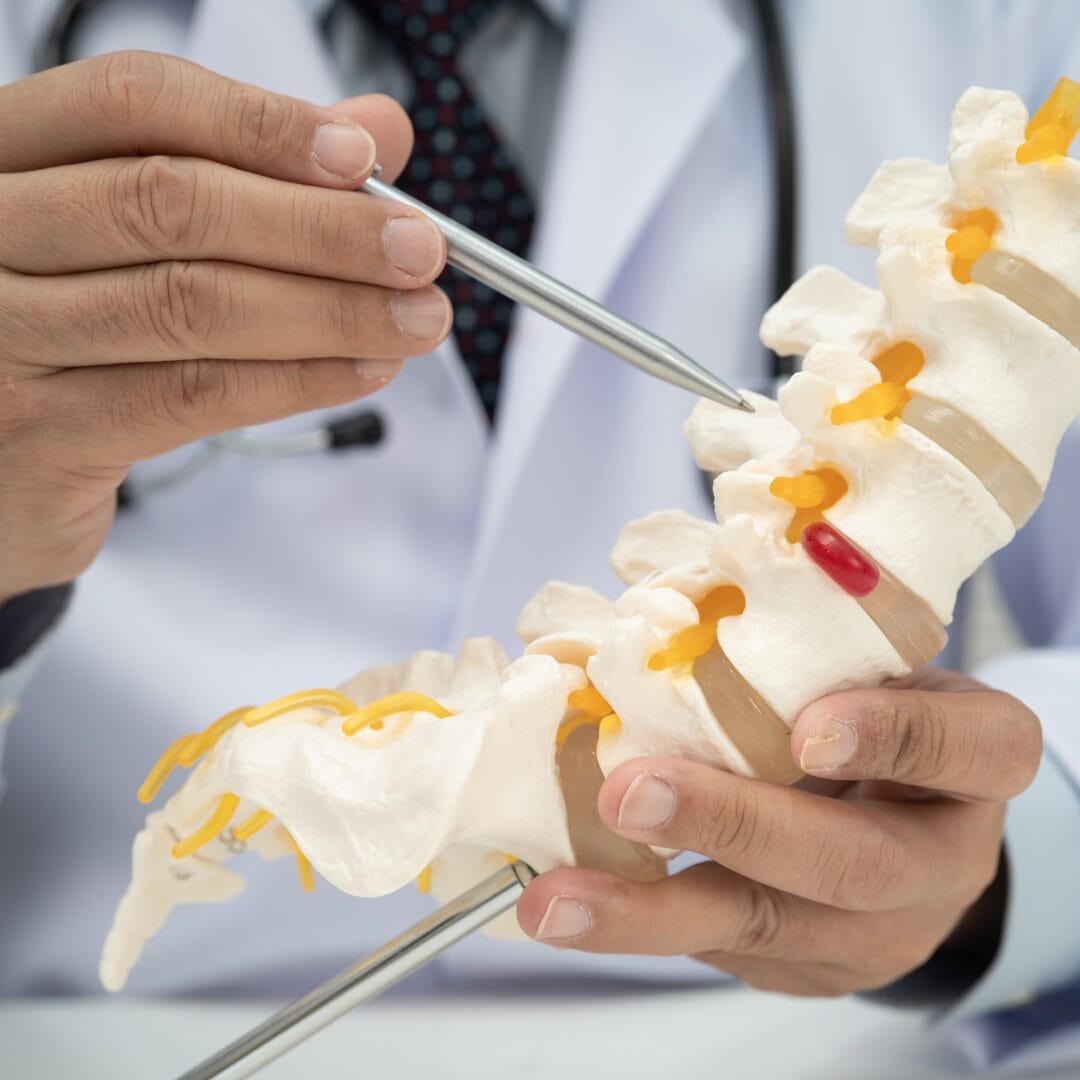
Endoscopic spine surgery is a minimally invasive technique where the surgeon uses a thin tube with a small camera to access the spine through a tiny incision — typically less than a centimetre. The camera sends a magnified view of the spine to a screen, allowing precise treatment without disturbing surrounding muscles and tissues.
This is fundamentally different from traditional open spine surgery, where a longer incision and more muscle separation is required. The endoscopic approach allows targeted treatment of the actual problem — usually a compressed nerve, a herniated disc, or a narrowed spinal canal — without the wider impact of open surgery.
Endoscopic vs Traditional Spine Surgery
Patients often ask whether the difference is really that significant. The honest answer: yes, in most cases.
Traditional Open Surgery
- Larger incision (5–15 cm)
- Significant muscle separation
- Longer hospital stay (3–7 days)
- Greater post-operative pain
- Recovery: 4–6 weeks for basic activity
- Visible scar
Endoscopic Spine Surgery
- Tiny incision (under 1 cm)
- Minimal muscle disruption
- Day-care or 1–2 day stay
- Less post-operative pain
- Recovery: 1–2 weeks for basic activity
- Barely visible mark
That said, not every spine problem can be addressed endoscopically. The right approach depends entirely on what is causing your pain — which is why a proper specialist evaluation comes first.
Conditions That May Be Treated Endoscopically
Endoscopic spine surgery is suitable for several common spine problems, particularly those involving disc and nerve compression. The technique has expanded considerably in recent years and now covers a wider range of conditions than before.
Conditions commonly addressed with endoscopic techniques
- Herniated or slipped discs in the lumbar (lower back) or cervical (neck) spine
- Sciatica caused by nerve compression
- Spinal stenosis — narrowing of the spinal canal pinching the nerves
- Foraminal stenosis — narrowing of the openings where nerves exit the spine
- Some cases of recurrent disc problems after previous surgery
- Persistent leg pain, numbness, or weakness from nerve pressure
Whether your specific condition can be treated this way is something only a spine specialist can determine after reviewing your imaging and examining you. Some patients are excellent candidates; others may need a different approach. Both possibilities are normal.
What Endoscopic Discectomy Means
One of the most commonly performed endoscopic spine procedures is endoscopic discectomy. The term simply means removing the part of a damaged disc that is pressing on a nerve — using the endoscopic technique. Patients with sciatica, leg pain, or numbness from a herniated disc often benefit from this approach.
The advantage is that only the problematic portion of the disc is addressed. The healthy parts of the disc and surrounding spine are left undisturbed. This is one reason recovery is significantly faster compared to traditional discectomy.
Recovery Time — What to Expect
Recovery after endoscopic spine surgery is one of the biggest advantages patients notice. Most people are walking on the same day or the morning after surgery. Hospital stays are typically short, often just a day or two.
General recovery timeline (varies per patient)
- Day 1: Walking with assistance; usually discharged within 24–48 hours
- Week 1: Resume light home activities; back to desk-based work in many cases
- Week 2–4: Gradual return to full daily activities; physiotherapy begins
- Week 6–8: Most patients resume more demanding activities under guidance
- 3 months: Full recovery for most patients, though individual healing varies
The actual timeline depends on the procedure, your overall health, your job demands, and how well you follow the rehabilitation plan. Your spine surgeon at Pure Ortho will give you a realistic timeline based on your specific case.
What Is the Success Rate?
Endoscopic spine surgery has a high success rate when performed on suitable candidates. Patient selection matters as much as the technique itself — the procedure works best when the right diagnosis is matched to the right patient.
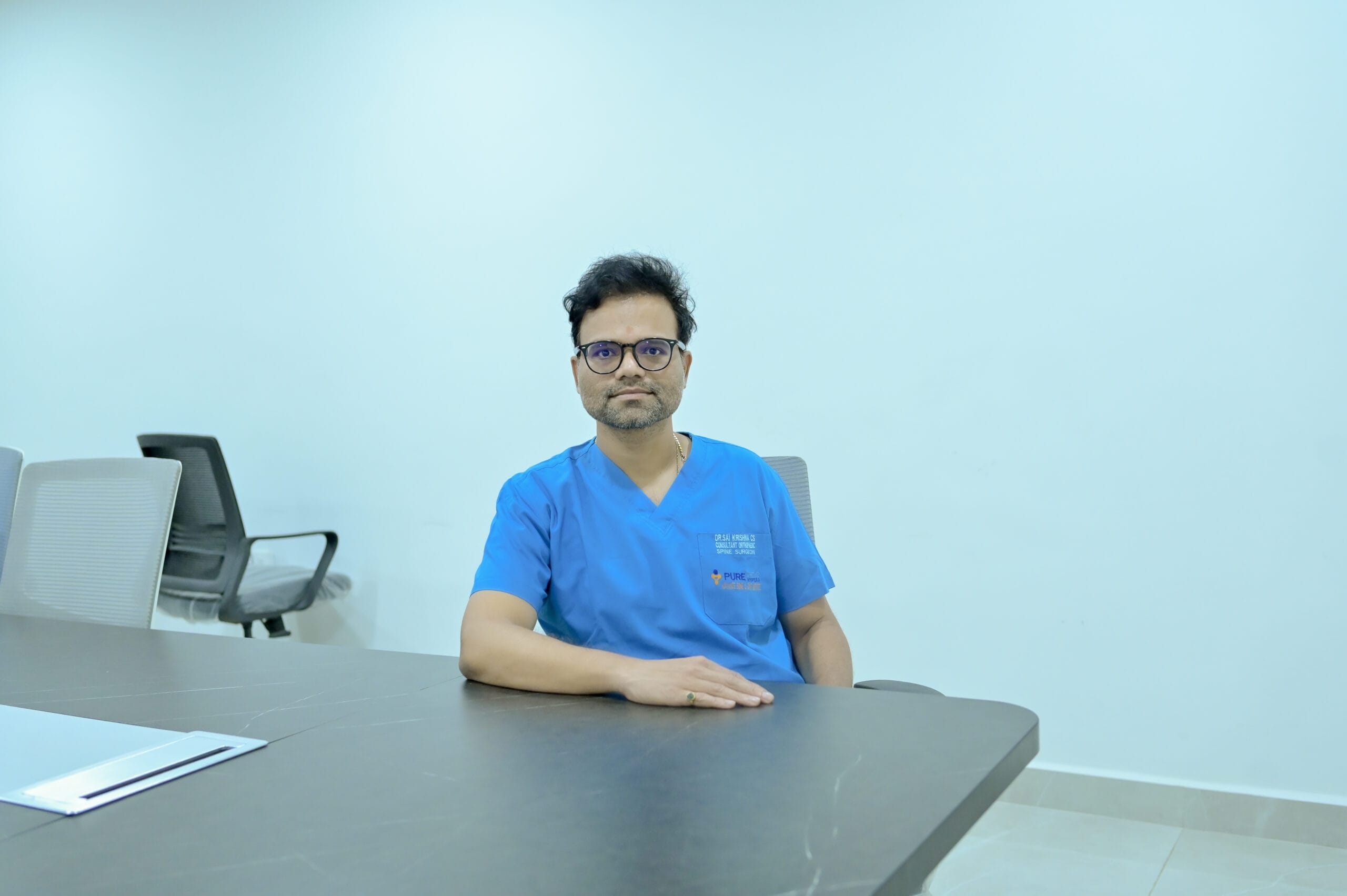
This is why Pure Ortho's approach starts with thorough evaluation rather than rushing to surgery. Our spine specialist Dr. Sai Krishna C.S reviews each patient's symptoms, MRI findings, and overall health before recommending any surgical option. In some cases, non-surgical treatment is enough. In others, endoscopic surgery is the right path. And occasionally, traditional surgery is what the situation actually needs.
Is It the Right Option for You?
The honest answer is: it depends on what is causing your back or leg pain, how severe it is, and what your daily life looks like. Surgery is never the first answer for back pain — most patients are managed without it. But for those who do need surgical intervention, endoscopic options often offer the most balanced combination of effectiveness and recovery.
Signs you should see a spine specialist
- Back pain that has not improved with rest, medication, or physiotherapy
- Pain that radiates down one or both legs (sciatica)
- Numbness, tingling, or weakness in the legs or feet
- Difficulty walking long distances due to leg pain
- Loss of bladder or bowel control — a medical emergency, see a doctor immediately
- Pain that disturbs sleep regularly
If any of these apply to you, a consultation with a spine specialist is the right next step — not to push you toward surgery, but to identify what is causing the problem and to discuss your options honestly.
Why Choose Pure Ortho Hospitals for Spine Care
Pure Ortho Hospitals in Sainikpuri is a dedicated Advanced Bone & Joint Institute. Our spine department is led by Dr. Sai Krishna C.S, who specialises in both endoscopic and traditional spine surgery. Patients have access to advanced imaging, on-site diagnostics, post-operative physiotherapy, and a full multidisciplinary team — all under one roof.
You will not be rushed. You will not be pushed toward unnecessary surgery. The goal is to find the root cause of your back pain and recommend what is actually right for your situation.
Frequently Asked Questions
Other Departments at Pure Ortho Hospitals
Pure Ortho Hospitals, Sainikpuri is a full-service Advanced Bone & Joint Institute. Spine care is one of many specialised departments — every aspect of orthopaedic care is available under one roof.
Talk to a Spine Specialist at Pure Ortho
Back pain has a root cause. Find out what is actually behind your symptoms — and what your real options are. Visit Pure Ortho Hospitals, Sainikpuri for a thorough spine evaluation.
📞 Call 8686868208More from Pure Ortho Hospitals
This article is for patient education only. Please consult a qualified orthopaedic surgeon before making any treatment decisions.