


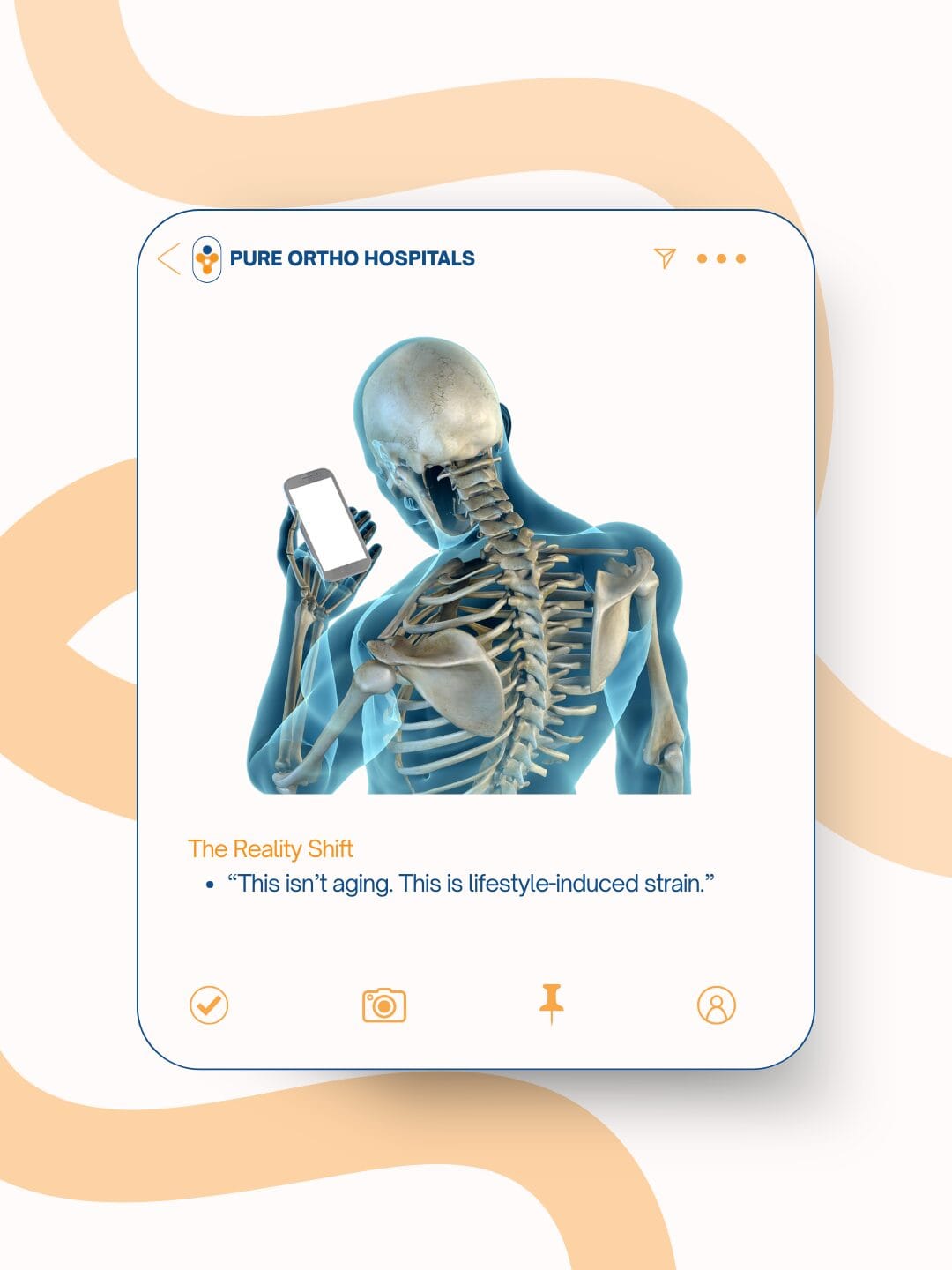
Look around any coffee shop, metro, or office. Heads bowed. Necks bent forward. Eyes locked on screens. This has become normal — but your spine wasn't built for it.
"Tech neck" is what spine specialists are now calling the wave of neck and back problems caused by long hours of phone and screen use. And it's not just an older-generation issue. People in their 20s and early 30s are walking into spine clinics with problems that used to belong to people much older. If you've felt persistent neck stiffness, headaches, or tingling in your hands lately — keep reading.
What Is Tech Neck Actually Doing to Your Spine?
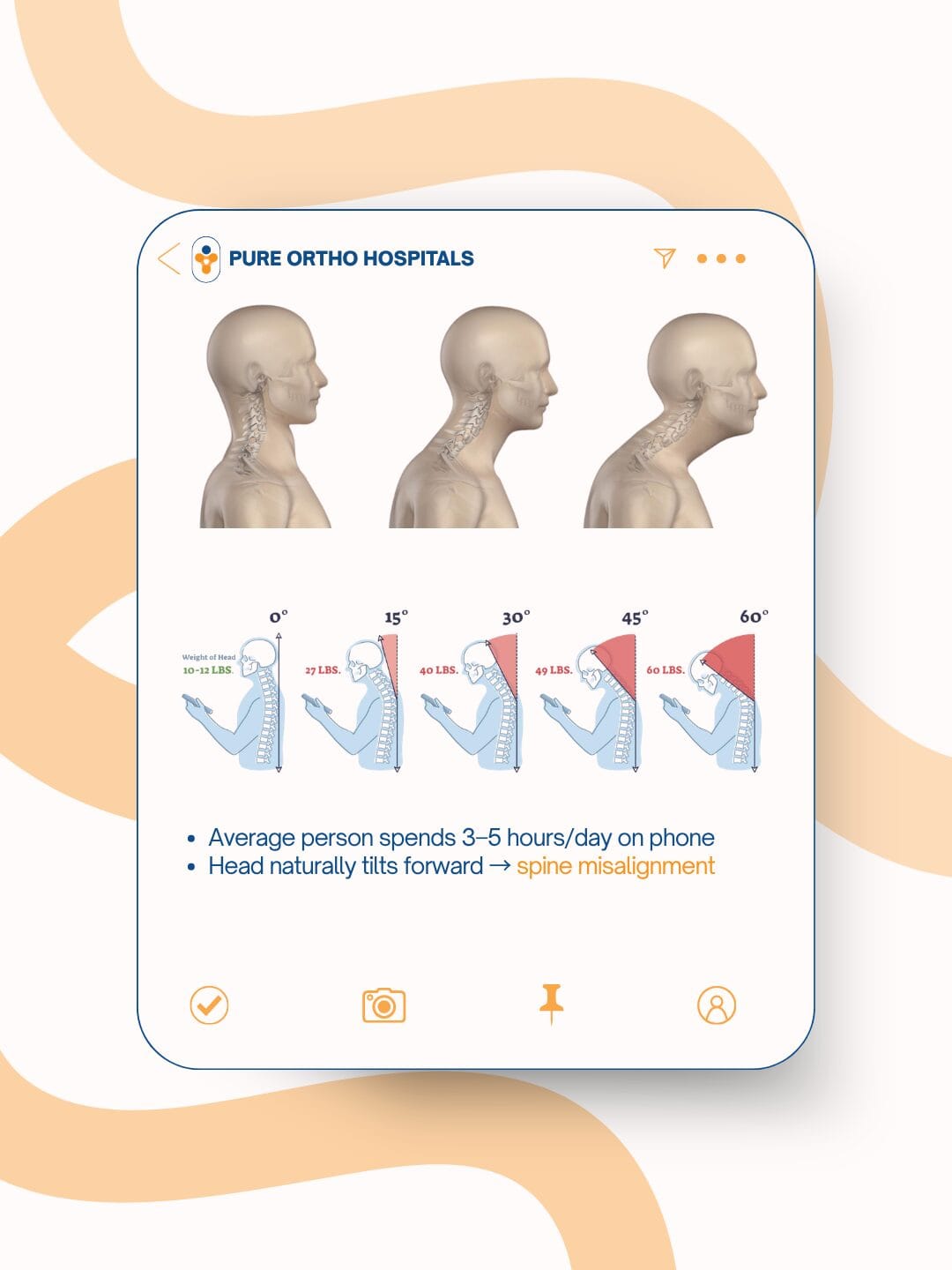
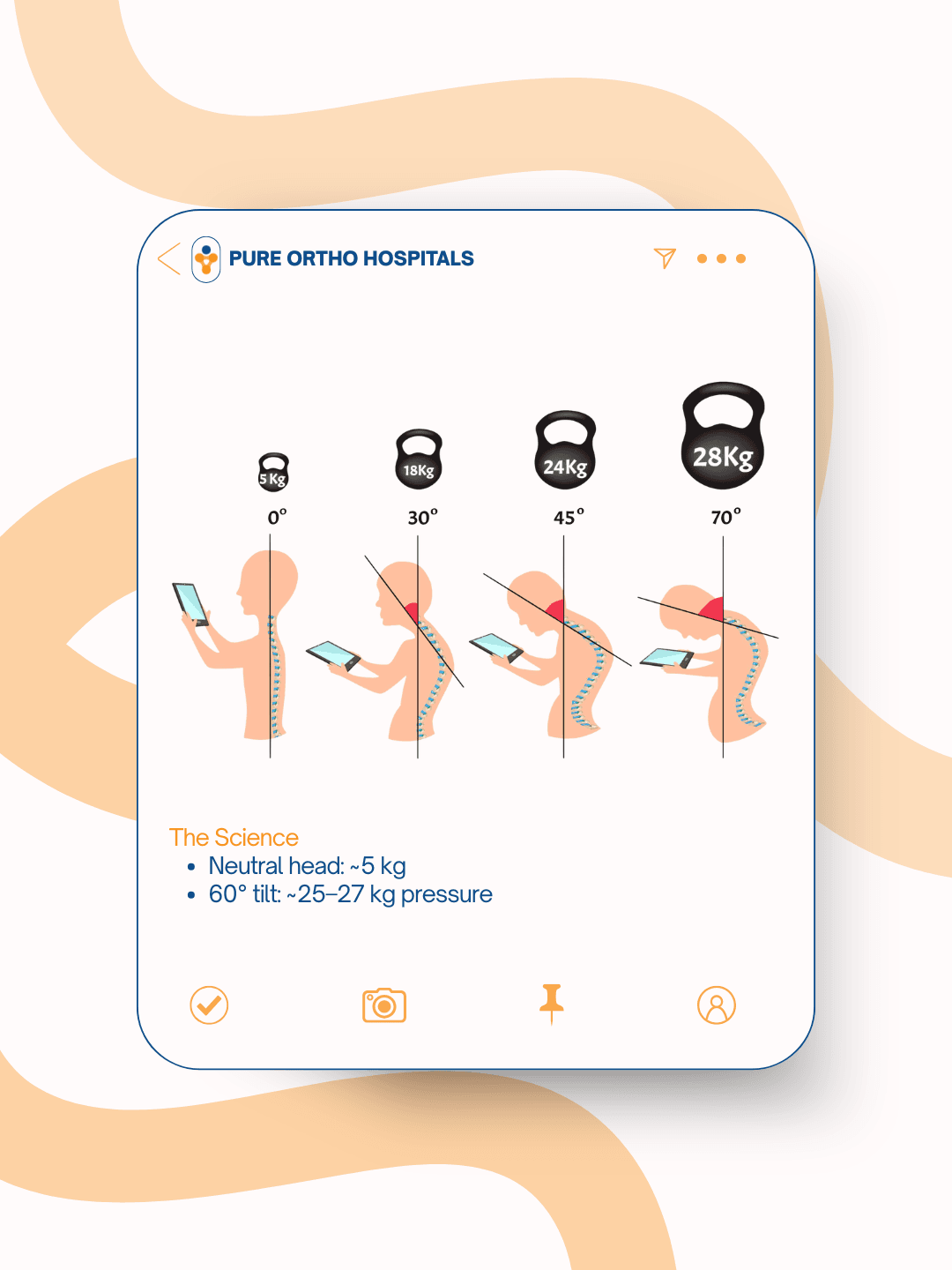
Your head weighs about 5 kilograms. That's the weight your neck is designed to support — when your spine is in a neutral, upright position. The moment you bend your head forward to look at a phone, that weight on your spine multiplies.
Think about that for a moment. Every time you scroll Instagram with your head tilted down, your neck is essentially carrying the weight of a small child. For hours. Every day.

Why This Is a Bigger Problem for Younger People
Spine surgeons across India are noticing something concerning: patients in their 20s coming in with disc problems, neck stiffness, and chronic pain that previously appeared decades later. The reason is simple — exposure starts early and never stops.
A typical young adult today might use a smartphone for 5+ hours, work on a laptop for another 6–8 hours, and watch TV or scroll in bed for 2 more. That's 13–15 hours of poor posture daily, beginning from the teenage years. The cumulative effect over a decade is significant.
Why young adults are most at risk
- Exposure begins in the teenage years when the spine is still developing
- IT, BPO, and remote work require long hours bent over devices
- Phones are now used for everything — calls, work, entertainment, navigation
- Lack of physical activity weakens the supporting muscles around the spine
- Symptoms are easy to ignore early — until they become serious
What Tech Neck Looks Like — Warning Signs
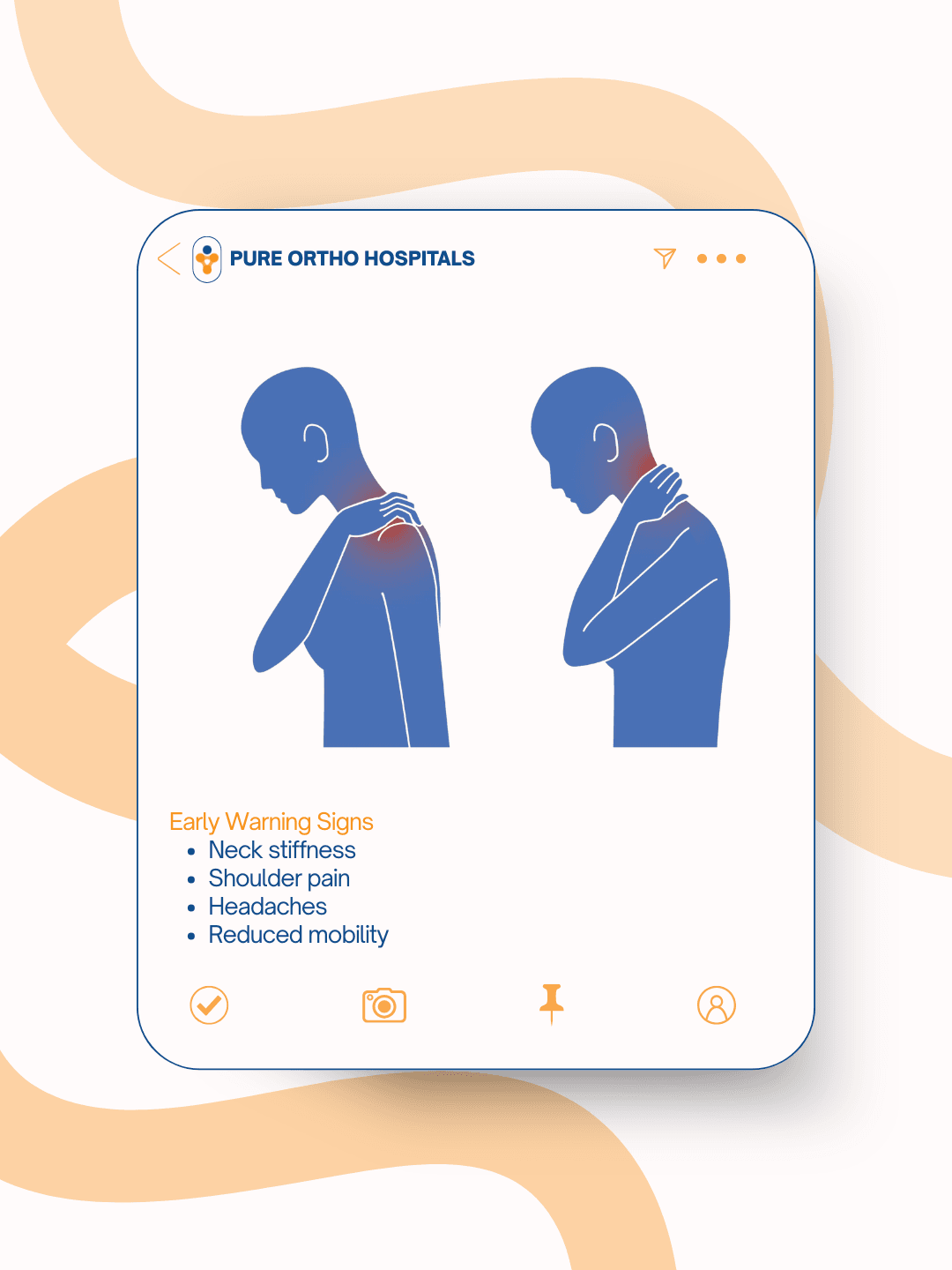
The damage doesn't happen overnight. It starts small. People dismiss the early signs as "I just slept wrong" or "it's been a long week at work." If these symptoms keep coming back, your spine is sending you a clear message.
Constant Neck Stiffness
Especially when waking up or after long screen sessions
Tension Headaches
Usually starting at the base of the skull, radiating forward
Shoulder & Upper Back Pain
Burning or aching across the upper traps
Tingling in Hands or Fingers
Sign of nerve compression in the neck
Disturbed Sleep
Pain that worsens at night or affects sleep position
Visible Posture Changes
Hunched shoulders, head sitting forward of the body
If any two of these are showing up regularly in your life, your neck is asking for attention. Ignoring them doesn't make them go away — it just gives the underlying problem time to get worse.

The Long-Term Damage Most People Don't See Coming
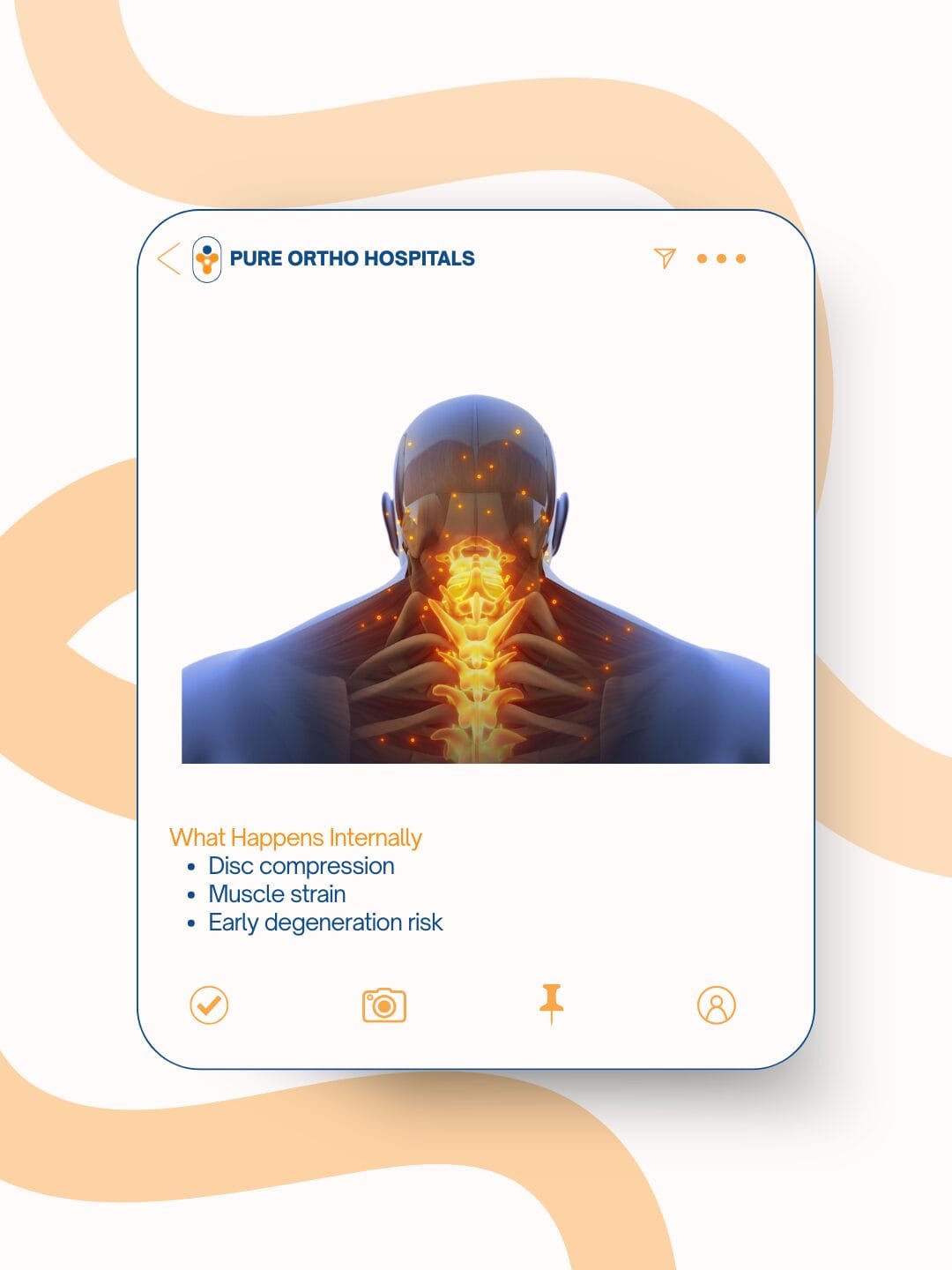
Tech neck isn't just about feeling sore. The cumulative strain causes real structural changes to the spine over time. Many people only realise the damage when it shows up as something serious — and by then, the easy fixes are already out of reach.
Conditions that can develop from chronic poor posture
- Cervical disc degeneration — early wear of the discs in the neck
- Disc herniation — slipped discs that compress nerves
- Cervical spondylosis — arthritis of the neck joints, normally seen in 50+ but now appearing earlier
- Forward head posture that becomes structurally fixed
- Reduced lung capacity — the slumped posture compresses your chest
- Chronic tension headaches and migraines
- Permanent changes to spinal curvature in extreme cases
None of these are dramatic on Day 1. They build up quietly over years. By the time someone is 35 or 40 and feels the effects, the spine has been changing since they were 20.
What Actually Works — and What Doesn't
The internet is full of "5 stretches to fix tech neck" videos. While general movement and stretching help, they are not a substitute for understanding what is actually happening with your spine. Each person's neck pain has a slightly different cause — muscle imbalance, disc problem, nerve compression, or sometimes a combination.
This is why guesswork doesn't work. Following a YouTube video aimed at 10 million people may help some users and hurt others. The right approach for you depends on what is actually going on inside your spine.
At Pure Ortho Hospitals, Sainikpuri, Hyderabad, our spine team carries out a thorough evaluation — examining your posture, range of motion, and where appropriate, imaging — before recommending anything. Sometimes the answer is physiotherapy. Sometimes it's posture training. In more advanced cases, it may need a different intervention. The point is, the recommendation is based on you, not a generic checklist.
When Should You Actually See a Spine Specialist?
Most occasional neck soreness will resolve on its own with rest. The line between "normal" and "needs attention" is not always obvious, but there are clear signals.
Don't delay if any of these apply
- Neck pain that has lasted more than 3 weeks
- Pain or tingling that travels down your arm or into your fingers
- Headaches that come back regularly after long phone or computer use
- Difficulty turning your head or looking up
- You notice your posture changing — friends or family pointing it out
- Sleep is being affected by neck pain
- You are under 35 and these symptoms are already showing up regularly
The earlier these issues are caught, the more options are available. Many problems that seem serious in your 30s could have been managed with simple intervention in your 20s.

Why Pure Ortho Hospitals for Spine Evaluation
Pure Ortho Hospitals in Sainikpuri is a dedicated Advanced Bone & Joint Institute. The spine department handles everything from posture-related issues common in young adults to more complex spine problems that need surgical attention. All diagnostics, imaging, and physiotherapy are available under one roof — so you don't have to bounce between facilities to get an answer.
You won't be pushed toward surgery. You won't be charged for unnecessary tests. The goal is straightforward: find the actual cause of your spine problem and recommend the right treatment for your situation — whether that's posture correction, physiotherapy, or something more involved.
Frequently Asked Questions
Other Departments at Pure Ortho Hospitals
Pure Ortho Hospitals, Sainikpuri is a full-service Advanced Bone & Joint Institute. Beyond spine care, we cover every aspect of orthopaedic and joint care under one roof.
Don't Let Your Phone Damage Your Spine
If neck pain, headaches or stiffness have become part of your weekly routine, it's time to find out why. Visit Pure Ortho Hospitals, Sainikpuri for a proper spine evaluation.
📞 Call 8686868208More from Pure Ortho Hospitals
This article is for patient education only. Please consult a qualified orthopaedic surgeon before making any treatment decisions.