

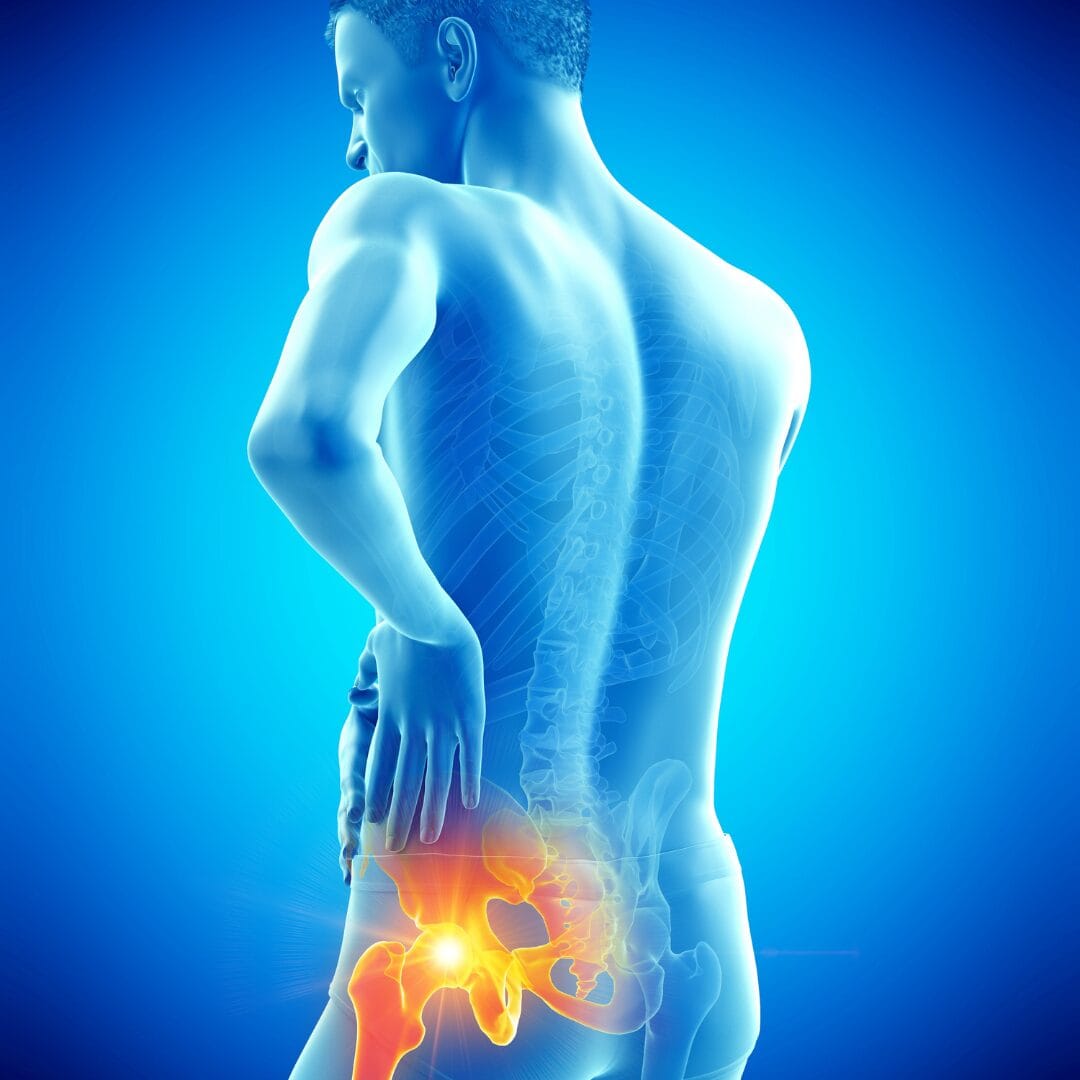
Most people who have sciatica describe it the same way. The pain is not just in the back. It shoots — sometimes like electricity, sometimes like a deep burning ache — down through the buttock, the back of the thigh, and into the calf. Sometimes it goes all the way to the foot. It is unlike any back pain they have experienced before, and it does not respond to ordinary pain relief the way muscle pain does.
That is because sciatica is not muscle pain. It is nerve pain. And nerve pain requires a different understanding, a different approach to diagnosis, and a different treatment pathway than the back strain most patients assume they are dealing with.
This guide covers what sciatica actually is, why it happens, what the symptoms mean, when it becomes serious, and what the spine team at Pure Ortho Hospitals, Sainikpuri, Hyderabad does about it.
What Is Sciatica?
The sciatic nerve is the longest and thickest nerve in the human body. It begins in the lower spine — formed from nerve roots at L4, L5, S1, S2, and S3 — passes through the buttock, travels down the back of the thigh, branches at the knee, and continues into the calf and foot. It controls sensation and movement across the entire back of the leg.
Sciatica occurs when this nerve — or the nerve roots that form it — are compressed, irritated, or inflamed somewhere along its path. The compression generates pain signals that travel along the nerve's distribution. Because the nerve is long, the pain is also long — and it goes to places that seem far from where the problem actually is.
How sciatica pain travels — the nerve pathway
Lower spine (L4-L5 or L5-S1) — Disc or bone compresses the nerve root. This is the source of the problem.
Buttock — Pain begins here. Often mistaken for a muscle problem. Can be very deep and difficult to localise.
Back of the thigh — Pain travels down. Patients describe aching, burning, or pulling sensations.
Calf — Pain continues below the knee. Numbness and tingling become more prominent at this stage.
Foot and toes — In severe compression, pain, numbness, or weakness reaches the foot. The specific toes affected depend on which nerve root is compressed.
What Causes Sciatica?
Sciatica is a symptom — not a diagnosis in itself. It means a nerve is being compressed somewhere. The cause of that compression determines the correct treatment. Different causes require entirely different approaches, which is why identifying the specific cause through examination and imaging matters before any treatment begins.
Lumbar Disc Herniation
A disc at L4-L5 or L5-S1 has herniated and is pressing on a nerve root. Accounts for the majority of sciatica cases. Worse with sitting and bending. Often associated with lower back pain.
Spinal Stenosis
Narrowing of the spinal canal compresses multiple nerve roots. Typically produces bilateral leg symptoms, worse with walking and standing, relieved by sitting or bending forward. More common in adults over 60.
Degenerative Disc Disease
Worn discs lose height, narrowing the exit channels for nerve roots. Produces chronic, gradually worsening sciatica without a specific incident triggering it.
Spondylolisthesis
One vertebra slipping forward on another — compressing the nerve root at that level. Can cause significant sciatica with associated back pain and sometimes visible posture changes.
Piriformis Syndrome
The piriformis muscle in the buttock compresses the sciatic nerve directly — producing sciatica-like symptoms without any spinal cause. Distinguished from disc sciatica by examination and the absence of spinal findings on MRI.
Tumour or Infection
Very rarely, a growth or infection near the spine or along the nerve compresses it. These causes produce sciatica alongside other red flag symptoms and require urgent investigation.
Symptoms — What Sciatica Feels Like
Sciatica has a distinctive character that separates it from ordinary back or leg pain. Recognising these features helps confirm that nerve involvement is likely and that a spine evaluation is warranted.
Radiating Leg Pain
Pain that runs from the lower back or buttock down the leg — the defining feature of sciatica
Electric Shock Sensation
Sharp, shooting pain described as electric or burning — distinct from the dull ache of muscle pain
Numbness in the Leg
Altered sensation — numbness, tingling or pins-and-needles — in the thigh, calf, or foot
Leg Weakness
Difficulty lifting the foot, weakness when standing on tiptoe, or reduced grip when walking on uneven ground
One-Sided Symptoms
Sciatica typically affects one leg only — the side where the nerve is compressed
Worse with Sitting
Disc-related sciatica typically worsens with sitting and improves with walking or standing
Worse with Coughing
Coughing, sneezing, or straining sharply increases disc pressure — intensifying sciatica momentarily
Lower Back Pain
Often — but not always — present alongside leg symptoms. Some patients have predominantly leg symptoms with minimal back pain.
Sciatica vs Ordinary Back Pain — The Difference That Matters
This distinction determines whether you need a general physician or a spine specialist. Ordinary lower back pain stays in the back — it may be widespread or localised to one area, but it does not travel into the leg. Muscle strain, ligament sprain, and facet joint pain all produce back pain that remains in the back.
Sciatica travels. When pain crosses the buttock and moves into the thigh — and especially when it goes below the knee into the calf or foot — this is nerve involvement. The treatment for nerve pain is fundamentally different from the treatment for muscle or joint pain, and treating sciatica as though it is a muscle problem is one of the primary reasons patients suffer for months without improvement.
Sciatica from Disc Problems vs Piriformis Syndrome
These two conditions produce similar symptoms — pain running down the leg from the buttock. Distinguishing between them matters significantly because the treatment is completely different. A physiotherapist stretching the piriformis muscle in a patient whose sciatica is actually from a disc herniation can make things significantly worse.
Disc-Related Sciatica
- Pain starts in lower back or buttock
- Worse with sitting and bending forward
- Worse with coughing or sneezing
- MRI shows disc herniation at L4-L5 or L5-S1
- Straight leg raise test positive
- May have back pain alongside leg pain
- More common — majority of sciatica cases
Piriformis Syndrome
- Pain localised to buttock and runs down leg
- Worse with prolonged sitting
- Tender point deep in the buttock
- MRI spine is normal
- Pain with resisted hip external rotation
- No significant back pain
- Less common — often misdiagnosed
When Sciatica Is a Medical Emergency
Go to Emergency Immediately If Sciatica Is Accompanied By
- Loss of bladder or bowel control — inability to urinate or accidental leakage
- Numbness in the groin, inner thighs, or perineal area (saddle anaesthesia)
- Sudden severe weakness in both legs simultaneously
- Sciatica following a significant injury or trauma to the spine
- Progressive rapid worsening of leg weakness over hours or days
These signs suggest cauda equina syndrome — a spinal emergency requiring surgery. Call 8686868208 or go to Pure Ortho Hospitals 24x7 emergency without delay.
How Sciatica Is Diagnosed at Pure Ortho Hospitals
Diagnostic process
- Clinical history — exact pain distribution, what aggravates and relieves it, duration, bowel and bladder function
- Neurological examination — reflexes, muscle strength in the leg and foot, sensation testing across dermatomes
- Straight leg raise test — reproduces sciatica by tensioning the nerve; strongly positive in disc-related sciatica
- X-ray — disc height, alignment, bone changes, rules out fractures
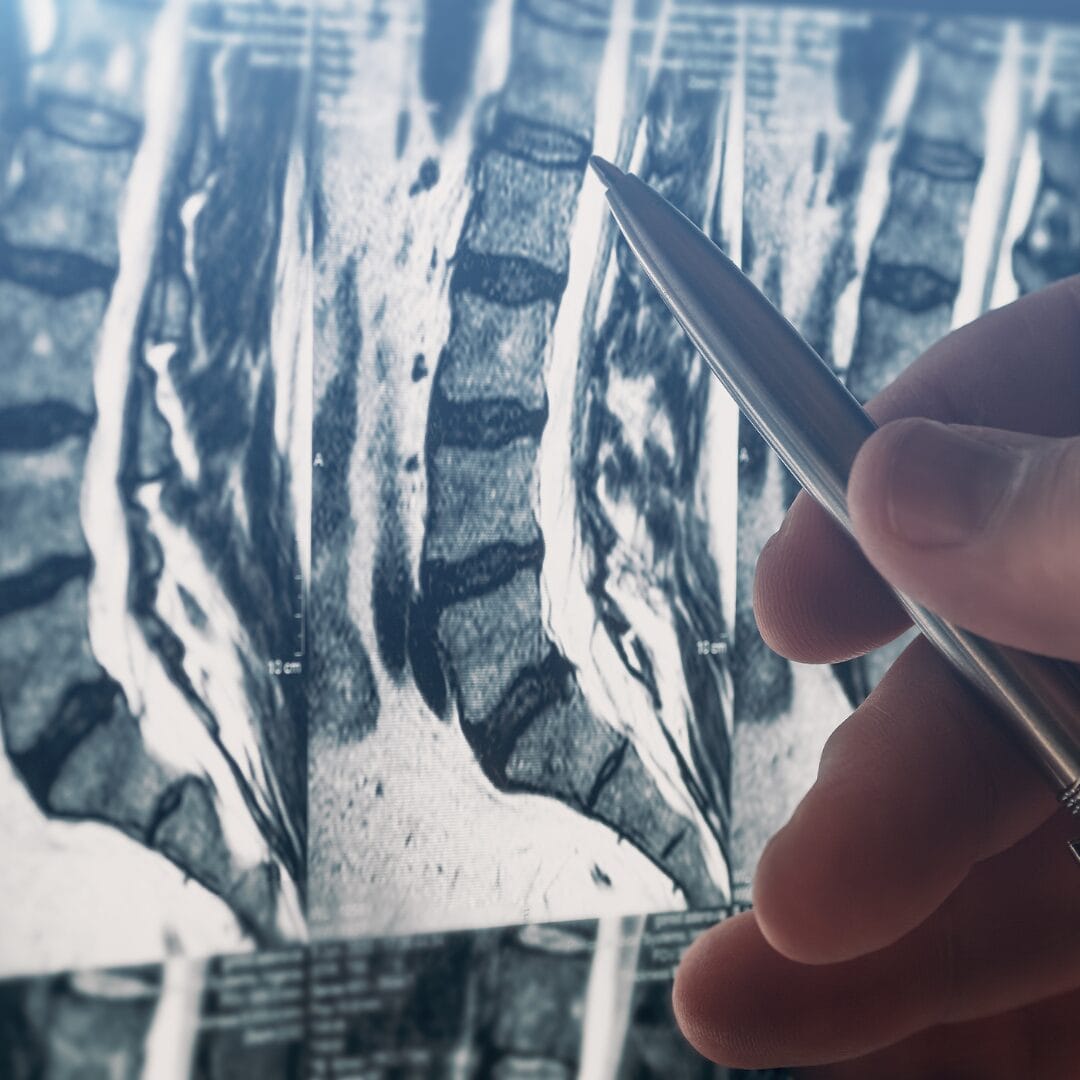
- MRI lumbar spine — gold standard; shows disc herniation, nerve compression, canal dimensions, and all other structures clearly
- Nerve conduction study — if nerve damage quantification is needed or diagnosis is uncertain
- Clinical correlation — matching imaging to symptoms; a disc bulge on MRI without corresponding clinical findings does not automatically need treatment
Why Hyderabad's IT Workforce Is at High Risk
Sciatica is not random. The population most consistently presenting with it at Pure Ortho Hospitals, Sainikpuri is Hyderabad's desk-based working population — IT professionals, designers, analysts, and managers who sit for 8-12 hours daily, often with poor ergonomic setups.
Prolonged sitting increases lumbar disc pressure by up to 40% compared to standing. Over months and years, this accelerates disc degeneration at L4-L5 and L5-S1 — the levels responsible for the majority of sciatica cases. Work-from-home setups with kitchen chairs, sofas, and laptops on coffee tables have made this significantly worse across Hyderabad since 2020.
A person who develops sciatica at 35 from ten years of desk work has a fundamentally different clinical situation from a 65-year-old with spinal stenosis. The cause is the same nerve — the treatment approach and long-term management are very different.
Treatment — From Conservative to Surgical
Most sciatica — around 80-90% of cases — improves with conservative management. The critical distinction is between sciatica that is resolving (even slowly) and sciatica that is progressing. Progressing sciatica — particularly with worsening weakness — should not be managed conservatively indefinitely while nerve damage accumulates.
Treatment options at Pure Ortho Hospitals, Sainikpuri
- Activity modification — identifying positions and activities that aggravate disc pressure; avoiding prolonged sitting
- Physiotherapy — nerve mobilisation techniques, core strengthening, postural correction; different from general back physiotherapy
- Pain management — medication to reduce nerve inflammation and pain during the acute phase
- Epidural steroid injection — targeted injection at the compressed nerve root to reduce inflammation; effective for acute, severe sciatica
- Transforaminal nerve root injection — more targeted than standard epidural; delivers anti-inflammatory medication directly to the affected nerve root
- Endoscopic discectomy — keyhole surgery removing the disc fragment pressing on the nerve; fast recovery, highly effective for disc-related sciatica
- Microdiscectomy — microsurgical removal of herniated disc material under magnification
- Spinal decompression — for stenosis-related sciatica requiring canal widening
Recovery — What to Realistically Expect
Week 1-4
Acute phase. Pain management, rest modification, gentle movement.
Week 4-8
Physiotherapy begins. Leg pain typically reducing. Back pain may persist longer.
Month 2-3
Significant improvement in most cases. Nerve symptoms — numbness, tingling — resolve more slowly.
Month 3-6
Full functional recovery for most non-surgical patients with consistent treatment.
After Surgery
Endoscopic discectomy: walking day one, return to light activity within 1-2 weeks. Full recovery 6-8 weeks.
Nerve symptoms — numbness and tingling — recover more slowly than pain. The nerve that has been compressed for weeks or months does not recover overnight. Improvement is gradual and measured in weeks to months. Patience combined with consistent treatment produces the best outcomes.
Meet the Specialists at Pure Ortho Hospitals, Sainikpuri
Dr. G. Uday Sekhar Reddy
MBBS, MS Ortho, MCh Ortho
Dr. Sai Krishna C.S
MS Ortho (University Gold Medalist), DNB Ortho, Fellowship in Spine Surgery
Dr. V.S. Abhilash Kumar S
MBBS, MS Ortho, FIJR, FISS (S.Korea, USA) — Clinical Director
Dr. Pudari Manoj Kumar
MBBS, MS Ortho, FIJR, FIRJR
Dr. L. Sreeram
MPT (Ortho), FDOR, MIAP
Dr. L. Sri Dharani
BPT, MIAP, PTOTA (Canada)
Frequently Asked Questions
Other Departments at Pure Ortho Hospitals
Leg Pain That Travels Needs a Proper Diagnosis
Sciatica that is not correctly identified and treated becomes chronic. Visit Pure Ortho Hospitals, Sainikpuri, Hyderabad for a specialist spine evaluation — find out exactly which nerve is affected and what the right treatment is for your case.
Call 8686868208More from Pure Ortho Hospitals
This article is for patient education only. Please consult a qualified spine specialist before making any treatment decisions.