

When a family member comes home from the hospital after a fall with a diagnosis that includes "PFN surgery recommended," most families immediately search what PFN means. The term is unfamiliar. The surgery sounds major. The questions pile up: what is being put inside the bone, why is surgery needed at all, when will the patient walk, and what is the recovery like?
PFN stands for Proximal Femoral Nail. It is one of the most commonly performed orthopaedic trauma procedures in India — particularly in elderly patients who fall and fracture the hip area, and in younger patients with high-energy femur fractures. This guide explains exactly what it is, why it is done, how the procedure works, and what to expect during recovery.
What PFN Means — The Device Explained
The femur is the long thigh bone. Its upper end — the proximal femur — connects to the hip joint via the femoral neck and femoral head. Just below this are two bony prominences: the greater trochanter (felt on the outer side of the upper thigh) and the lesser trochanter (on the inner side). Fractures through these prominences — called intertrochanteric fractures — are extremely common in the elderly after falls, because the bone here is particularly vulnerable to osteoporosis.
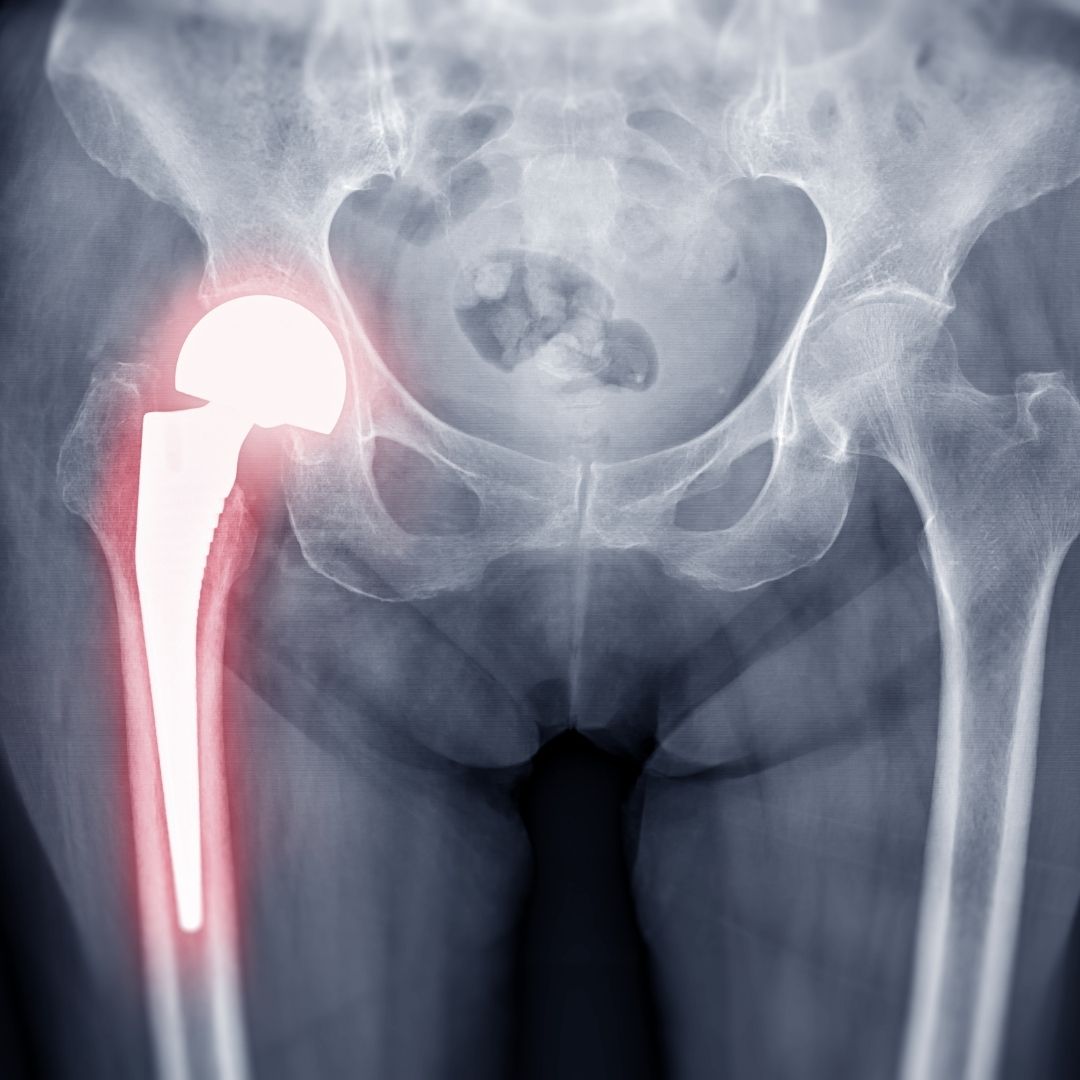
A Proximal Femoral Nail is a titanium alloy rod approximately 20-40 cm long and 9-12 mm in diameter. It is designed to be inserted into the hollow medullary canal of the femur — the internal cavity that runs the length of the bone. A locking screw (or blade) is then passed through a hole in the upper end of the nail, across the fracture line, and into the femoral head. This holds the two fracture fragments firmly together while the bone heals. The nail is also locked at the bottom with a distal screw to prevent rotation.
The result is a mechanically stable construct that can bear body weight within hours of surgery — which is precisely why PFN is preferred over other methods for these fractures.
Which Fractures Need PFN Surgery?
Fractures Treated with PFN
- Intertrochanteric fractures (through the trochanters)
- Subtrochanteric fractures (just below the lesser trochanter)
- Reverse oblique intertrochanteric fractures
- Pertrochanteric fractures with comminution
- Pathological fractures near the hip (from bone tumours)
- High-energy femur fractures in the proximal third
Fractures Treated Differently
- Femoral neck fractures — hemiarthroplasty or hip replacement (elderly) or cannulated screws (young)
- Femoral shaft fractures — longer intramedullary nail (not PFN)
- Distal femur fractures — retrograde nail or plate fixation
- Undisplaced stable intertrochanteric — some managed without surgery in very frail patients
Why Surgery Is Needed — The Alternative Is Worse
The question families often ask is: can the fracture heal without surgery? For intertrochanteric fractures, the answer is theoretically yes — but at a cost that is almost never acceptable. Non-operative treatment means 6-12 weeks of complete bed rest. In an elderly patient, 6-12 weeks of immobility causes pressure sores, pneumonia, deep vein thrombosis, muscle wasting, and mental deterioration. The mortality rate from these complications in bedridden elderly hip fracture patients treated without surgery is substantially higher than the surgical risk.
PFN surgery, performed within 24-48 hours of the fracture when the patient's medical condition is optimised, allows the patient to sit up the same day and walk the next day. This single advantage — early mobilisation — is what makes surgery so clearly the right choice for almost all patients who are medically fit enough to undergo it.
The PFN Procedure — Step by Step
Anaesthesia
Spinal anaesthesia (preferred for elderly patients — avoids general anaesthesia risk) or general. Nerve block added for post-operative pain control.
Fracture Table
Patient positioned on a specialised orthopaedic fracture table. The fracture is reduced (aligned) using traction and manipulation — without opening the fracture site.
C-Arm Guidance
Continuous real-time X-ray (fluoroscopy) confirms fracture reduction and guides nail and screw placement throughout the procedure.
Small Incision
A 3-4 cm incision is made at the top of the hip. No large wound — the entire nail is inserted through this small opening using specialised instruments.
Nail Insertion
The femoral canal is opened with a guidewire and reamer. The PFN is passed down the canal over the guidewire and positioned to span the fracture.
Locking Screws
A cephalomedullary screw (or blade) locks through the nail into the femoral head. Distal locking screws are placed. Wounds closed. Total incision length under 6 cm.
Recovery After PFN Surgery
Surgery Day
Surgery completed. Patient shifted to ward. Sitting up the same evening if comfortable.
First Walk
Physiotherapy begins. First standing and walking with a frame. Drip and catheter removed.
Discharge
Discharged home or to a step-down facility when walking independently with frame and wound is clean.
Frame to Stick
Walking frame replaced with a walking stick as confidence and strength improve. X-ray to confirm fracture callus forming.
X-Ray Review
Fracture healing confirmed on X-ray. Most patients walking independently or with minimal support.
Full Recovery
Return to pre-fracture activity level in most patients. Nail is permanent — removal not routinely needed.
PFN vs Hip Replacement — Which Is Used When?
This is one of the most common questions families ask — especially when a relative has been told they need hip surgery after a fall. The choice between PFN and hip replacement depends on exactly where the fracture is, not how bad the fall was.
The key distinction
- Intertrochanteric fracture (through the trochanters, below the femoral neck) — PFN is the correct surgery. The femoral head still has its blood supply. The bone can heal with fixation. Replacing the hip joint is unnecessary and more complex.
- Femoral neck fracture (through the femoral neck, closer to the femoral head) — the fracture disrupts the blood vessels supplying the femoral head. In elderly patients, the femoral head is at high risk of dying (avascular necrosis) if fixed rather than replaced. Hemiarthroplasty (half hip replacement) or total hip replacement is preferred.
- Undisplaced femoral neck fracture in a young patient — cannulated screws to preserve the patient's own femoral head. Not PFN.
Complications — What to Watch For After PFN Surgery
- Cut-out — the cephalomedullary screw cuts through the top of the femoral head if placed incorrectly or if bone is very osteoporotic. The most important technical complication — prevented by accurate screw placement using the TAD (tip-apex distance) measurement on fluoroscopy.
- Wound infection — risk is higher in diabetic patients with uncontrolled blood sugar. Blood sugar must be controlled before surgery and monitored after.
- Deep vein thrombosis (DVT) — blood clots in the leg veins from immobility. Prevented with early mobilisation (the main reason surgery is done), compression stockings, and anticoagulant medication.
- Implant failure — rare in correctly placed PFNs. More common in severely osteoporotic bone or when the patient bears full weight before adequate callus has formed.
- Non-union — the fracture fails to heal. More common in subtrochanteric fractures and smokers. Requires revision surgery.
Take These Seriously After PFN Surgery
- Fever above 38.5°C after the first 48 hours — may indicate wound or chest infection
- Increasing redness or discharge from the wound
- Sudden severe pain in the operated leg — needs urgent X-ray to check implant
- Calf pain and swelling — possible deep vein thrombosis
- Breathlessness or chest pain — possible pulmonary embolism (blood clot in lung) — emergency
Pure Ortho Hospitals, Sainikpuri is open 24x7 for post-operative emergencies: 8686868208
The Trauma Team at Pure Ortho Hospitals, Sainikpuri
Dr. G. Uday Sekhar Reddy
Dr. Sai Karthikeya Badri
Dr. RNV Vamshi Krishna
Dr. Goutham Balachandra Reddy
Dr. L. Sreeram
Dr. Kranthi Kumar Reddy
Frequently Asked Questions
Other Departments at Pure Ortho Hospitals
Hip Fracture and PFN Surgery at Pure Ortho Hospitals, Sainikpuri
Hip fractures need surgery within 24-48 hours for the best outcome. Pure Ortho Hospitals, Sainikpuri operates a 24x7 trauma service with an experienced surgical team and dedicated critical care. Call immediately.
Call 8686868208More from Pure Ortho Hospitals
This article is for patient education only. Please consult a qualified orthopaedic surgeon before making any treatment decisions.