

Hip Replacement Surgery — Cost, AVN and What to Expect
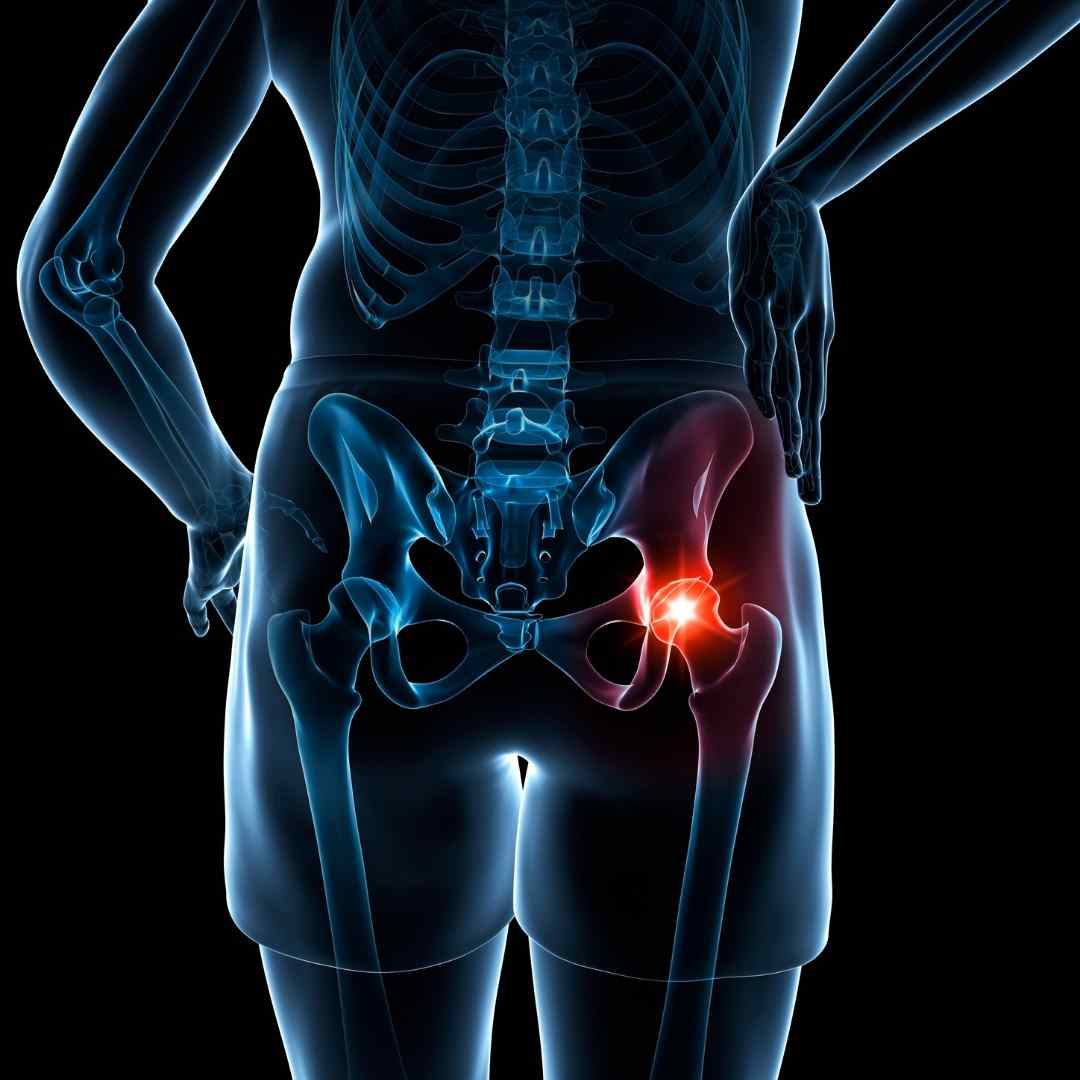
Hip pain brings two very different groups of patients to Pure Ortho Hospitals, Sainikpuri. One group is older, with gradual wear-and-tear arthritis that has built up over decades. The other is younger — often in their 30s or 40s — with hip pain that seemingly came from nowhere, getting worse over weeks rather than years. This second group frequently has avascular necrosis, a condition that surprises most patients because they had never heard of it before their diagnosis.
This guide covers both — what causes hip damage requiring replacement, what avascular necrosis is and why it matters, the surgery itself, and what recovery looks like at Pure Ortho Hospitals, Sainikpuri, Hyderabad.
What Is Avascular Necrosis of the Hip?
Avascular necrosis (AVN) — also called osteonecrosis — occurs when blood supply to the femoral head, the ball-shaped top of the thighbone that forms the hip joint, is disrupted. Bone tissue is living tissue that requires a continuous blood supply. When that supply is cut off, the bone cells begin to die.
The femoral head is particularly vulnerable to this because its blood supply runs through a limited number of vessels with little backup circulation. When these vessels are compromised, there is no alternative route to keep the bone alive. Over time, the dead bone weakens structurally. Eventually it can collapse under normal body weight — leading to joint surface damage, severe arthritis, and significant pain.
What Causes Avascular Necrosis?
Long-Term Steroid Use
One of the most common identifiable causes. High-dose or prolonged corticosteroid use for conditions like asthma, autoimmune disease, or post-COVID treatment can disrupt blood flow to bone.
Excessive Alcohol Use
Chronic heavy alcohol consumption is a well-established risk factor, affecting fat metabolism in ways that compromise bone blood supply.
Hip Fracture or Dislocation
Trauma to the hip can directly damage the blood vessels supplying the femoral head, leading to AVN even after the fracture itself has healed.
Blood Disorders
Sickle cell disease, clotting disorders, and certain blood conditions increase AVN risk by affecting normal blood flow.
Decompression Sickness
Divers and those exposed to rapid pressure changes are at increased risk through gas bubble formation affecting bone blood vessels.
No Identifiable Cause
In a significant proportion of cases, no specific cause is found — termed idiopathic AVN. This does not change the treatment approach once diagnosed.
The Stages of Avascular Necrosis — Ficat and Arlet Classification
AVN progresses through defined stages, and the stage at diagnosis significantly affects treatment options. Earlier detection means more treatment choices remain available.
Stage 1
X-ray normal. MRI shows early bone changes. Often asymptomatic or mild pain.
Stage 2
X-ray shows bone density changes. Femoral head shape still preserved. Pain present.
Stage 3
Crescent sign visible — subchondral fracture. Early structural collapse beginning.
Stage 4
Femoral head flattening or collapse. Joint surface damage. Arthritis developing.
Stage 5
Joint space narrowing. Significant arthritis. Hip replacement typically needed.
Stage 1 and early Stage 2 AVN, caught before collapse occurs, may respond to joint-preserving treatments. Once collapse has occurred (Stage 3 onwards), the structural damage is generally not reversible, and treatment shifts toward managing symptoms and, eventually, hip replacement.
Symptoms — Hip Pain That Needs Evaluation
Groin Pain
The most common early symptom of hip-related conditions including AVN, often described as deep, aching pain
Pain with Weight-Bearing
Pain that worsens with standing or walking, particularly noticeable going up stairs
Limited Range of Motion
Difficulty with movements like putting on socks, getting in and out of a car, or crossing legs
Limp
An altered walking pattern develops to avoid loading the painful hip
Night Pain
Pain that disturbs sleep, particularly when lying on the affected side
Rapid Onset (AVN specific)
Unlike gradual arthritis, AVN symptoms can develop and worsen over weeks rather than years — particularly in younger patients with risk factors
How AVN Is Diagnosed
Diagnostic process at Pure Ortho Hospitals, Sainikpuri
- Clinical history — steroid use, alcohol history, prior hip trauma, blood disorders, onset pattern
- Physical examination — range of motion, pain with specific movements, gait assessment
- X-ray — may appear normal in early stages; shows collapse and arthritis in later stages
- MRI — the most sensitive test; detects AVN at the earliest stages before X-ray changes appear, which is critical for joint-preserving treatment options
- Staging assessment — using the Ficat and Arlet classification to determine stage and guide treatment
Early MRI diagnosis matters enormously in AVN. A patient diagnosed at Stage 1 has fundamentally different treatment options compared to one diagnosed at Stage 4. If you have hip pain and any of the known risk factors — particularly steroid use or significant alcohol history — raising AVN specifically with your doctor and requesting an MRI if X-ray is normal is a reasonable and important step.
Treatment for Avascular Necrosis — Stage Dependent
Treatment options by stage
- Early stage (1-2), no collapse: Activity modification, reduced weight-bearing, medication to address contributing factors. Core decompression — a procedure to relieve pressure inside the bone and stimulate new blood vessel growth — may be considered to preserve the joint.
- Bone grafting procedures: For select early-stage cases, bone grafting can support the weakened area and potentially delay or prevent collapse.
- Established collapse (Stage 3-5): Once structural collapse has occurred, joint-preserving options are largely no longer effective. Hip replacement becomes the most reliable solution for restoring pain-free function.
- Addressing the underlying cause: Whether continuing steroid use safely, managing alcohol consumption, or treating an underlying blood disorder — addressing the cause is part of comprehensive care, particularly to protect the other hip if not yet affected.
Total Hip Replacement — What It Involves
When AVN has progressed to significant joint damage, or when arthritis from any cause has reached an advanced stage, total hip replacement remains one of the most successful and reliable surgical procedures in orthopaedics.
Total Hip Replacement
Both the femoral head and the hip socket (acetabulum) are replaced with implant components. Suitable for most patients with significant hip arthritis or AVN-related joint damage.
Partial Hip Replacement
Only the femoral head is replaced, leaving the natural socket intact. Most commonly used for certain hip fractures in elderly patients rather than for arthritis or AVN.
Hip Resurfacing
The femoral head surface is capped rather than removed, preserving more of the natural bone. Considered for select younger, active patients with good bone quality — assessed case by case.
How Much Does Hip Replacement Cost in Hyderabad?
Hip replacement cost in Hyderabad is determined by several factors — and any number quoted without reviewing your specific case is incomplete information.
Factors affecting hip replacement cost
- Implant type and material — standard, ceramic, or premium components
- Surgical approach — conventional or robotic-assisted
- Unilateral or bilateral replacement
- Length of hospital stay and complexity of the underlying condition
- Pre-operative investigations including MRI for AVN staging
- Health insurance coverage — most major policies in India cover hip replacement
A consultation at Pure Ortho Hospitals, Sainikpuri — bringing your X-rays, MRI if available, and insurance documents — provides a specific, itemised estimate rather than a generic range.
Recovery After Hip Replacement
Day 1
Walking with physiotherapy support begins. Pain managed effectively.
Day 3-5
Discharge for most patients. Walking with walker or crutches.
Week 2-4
Progressive walking improvement. Outpatient physiotherapy continues.
Week 6
Walking without aids for most patients. Driving may be considered.
Month 3-6
Full recovery. Return to most daily activities and low-impact sport.
See a Specialist If You Have
- Hip or groin pain lasting more than 4 weeks, especially with risk factors for AVN
- Hip pain that developed rapidly over weeks rather than gradually
- History of long-term steroid use or significant alcohol consumption with new hip pain
- Hip pain following a previous fracture or dislocation
Call Pure Ortho Hospitals, Sainikpuri: 8686868208
Meet the Specialists at Pure Ortho Hospitals
Dr. G. Uday Sekhar Reddy
MBBS, MS Ortho, MCh Ortho
Dr. V.S. Abhilash Kumar S
MBBS, MS Ortho, FIJR, FISS (S.Korea, USA) — Clinical Director
Dr. Pudari Manoj Kumar
MBBS, MS Ortho, FIJR, FIRJR
Dr. L. Sreeram
MPT (Ortho), FDOR, MIAP
Dr. L. Sri Dharani
BPT, MIAP, PTOTA (Canada)
Dr. B. Jayanth Varma
MBBS, Diploma in Anaesthesiology
Frequently Asked Questions
Other Departments at Pure Ortho Hospitals
Hip Pain Deserves a Clear Diagnosis
Whether it is gradual arthritis or avascular necrosis, the earlier the diagnosis the more options you have. Visit Pure Ortho Hospitals, Sainikpuri, Hyderabad for a thorough hip evaluation.
Call 8686868208More from Pure Ortho Hospitals
This article is for patient education only. Please consult a qualified orthopaedic surgeon before making any treatment decisions.