

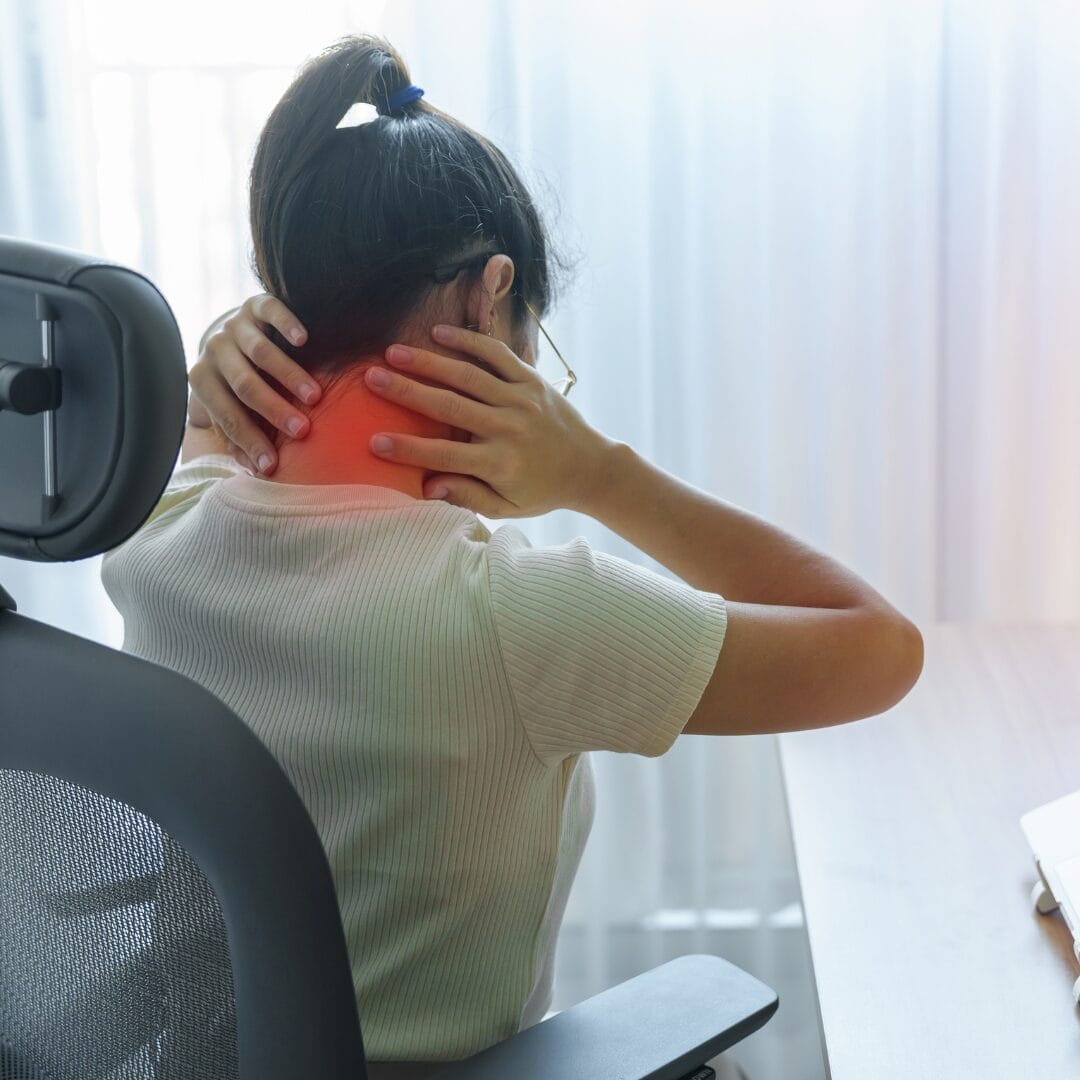
A generation ago, cervical spondylosis was a condition that appeared on X-rays of patients in their 50s and 60s. The discs in the neck had simply worn down over decades of normal ageing — an expected finding in older adults that was managed conservatively and largely accepted as part of growing older.
That picture has changed dramatically. Spine clinics across Hyderabad and India now regularly see patients in their mid-30s and early 40s — software engineers, designers, managers, students — with MRI findings that previously belonged to a much older demographic. The discs in the cervical spine are degenerating faster, earlier, in a population that sits in front of screens for eight to twelve hours a day with their head pushed forward.
Understanding what cervical spondylosis actually is, why it is arriving earlier than it should, and what the symptoms mean is the starting point for managing it properly at Pure Ortho Hospitals, Sainikpuri, Hyderabad.
What Is Cervical Spondylosis?
The cervical spine is the section of the spine running through the neck — seven vertebrae (C1 through C7) stacked between the skull and the thoracic spine. Between each pair of vertebrae sits a disc that absorbs shock and allows movement. The facet joints at the back of each vertebra provide stability and guide motion.
Cervical spondylosis describes the degenerative changes that develop in these structures over time — and increasingly, ahead of time. As discs lose their water content and height, the space between vertebrae narrows. The body responds by producing bone spurs (osteophytes) to try to stabilise the degenerated segment. These bone spurs can encroach on the spinal canal or the openings through which nerves exit — producing the symptoms that bring patients to a spine specialist.
The condition affects both the disc (spondylosis) and the surrounding joints. When only the discs are involved, it is cervical disc degeneration. When bone spur formation is prominent, it is cervical osteophytosis. Both fall under the broad term cervical spondylosis in clinical use.
Why Younger People in Hyderabad Are Getting It Earlier
The acceleration of cervical degeneration in younger adults is not a mystery. The biomechanics are well understood — and the numbers are striking.
Most people looking at a phone or a laptop screen below eye level hold their head at 30-45 degrees of forward tilt without realising it. At 45 degrees, the effective load on the cervical spine is more than four times the load in a neutral position. Maintain that position for six to eight hours a day, five days a week, for five to ten years — and the cumulative mechanical stress on the cervical discs becomes enormous.
This is why cervical spondylosis is no longer a condition of the elderly in urban India. It is a condition of prolonged screen use, sustained poor posture, sedentary desk jobs, and the specific demands of Hyderabad's IT and office economy.
Which Cervical Levels Are Most Commonly Affected
Cervical spondylosis does not affect all levels equally. Certain segments bear more mechanical load and degenerate more frequently.
Most Common
Highest mobility segment. Pain and tingling into shoulder, outer arm, and thumb. Bicep reflex may be reduced.
Second Most Common
Pain into back of arm, forearm, middle finger. Tricep reflex may be affected. Tricep weakness in severe cases.
Common
Shoulder pain and deltoid weakness. Pain does not usually radiate below the elbow.
Less Common
Pain and numbness into ring and little finger. Hand weakness. Important to distinguish from cubital tunnel syndrome.
Multi-level
Degeneration at several levels simultaneously — common in patients over 45 or with long-standing postural strain.
Symptoms of Cervical Spondylosis
Symptoms depend on which level is affected and whether the degeneration is compressing a nerve root, the spinal cord itself, or neither. Many people have cervical spondylosis visible on imaging with no symptoms at all — the disc has degenerated but is not pressing on anything. When symptoms are present, they fall into two distinct patterns.
Neck Pain and Stiffness
Aching or sharp pain in the neck, worse at end of day or after prolonged sitting. Difficulty turning the head fully.
Headaches at the Base of Skull
Cervicogenic headaches — originating in the upper cervical joints and muscles, radiating to the back of the head and temples.
Pain Into Shoulder or Arm
Aching or sharp pain radiating from the neck into the shoulder, upper arm, or forearm — following the pattern of the compressed nerve.
Numbness or Tingling in Hand
Pins-and-needles or altered sensation in specific fingers — the distribution depends on which nerve root is involved.
Arm or Hand Weakness
Difficulty with grip, dropping objects, or weakness lifting the arm — indicates nerve compression significant enough to affect motor function.
Grinding or Clicking Sound
Crepitus — a grinding or clicking sensation on neck movement. Common and often not serious, but warrants evaluation if accompanied by pain.
Cervical Radiculopathy vs Cervical Myelopathy — A Critical Distinction
When cervical spondylosis causes symptoms beyond neck pain, it is doing so through one of two mechanisms — and distinguishing between them determines the urgency and nature of treatment.
Cervical Radiculopathy
- Nerve root compression
- Pain, numbness, tingling in one arm
- Follows specific nerve distribution
- Arm weakness possible
- Usually one-sided
- Most cases respond to conservative treatment
Cervical Myelopathy
- Spinal cord compression
- Symptoms in both arms or legs
- Difficulty walking, balance problems
- Hand clumsiness, dropping things
- Bladder or bowel changes in severe cases
- Often needs surgical decompression
Myelopathy — spinal cord compression — is a more serious condition that can progress irreversibly if not treated. It does not always announce itself dramatically. Some patients simply notice that they are walking differently, their handwriting has worsened, or they are dropping objects more frequently. These symptoms in a patient with known cervical spondylosis require urgent evaluation.
See a Spine Specialist Without Delay If You Have
- Weakness or clumsiness in both hands simultaneously
- Difficulty walking, unsteady gait, or balance problems
- Weakness or numbness in the legs alongside neck symptoms
- Bladder or bowel dysfunction alongside neck or arm symptoms
- Rapid progression of arm weakness within days or weeks
These suggest spinal cord involvement. Call 8686868208 or visit Pure Ortho Hospitals, Sainikpuri immediately.
How Cervical Spondylosis Progresses — The Stages
Disc Degeneration
Disc loses height and water content. Mild neck stiffness. No nerve compression yet.
Osteophyte Formation
Bone spurs begin developing at disc margins. Neck movement may reduce further.
Nerve Root Involvement
Bone spurs or disc material begins narrowing nerve exit channels. Arm pain, tingling, or numbness appears.
Canal Narrowing
Significant canal stenosis. Spinal cord at risk. Myelopathy symptoms may begin.
How It Is Diagnosed at Pure Ortho Hospitals, Sainikpuri
Diagnostic process
- Clinical history — onset, exact symptom pattern, occupation, screen hours, previous episodes
- Physical examination — neck range of motion, reflexes, motor strength in arms, sensory testing, Spurling's test for nerve root irritation
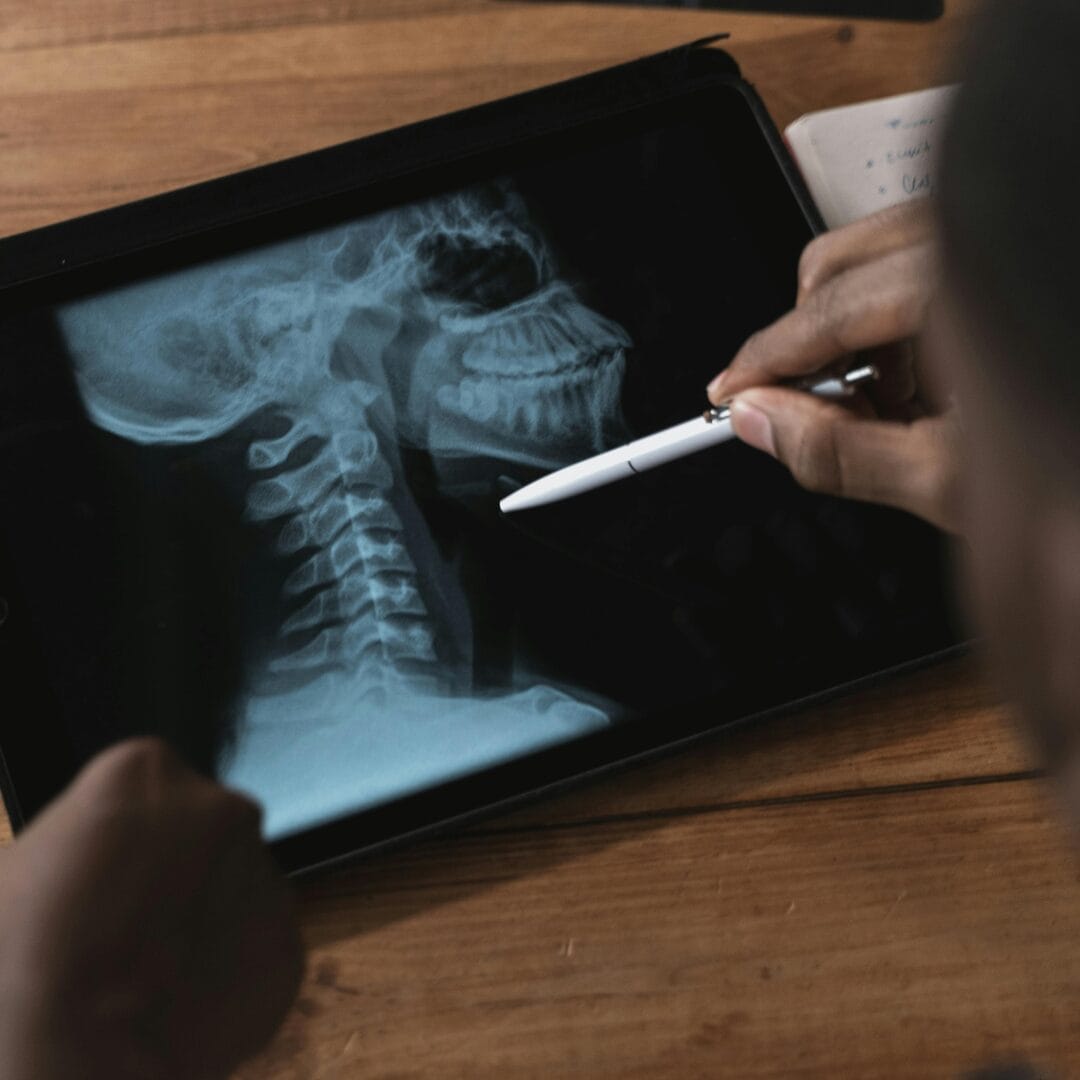
- X-ray — disc height, bone spur formation, alignment, instability
- MRI cervical spine — gold standard, shows disc condition, nerve compression, spinal cord involvement, soft tissue detail
- CT scan — used when bone detail is needed, particularly for surgical planning
- Nerve conduction study — if nerve damage quantification is needed
Treatment — Matched to the Stage and the Symptom
Most cervical spondylosis is managed without surgery. The approach depends entirely on what structures are involved, what symptoms are present, and how the condition has been progressing. At Pure Ortho Hospitals, Sainikpuri, treatment is determined by the patient's specific clinical picture — not a generic protocol.
Treatment options your spine specialist may discuss
- Activity modification and posture correction — addressing the screen and desk setup that is driving the degeneration
- Physiotherapy — neck strengthening, range of motion work, postural retraining, nerve mobilisation techniques
- Pain management — medications to control neck and arm pain during acute phases
- Cervical traction — gentle distraction of the cervical joints to reduce nerve root compression
- Cervical epidural or nerve root injection — targeted injection for severe radiculopathy not responding to physiotherapy
- Anterior cervical discectomy and fusion (ACDF) — surgery to remove the offending disc and stabilise the segment; for cases with significant nerve or cord compression
- Cervical disc replacement — motion-preserving surgical alternative to fusion for selected younger patients
- Posterior decompression — for multi-level myelopathy with canal stenosis
What the Hyderabad IT Workforce Specifically Needs to Know
Cervical spondylosis in working adults in Hyderabad has a specific driver that makes it different from the age-related version seen in older patients: it is being compressed into fewer years by sustained mechanical overload. Someone who develops cervical degeneration at 35 from ten years of screen work has decades of working life ahead of them — which means the management decisions made now carry far greater long-term significance.
The goal of early treatment in this population is not just pain relief — it is slowing the progression, preventing nerve root or cord involvement, and preserving function for the decades ahead. An employee at 35 who addresses cervical spondylosis with physiotherapy and posture correction has a very different ten-year trajectory than one who treats symptoms with painkillers and continues the same postural loading unchanged.
Pure Ortho Hospitals, Sainikpuri has seen this pattern consistently. Patients who come early — with neck pain and occasional arm tingling but no significant nerve involvement — leave with a physiotherapy plan and clear postural guidance. Patients who arrive five years later, after symptoms have progressed, face a more complex conversation.
Meet the Specialists at Pure Ortho Hospitals
Cervical spondylosis is managed by the Spine and Orthopaedic team at Pure Ortho Hospitals, Sainikpuri, with physiotherapy and pain management fully integrated.
Dr. Sai Krishna C.S
MS Ortho (University Gold Medalist), DNB Ortho, Fellowship in Spine Surgery
Dr. V.S. Abhilash Kumar S
MBBS, MS Ortho, FIJR, FISS (S.Korea, USA) — Clinical Director
Dr. G. Uday Sekhar Reddy
MBBS, MS Ortho, MCh Ortho
Dr. L. Sreeram
MPT (Ortho), FDOR, MIAP
Dr. L. Sri Dharani
BPT, MIAP, PTOTA (Canada)
Dr. B. Jayanth Varma
MBBS, Diploma in Anaesthesiology
Frequently Asked Questions
Other Departments at Pure Ortho Hospitals
Cervical spine care at Pure Ortho Hospitals, Sainikpuri is supported by a full orthopaedic and rehabilitation team under one roof.
Neck Pain in Your 30s Is Not Normal — Get It Assessed
Cervical spondylosis caught early responds well. Left unmanaged, it progresses to nerve and cord involvement that is significantly harder to treat. Visit Pure Ortho Hospitals, Sainikpuri, Hyderabad for a spine evaluation.
Call 8686868208More from Pure Ortho Hospitals
This article is for patient education only. Please consult a qualified spine specialist before making any treatment decisions.