
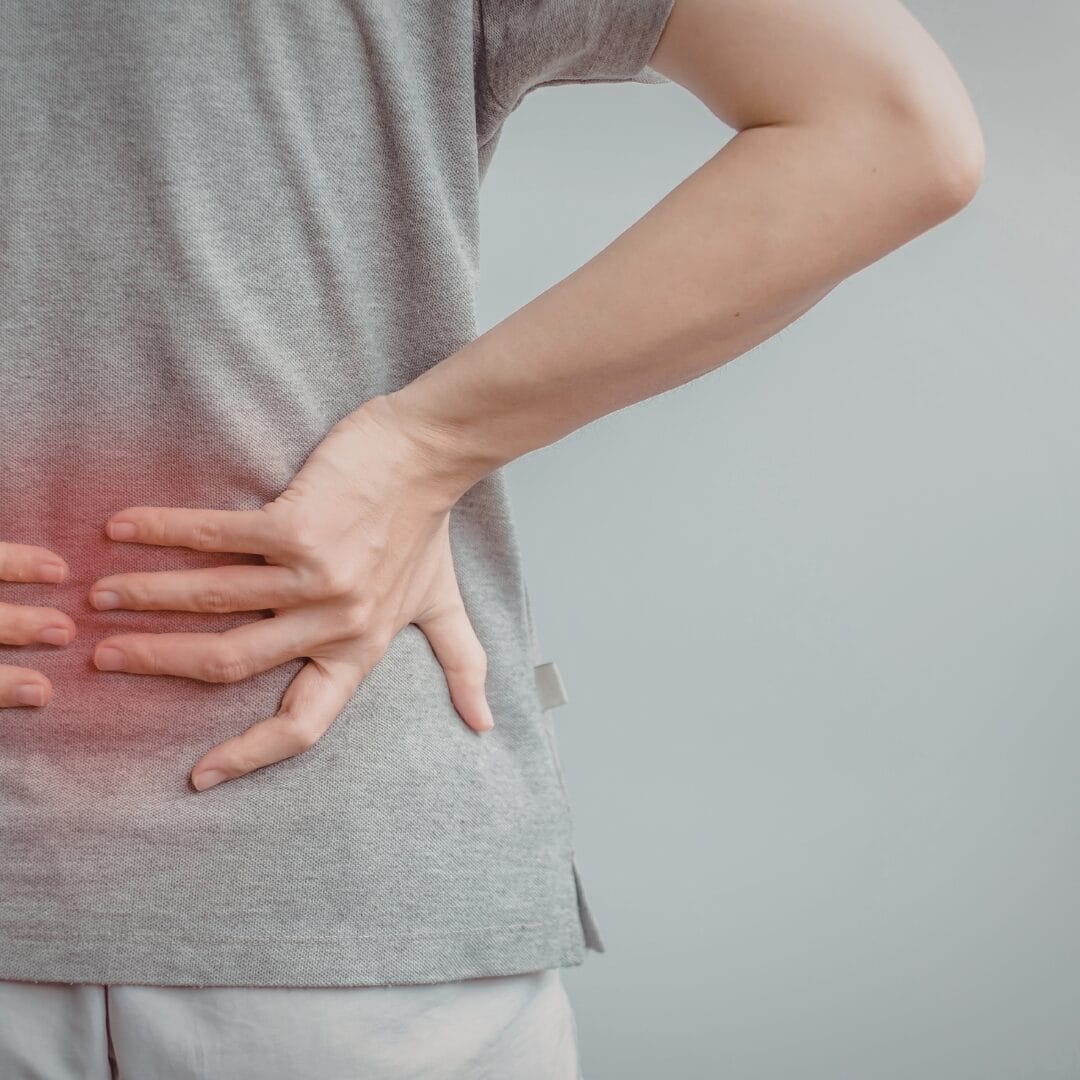
If you have been told you have an L5-S1 disc problem — or if your MRI report mentions a bulge, herniation, or degeneration at that level — you are likely dealing with one of the most common causes of sciatica in adults. The pain down the back of the leg, the aching in the heel, the weakness when walking upstairs — these are the hallmarks of L5-S1 disc problems compressing the S1 nerve root.
Understanding what this level is, why it fails, and what that means for your treatment is essential before any decisions are made. This guide covers all of that clearly — and explains when to visit Pure Ortho Hospitals, Sainikpuri for a proper evaluation.
What Is the L5-S1 Level?
The lumbar spine has five vertebrae — L1 through L5. Below L5 is the sacrum, a triangular bone that forms the back wall of the pelvis. The disc between L5 and the first sacral segment (S1) is called the L5-S1 disc — and it sits at the very bottom of the mobile spine, where it joins the fixed sacrum.
This junction point carries a unique combination of stresses. It bears the entire weight of the upper body. It absorbs the forces of walking, running, bending, and twisting. And unlike the vertebrae above it, L5-S1 has very limited ability to move in certain directions — which concentrates mechanical strain at this single disc rather than distributing it across multiple levels.
The result: L5-S1 is one of the most commonly degenerated, herniated, and surgically treated discs in the human body. It is a consistent finding in patients presenting with sciatica across all age groups in India.
How L5-S1 Is Different from L4-L5
These two levels are often mentioned together in MRI reports and are frequently confused by patients. They are adjacent, they share similar risk factors, and they can both cause sciatica. But they compress different nerve roots and produce distinctly different symptom patterns.
L4-L5 Disc Problem
- Compresses the L5 nerve root
- Pain radiates to outer shin and top of foot
- Foot drop — difficulty lifting the foot
- Weakness in great toe extension
- Numbness on top of foot or outer shin
L5-S1 Disc Problem
- Compresses the S1 nerve root
- Pain radiates down back of leg to heel
- Calf weakness — difficulty standing on tiptoe
- Reduced or absent ankle reflex
- Numbness on outer heel or sole of foot
These distinctions are clinically significant. A spine specialist can often identify which disc is involved from the symptom pattern alone — before even seeing the MRI. This is why physical examination is as important as imaging in spine care.
Why the L5-S1 Disc Is So Vulnerable
The L5-S1 level fails more frequently than other lumbar levels for several structural and mechanical reasons that go beyond simple wear and tear.
Why L5-S1 bears the greatest mechanical burden
- Positioned at the junction between the mobile lumbar spine and the fixed sacrum — all torsional force concentrates here
- Highest axial load in the spine — supports the entire weight of the upper body
- Greatest range of flexion-extension motion compared to any other lumbar level
- Increased shear force — particularly in patients with lumbar lordosis or spondylolisthesis
- Disc degeneration at this level often begins earlier than at other levels in genetically predisposed individuals
- Prolonged sitting increases L5-S1 disc pressure substantially — a major factor in desk workers and drivers
L5-S1 Disc Problem Symptoms — The S1 Nerve Pattern
Symptoms arise when the disc presses on the S1 nerve root, which exits the spine through the L5-S1 level and travels down the back of the leg. The S1 nerve controls several specific functions — which is why its compression produces a recognisable clinical picture.
Lower Back Pain
Deep, aching pain in the lower back, often worse after prolonged sitting or bending
Sciatica — Back of Leg
Pain radiating from the buttock down the back of the thigh, calf, and into the heel or outer foot — the S1 distribution
Calf Weakness
Difficulty rising on tiptoe — a hallmark sign of S1 nerve root involvement at L5-S1
Heel and Sole Numbness
Numbness, altered sensation, or tingling on the outer heel and sole — S1 nerve territory
Absent Ankle Reflex
The ankle jerk reflex may be reduced or absent — assessed clinically by the examining doctor
Pain Worse When Sitting
L5-S1 disc pressure increases substantially in seated positions — many patients find standing more comfortable than sitting
Not every patient with an L5-S1 disc problem has all these symptoms. Some have only back pain. Others have predominantly leg pain with minimal back symptoms. The pattern depends on how much the disc is pressing on the nerve, which part of the nerve is compressed, and the individual's anatomy.
Seek Immediate Evaluation
- Sudden loss of bladder or bowel control — possible cauda equina syndrome, a surgical emergency
- Rapidly progressive leg weakness within hours or days
- Numbness in the groin, inner thighs, or perineum (saddle area)
- Bilateral leg symptoms developing suddenly
These are medical emergencies. Call 8686868208 or visit Pure Ortho Hospitals 24x7 emergency without delay.
L5-S1 Disc Problem and Heel Pain — A Common Confusion
Many patients with L5-S1 disc problems are first seen for heel pain — and initially diagnosed with plantar fasciitis. This is a clinically important distinction that is frequently missed.
Plantar fasciitis typically produces pain on the underside of the heel, worst with the first steps in the morning and easing through the day. S1 nerve compression from L5-S1 disc problems produces heel pain that may be present through the day, is often associated with back or leg symptoms, and does not follow the morning-only pattern.
If you have heel pain alongside back pain or leg symptoms — or if plantar fasciitis treatment has not helped — a spine evaluation at Pure Ortho Hospitals is warranted. Both conditions can be assessed and distinguished in a single consultation.
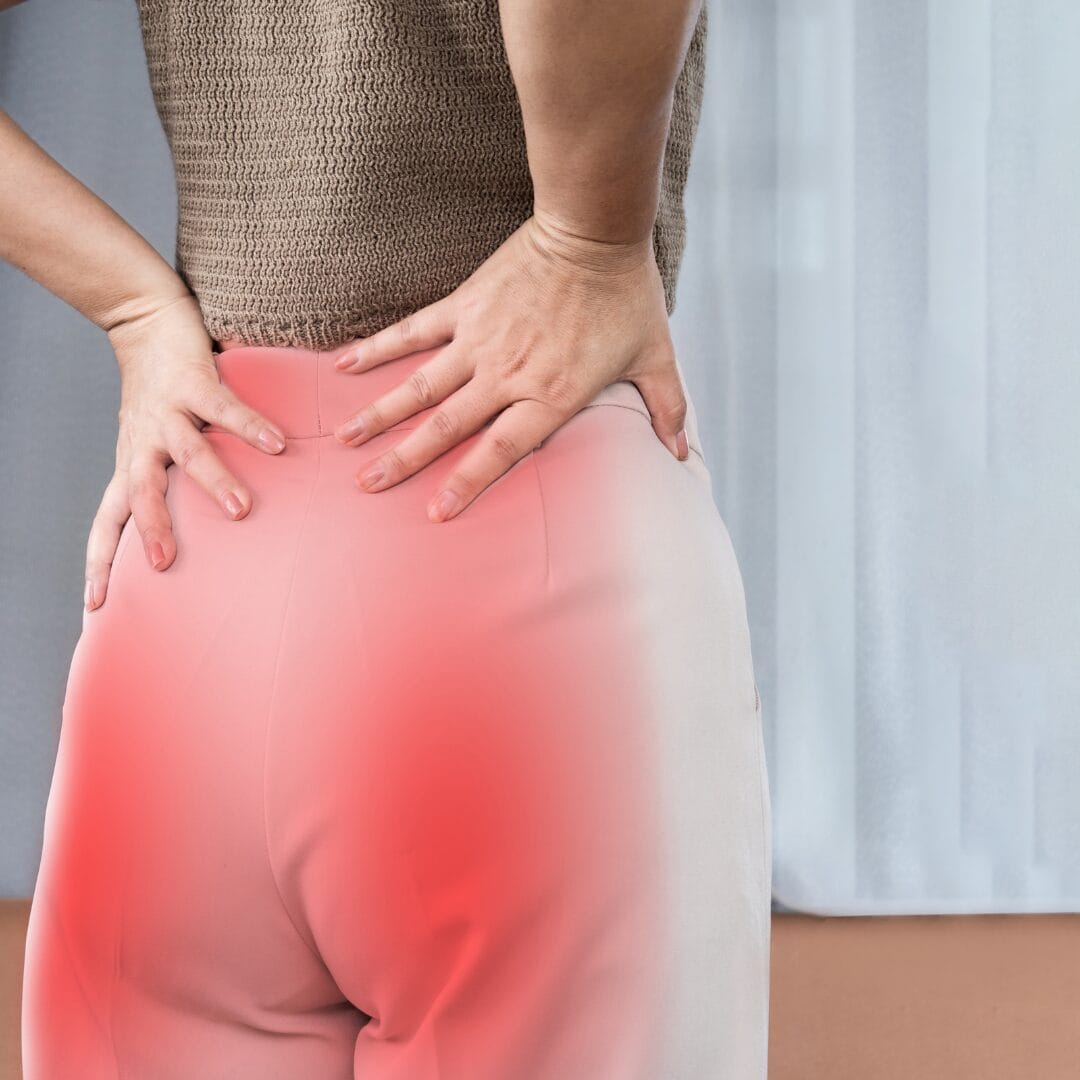
What Causes L5-S1 Disc Problems?
The causes are similar to other lumbar disc levels, but the mechanical factors specific to L5-S1 make certain causes more significant here than elsewhere in the spine.
Common contributing causes
- Age-related disc degeneration — the single most consistent underlying factor
- Spondylolisthesis — forward slippage of L5 on S1, unique to this level, increases disc stress significantly
- Prolonged sitting and desk work — increases disc pressure, common in IT and office professionals
- Heavy lifting with poor technique — acute disc herniation often triggered during bending and lifting
- High-impact sports or activities — repeated jarring force on the lumbosacral junction
- Obesity — increases axial load on the last disc in the spine
- Previous L4-L5 degeneration — compensatory overloading of L5-S1 when the adjacent level stiffens
- Genetic predisposition — disc composition and resilience are partly hereditary
What Is Spondylolisthesis at L5-S1?
Spondylolisthesis is a condition unique in significance to the L5-S1 level. It refers to the forward slippage of the L5 vertebra on the S1 below it. When this occurs, the L5-S1 disc is placed under shear stress in addition to compression — which accelerates disc degeneration and can cause significant nerve compression.
Spondylolisthesis has grades from 1 to 4, based on how far L5 has slipped. Mild grades often respond to conservative management. Severe grades with significant nerve compression may require surgical stabilisation. Whether this applies to your case requires imaging and clinical assessment at Pure Ortho Hospitals.
How L5-S1 Disc Problems Are Diagnosed
Diagnostic process at Pure Ortho Hospitals
- Clinical history — exact pain pattern, leg symptoms, bowel and bladder function, what makes it worse
- Physical examination — straight leg raise test, S1 reflex, muscle strength in calf and foot, sensation testing
- X-ray — assesses disc height, identifies spondylolisthesis, rules out fractures
- MRI scan — shows disc condition, nerve root compression, canal dimensions, soft tissue in detail
- Nerve conduction study — if nerve damage quantification is needed
- Correlation of imaging with symptoms — essential to confirm which level is causing the problem
Treatment Options — From Conservative to Surgical
Most L5-S1 disc problems — including significant herniations — improve substantially with well-managed conservative treatment. The body has mechanisms to reduce disc inflammation over time, and many patients who appear to need surgery at first assessment respond well to a structured non-surgical programme.
Treatment paths your specialist may discuss
- Physiotherapy — targeted strengthening, movement retraining, nerve mobilisation techniques
- Pain and anti-inflammatory management — medications to reduce acute pain and nerve irritation
- Activity modification — reducing high-load positions while keeping the patient active
- Epidural steroid injection — targeted injection to reduce S1 nerve root inflammation in selected cases
- Endoscopic discectomy — keyhole surgery removing the disc fragment pressing on the S1 nerve
- Microdiscectomy — microsurgical disc removal under magnification
- Spinal fusion at L5-S1 — for cases with spondylolisthesis and significant instability
The distinction between conservative management and surgery is not based on MRI appearance alone. It is based on symptom severity, duration, whether progressive nerve damage is present, and how the patient's condition has responded to structured non-surgical treatment. This is why a specialist consultation is the essential first step.
Recovery — What to Expect
Week 1-4
Acute pain phase. Medication, rest from aggravating activities, gentle movement.
Week 4-8
Physiotherapy commences. Pain typically reducing. Nerve symptoms may persist longer.
Month 2-4
Strengthening progresses. Most patients see significant improvement.
Month 4-6
Functional recovery ongoing. Most non-surgical patients reach substantial relief.
After Surgery
Endoscopic/microdiscectomy: walking day one, light activity 1-2 weeks, full recovery 6-8 weeks.
Nerve symptoms — numbness, tingling, weakness — often recover more slowly than pain. Nerve healing is measured in months, not weeks. Improvement in nerve-related symptoms after treatment is a gradual process that requires patience alongside active rehabilitation.
Meet the Specialists at Pure Ortho Hospitals
L5-S1 disc problems are managed by the Spine and Orthopaedic team at Pure Ortho Hospitals, with physiotherapy and pain management integrated from the start.
Dr. Sai Krishna C.S
MS Ortho (University Gold Medalist), DNB Ortho, Fellowship in Spine Surgery
Dr. V.S. Abhilash Kumar S
MBBS, MS Ortho, FIJR, FISS (S.Korea, USA) — Clinical Director
Dr. G. Uday Sekhar Reddy
MBBS, MS Ortho, MCh Ortho
Dr. Pudari Manoj Kumar
MBBS, MS Ortho, FIJR, FIRJR
Dr. L. Sreeram
MPT (Ortho), FDOR, MIAP
Dr. L. Sri Dharani
BPT, MIAP, PTOTA (Canada)
Frequently Asked Questions
Other Departments at Pure Ortho Hospitals
Spine care at Pure Ortho Hospitals is supported by a complete multidisciplinary team — all under one roof in Sainikpuri, Hyderabad.
L5-S1 Symptoms Need a Proper Evaluation
Sciatica, heel pain, calf weakness — these symptoms have a root cause. Visit Pure Ortho Hospitals, Sainikpuri for a thorough spine evaluation and a clear, honest treatment plan.
Call 8686868208More from Pure Ortho Hospitals
This article is for patient education only. Please consult a qualified spine specialist before making any treatment decisions.