

Robotic Knee Replacement in Hyderabad — Is It Better Than Traditional Surgery?
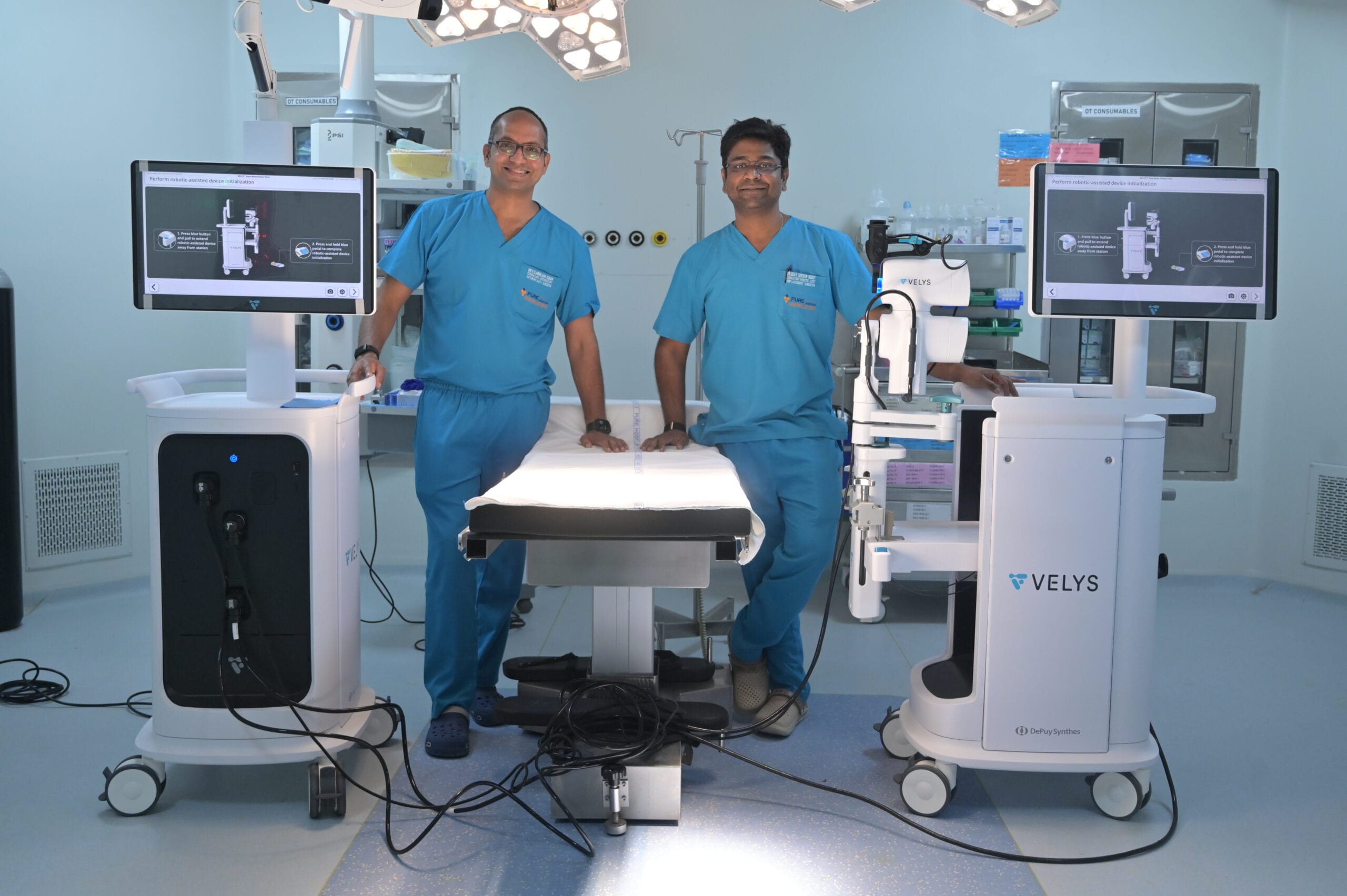
Knee replacement surgery has been performed successfully for decades. Traditional manual surgery has restored mobility for millions of patients globally — and continues to produce good outcomes in experienced hands. So why has robotic knee replacement surgery become the fastest-growing development in joint replacement, and why are patients across Hyderabad specifically asking for it?
The answer is not that traditional surgery was wrong. It is that robotic-assisted surgery addresses the one variable that traditional surgery cannot fully control: the precision of bone preparation and implant positioning in a joint that is unique in its geometry for every single patient. A knee implant placed even a few degrees off its ideal position can cause the replacement to feel unnatural, wear unevenly, or fail sooner than expected. Robotic surgery was built to eliminate that variable.
This is what robotic knee replacement is, how it compares to traditional surgery, and what it means for patients considering this procedure at Pure Ortho Hospitals, Sainikpuri, Hyderabad.
What Is Robotic Knee Replacement Surgery?
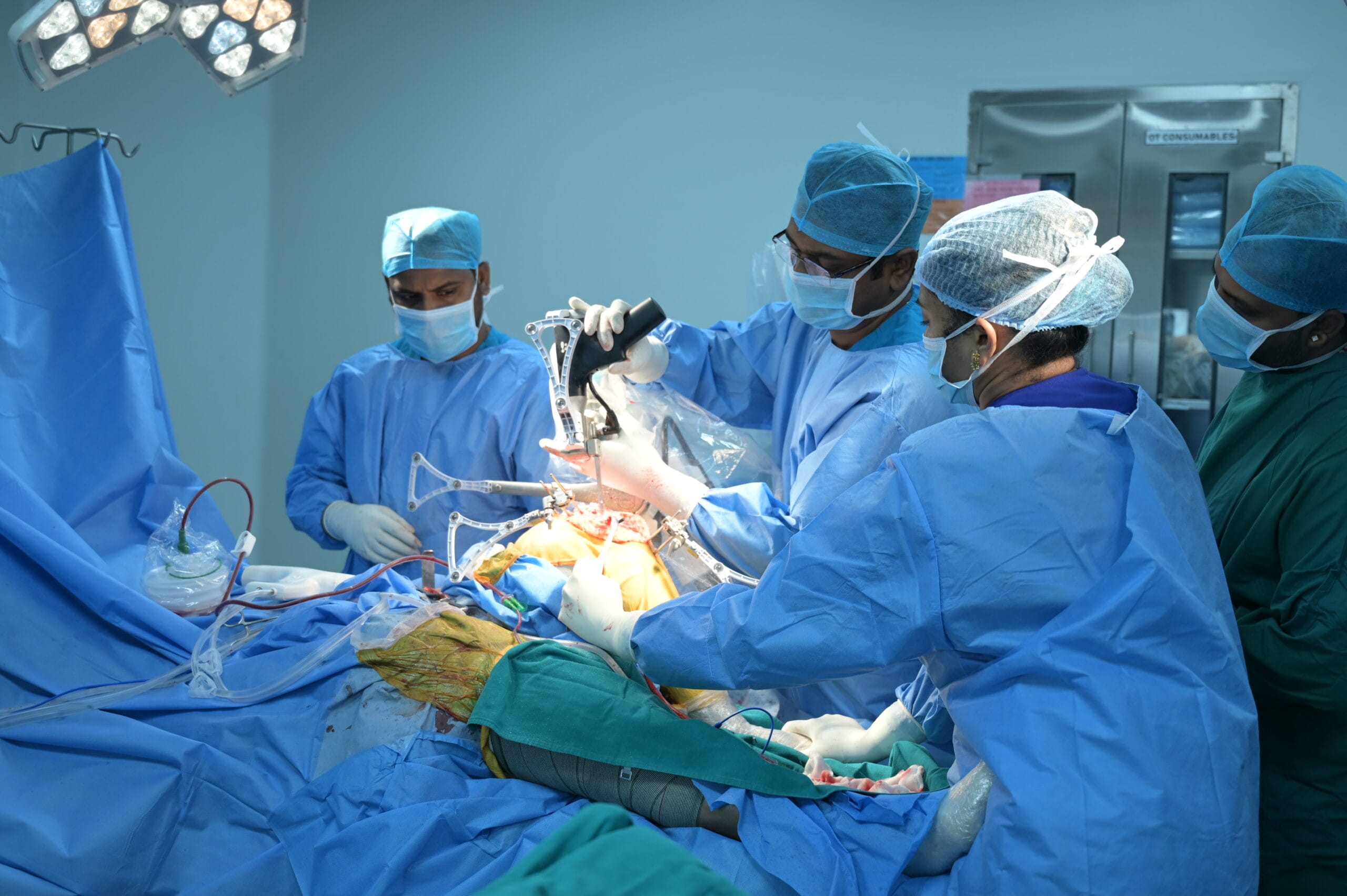
Robotic knee replacement is not a procedure performed by a robot. It is a procedure performed by a surgeon — assisted by a robotic arm system that enforces the surgical plan in real-time. The distinction matters because the surgeon's judgement, training, and decision-making remain central. The robotic system adds a layer of mechanical precision that the human hand alone cannot reliably achieve at the micron level.
The process has three key components that distinguish it from traditional surgery: pre-operative 3D planning from the patient's own imaging, real-time tracking of the knee's position during surgery, and robotic arm guidance that constrains bone cutting to the pre-planned boundaries.
How Robotic Knee Replacement Works — Step by Step
Pre-operative CT scan
A CT scan of the patient's knee is taken before surgery. This gives the system the precise three-dimensional geometry of that specific patient's bone — not an average or a template.
3D surgical plan
The software creates a 3D model of the knee and the surgeon plans the exact size, position, and alignment of the implant before the operation begins. Bone cuts are planned to the fraction of a millimetre.
Intraoperative tracking
During surgery, small tracking arrays attached to the bone allow the system to track the knee's precise position in real-time — accounting for any movement during the procedure.
Robotic-arm guided bone preparation
As the surgeon performs the bone cuts, the robotic arm actively resists any deviation from the pre-planned boundaries. It is mechanically impossible to cut more bone than planned — eliminating the risk of over-resection.
Implant placement and verification
The implant is placed into the prepared bone surfaces. The system verifies alignment in real-time and the surgeon confirms final position before the procedure concludes.
Robotic vs Traditional Knee Replacement — A Clear Comparison
Traditional Knee Replacement
- Manual bone cutting with mechanical guides
- Guides calibrated to average anatomy
- Alignment depends on surgeon's skill and judgement
- No real-time deviation prevention
- Does not account for soft tissue balance intraoperatively
- Proven long track record globally
- Available at most orthopaedic hospitals
Robotic Knee Replacement
- Robotic-arm guided bone cutting
- Patient-specific 3D plan from CT scan
- Alignment verified to sub-millimetre accuracy
- Robotic arm prevents unplanned deviation
- Real-time soft tissue balancing assessment
- Faster recovery, less surrounding tissue damage
- Available at select hospitals including Pure Ortho, Sainikpuri
Traditional knee replacement in experienced hands still produces excellent outcomes. The value of robotic surgery is not that it makes a bad surgeon good — it is that it makes a good surgeon more precise, and it removes the variability that comes from working manually in a small space with complex anatomy.
Advantages of Robotic Knee Replacement
Sub-Millimetre Implant Accuracy
Implant alignment within fractions of a degree — not achievable consistently with manual instruments alone.
Patient-Specific Planning
Every surgical plan is built from the patient's own CT scan, not an average template. Unique anatomy is accounted for before the first incision.
Less Bone Removed
Robotic guidance ensures only the planned amount of bone is removed — no more. Preserves bone stock for better implant anchoring and future revisions if needed.
Less Soft Tissue Damage
More controlled surgical movements and smaller operative field reduce damage to surrounding muscles, ligaments, and soft tissue.
Faster Initial Recovery
Less tissue trauma means less post-operative swelling and pain, allowing earlier mobilisation and faster return to walking.
Better Long-Term Implant Survival
Accurate alignment reduces uneven wear on the implant surfaces — a key factor in long-term survival of the knee replacement.
More Natural Knee Feel
Patient satisfaction studies consistently show higher rates of "natural knee feel" after robotic replacement — attributed to more precise ligament balance and alignment.
Real-Time Soft Tissue Balancing
The system allows the surgeon to assess and adjust ligament tension dynamically during surgery — a level of intraoperative data not available in traditional surgery.
Who Is a Good Candidate for Robotic Knee Replacement in Hyderabad?
Robotic knee replacement is not exclusively for any particular type of patient — but certain groups benefit most from the precision it offers.
Younger Active Patients
Patients under 65 who want to return to active life — the higher precision of robotic surgery is expected to translate to better long-term implant survival over a more active life.
Patients with Complex Anatomy
Previous fractures, deformity, or unusual bone geometry — cases where average surgical guides would not fit well and patient-specific planning is particularly valuable.
Partial Knee Replacement Candidates
Partial (unicompartmental) knee replacement requires even greater precision than total replacement — robotic guidance significantly improves outcomes.
Patients with High Activity Expectations
Those planning to return to sport, travel extensively, or maintain highly active lifestyles post-surgery — the natural knee feel and durability of robotic alignment supports this.
Second Opinion Patients
Patients who have been told they need knee replacement and want the most advanced option available in Hyderabad before proceeding.
Whether robotic replacement is the right choice for your specific case is determined by a thorough evaluation — including X-rays, MRI or CT, and clinical assessment — at Pure Ortho Hospitals, Sainikpuri. Not every knee replacement needs to be robotic. But for patients who are candidates, the precision advantage is significant and measurable.
What Is the Mako Robotic System?
Mako is one of the most widely used robotic platforms for knee and hip replacement globally — produced by Stryker, one of the world's leading orthopaedic device companies. The Mako system uses CT-based pre-operative planning, an AccuStop technology that prevents the saw from cutting outside planned boundaries, and a haptic robotic arm that the surgeon actively controls throughout the procedure.
The Mako system is approved for total knee replacement, partial knee replacement, and total hip replacement. Clinical studies on Mako robotic surgery consistently demonstrate better alignment accuracy, more bone conservation, and higher patient satisfaction scores compared to manual techniques.
Pure Ortho Hospitals, Sainikpuri uses advanced robotic technology for joint replacement — making it one of the few hospitals in the Sainikpuri and Secunderabad area offering this level of precision for patients across eastern Hyderabad.
Recovery After Robotic Knee Replacement — What to Expect
Day 1
Physiotherapy begins. Walking with support. Pain managed effectively.
Day 2-3
Discharge in most cases. Walking with aids. Swelling managed at home.
Week 2-4
Walking improves steadily. Stairs managed. Driving possible for some.
Week 6
Most patients walking without aids. Significant pain reduction.
Month 3
Return to most daily activities. Physiotherapy ongoing.
Month 6
Full recovery for most patients. Return to active lifestyle.
Recovery after robotic knee replacement is generally faster in the initial weeks compared to traditional surgery — largely because less soft tissue damage means less post-operative swelling and pain. The physiotherapy programme is equally important regardless of surgical technique — the best implant placement in the world still requires proper rehabilitation to achieve full function.
Cost of Robotic Knee Replacement in Hyderabad
Robotic knee replacement in Hyderabad costs more than traditional surgery — the robotic system, patient-specific planning, and specialised instruments carry an additional overhead. However, the cost difference is not as large as many patients expect, and most health insurance policies in India now include coverage for robotic joint replacement procedures.
Factors affecting cost in Hyderabad
- Type of replacement — total vs partial (unicompartmental) vs bilateral
- Implant brand and material — standard, high-flex, or premium implants
- Length of hospital stay and post-operative support
- Pre-operative CT scan and planning fee
- Physiotherapy programme included or separate
- Health insurance coverage — most major policies cover robotic replacement
For a clear, personalised cost estimate specific to your knee condition, bring your X-rays and insurance policy documents to a consultation at Pure Ortho Hospitals, Sainikpuri. The team will provide a detailed breakdown including what your insurance is expected to cover.
Meet the Robotic Knee Replacement Specialist at Pure Ortho Hospitals
Dr. V.S. Abhilash Kumar S
Dr. V.S. Abhilash Kumar S holds international fellowships in joint replacement and sports surgery from South Korea and the USA. As Clinical Director for Sports Medicine and Robotic Joint Replacement at Pure Ortho Hospitals, Sainikpuri, he leads the robotic knee and hip replacement programme — bringing the same level of precision surgery available at leading international centres to patients across Hyderabad.
Dr. G. Uday Sekhar Reddy
MBBS, MS Ortho, MCh Ortho
Dr. Pudari Manoj Kumar
MBBS, MS Ortho, FIJR, FIRJR
Frequently Asked Questions
Other Departments at Pure Ortho Hospitals
Find Out If Robotic Knee Replacement Is Right for You
Not every knee needs a robot. But if yours does — Pure Ortho Hospitals, Sainikpuri has the technology and the specialist team to deliver it. Consult Dr. V.S. Abhilash Kumar S in Hyderabad.
Call 8686868208More from Pure Ortho Hospitals
This article is for patient education only. Please consult a qualified orthopaedic surgeon before making any treatment decisions.