

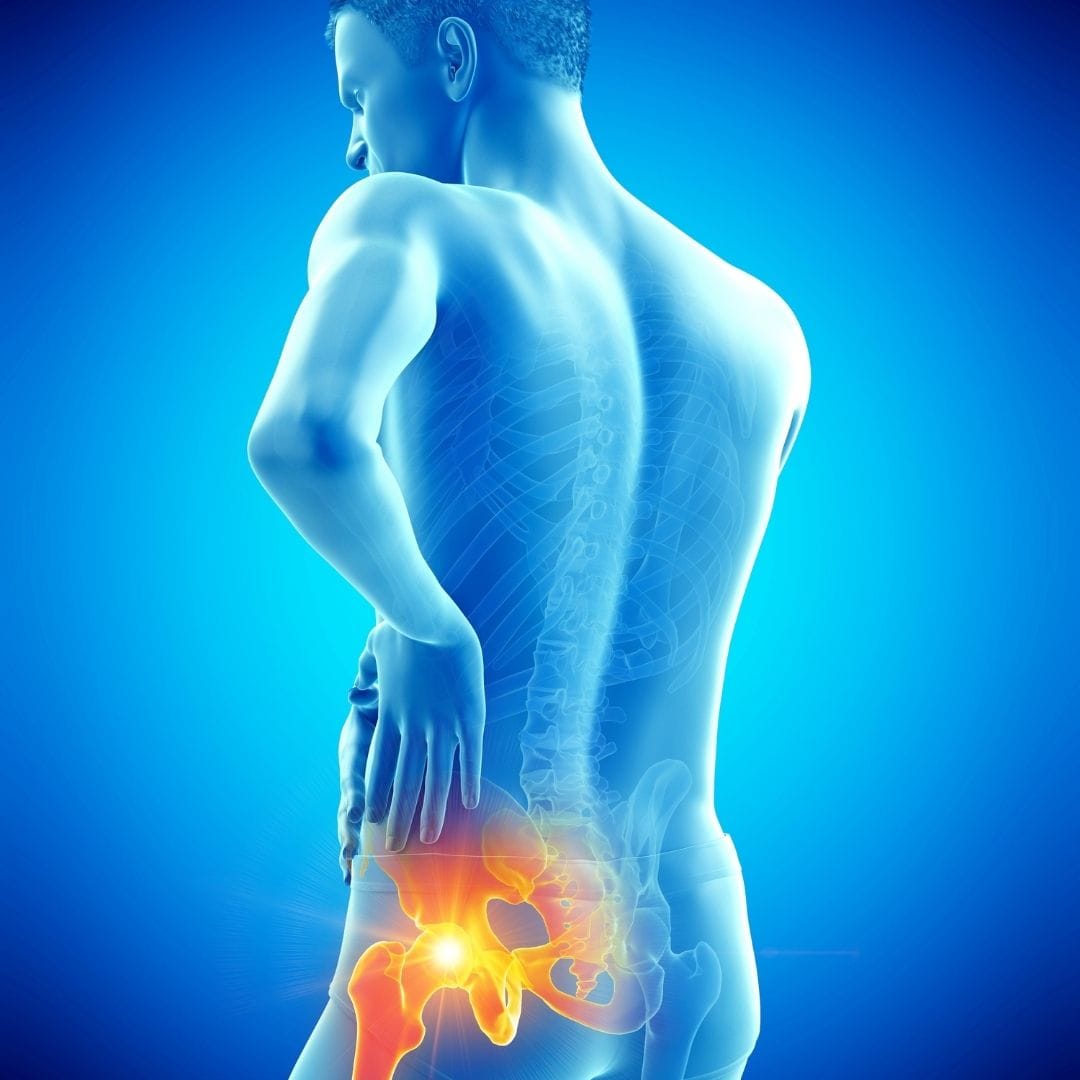
The first question almost every patient asks after being diagnosed with avascular necrosis of the hip is the same: do I need surgery? It is a reasonable question, and the answer matters enormously — because it depends almost entirely on how early the diagnosis was made.
Avascular necrosis (AVN) is the death of bone tissue from loss of blood supply to the femoral head — the ball-shaped top of the thighbone that forms the hip joint. Early-stage AVN, caught before the bone collapses, presents genuine options for joint-preserving management. Late-stage AVN, by which time the femoral head has collapsed and arthritis has developed, typically has one reliable treatment: hip replacement.
This blog answers the questions most frequently asked by patients at Pure Ortho Hospitals, Sainikpuri, Hyderabad about AVN — especially the ones who want to understand whether surgery can be avoided.
The Stage Determines Everything
AVN is not one condition — it is a spectrum of conditions, classified by stage. Treatment decisions in AVN are primarily determined by stage, not symptoms. This is why staging with MRI is the first essential step, even when pain is relatively mild.
Stage 1
MRI shows early changes. X-ray normal. Often no symptoms. Best window for joint preservation.
Stage 2
X-ray shows density changes. Femoral head shape intact. Conservative or core decompression.
Stage 3
Crescent sign — subchondral fracture. Collapse beginning. Non-surgical rarely sufficient.
Stage 4
Femoral head flattening. Joint surface damage. Bone grafting or replacement discussed.
Stage 5
Significant arthritis. Joint space narrowed. Hip replacement the standard treatment.
What Non-Surgical Treatment for AVN Involves
When patients ask about "treatment without surgery," they usually mean they want to avoid hip replacement. This is a reasonable goal — and for Stage 1 and Stage 2 AVN, it is sometimes achievable. But it requires understanding what non-surgical management actually consists of.
Non-surgical management options for early AVN
- Protected weight-bearing — reducing load through the affected hip using crutches or a walking aid, to prevent further mechanical stress on the weakening bone
- Eliminating the cause — stopping or reducing steroid use (in consultation with the prescribing doctor), addressing alcohol use, treating underlying blood disorders
- Bisphosphonate medication — reduces bone resorption and may slow the progression of bone collapse in early stages; evidence is supportive though not definitive
- Lipid-lowering agents — used in steroid-related AVN where abnormal fat metabolism is a contributing factor
- Anticoagulation — for AVN cases related to clotting disorders or hypercoagulable states
- Physiotherapy — maintains hip range of motion and surrounding muscle strength; does not reverse AVN but supports function
- Regular MRI monitoring — to assess whether the AVN is stable, progressing, or responding to management
The critical caveat: none of these measures reverse established necrosis or restore blood supply to dead bone. They are most relevant in the very earliest stages as an attempt to slow progression. Many patients diagnosed at Stage 1 or early Stage 2 still eventually progress to the point where surgery is needed — non-surgical management buys time, not a cure in most cases.
Core Decompression — What It Actually Is
Core decompression is frequently misunderstood. Patients often hear the term in the context of "avoiding hip replacement" and assume it is a conservative non-surgical measure. It is actually a surgical procedure — but a joint-preserving one, very different from hip replacement.
What core decompression involves
- Performed under anaesthesia, usually as a day procedure
- A drill is introduced through the femoral neck into the necrotic area of the femoral head, creating one or more channels
- These channels relieve intraosseous pressure — an important contributor to pain and to the vascular compromise in early AVN
- The channels also create pathways through which new blood vessel growth (neovascularisation) can occur
- Bone marrow concentrate or growth factors may be injected at the same time to further support healing
- Protected weight-bearing follows for 6-8 weeks after the procedure
- Most effective in Stage 1 and Stage 2 AVN before bone collapse — success rate declines significantly once collapse has begun
Core decompression does not guarantee that hip replacement will be avoided. It offers the best chance of slowing or halting progression in Stage 1-2 AVN, but a proportion of patients still progress despite the procedure. It remains a valuable option because its recovery is relatively straightforward and it does not make future hip replacement more difficult.
Post-COVID AVN — A Specific Concern in India
Since 2021, orthopaedic clinics across India have seen a significant increase in AVN presentations in a new group of patients: those who received high-dose corticosteroids during COVID-19 treatment. The mechanism is well-established — corticosteroids disrupt fat metabolism in ways that compromise blood flow to the femoral head, and high-dose short-course steroid use during COVID has produced the same AVN risk as prolonged steroid use for other conditions.
Post-COVID AVN typically presents 3-12 months after steroid treatment, in patients who are often in their 30s and 40s and had no prior hip problems. Many have bilateral involvement — both hips affected. This population is particularly important to identify early because their age makes hip replacement a less attractive long-term option than for older patients, and the joint-preserving window is most valuable for them.
Get an MRI If You Had COVID Steroid Treatment and Have Hip Pain
- Any groin or hip pain developing 3-18 months after COVID steroid treatment
- Pain in both hips — bilateral involvement is common in post-COVID AVN
- Hip pain in your 30s or 40s with no prior hip problems and COVID steroid history
- Normal hip X-ray with persistent pain — X-ray misses early AVN
Early MRI diagnosis keeps non-surgical options on the table. Call Pure Ortho Hospitals, Sainikpuri: 8686868208
When Hip Replacement Becomes the Right Answer
Hip replacement should not be viewed as a failure of AVN management — it is the appropriate and reliable solution when AVN has progressed beyond the stage where joint-preserving treatment is viable. Modern hip replacement at Pure Ortho Hospitals, Sainikpuri produces excellent long-term outcomes, and a 40-year-old with Stage 4-5 AVN who receives a well-placed hip implant can expect decades of good function.
When hip replacement is the appropriate discussion
- Stage 3 with significant bone collapse and persistent pain despite conservative management
- Stage 4 — established femoral head deformity with joint surface damage
- Stage 5 — significant arthritis with joint space narrowing
- Any stage with unacceptable pain and functional limitation
- Failed joint-preserving surgery — progression despite core decompression
- Younger patients with advanced disease where bone grafting has been considered and deemed not viable

Symptoms — What Brings Patients to a Specialist
Groin Pain
Deep, aching pain in the groin — the most common early symptom of hip AVN
Pain Worse with Activity
Initially only with walking or stairs, progressively developing at rest and at night
Stiffness
Reduced range of motion — difficulty crossing legs, putting on socks, getting in and out of a car
Limp
Develops as pain worsens — weight shifted to reduce load on the affected hip
Pain Radiating to Knee
Hip conditions frequently refer pain to the thigh and knee — in children especially, knee pain can be the presenting complaint of hip disease
Rapid Onset in Young Adults
AVN can develop and progress rapidly — particularly in post-COVID and steroid-related cases. Pain that worsens over weeks rather than months warrants urgent evaluation.
Meet the Specialists at Pure Ortho Hospitals
Dr. G. Uday Sekhar Reddy
MBBS, MS Ortho, MCh Ortho
Dr. V.S. Abhilash Kumar S
MBBS, MS Ortho, FIJR, FISS (S.Korea, USA) — Clinical Director
Dr. Pudari Manoj Kumar
MBBS, MS Ortho, FIJR, FIRJR
Dr. L. Sreeram
MPT (Ortho), FDOR, MIAP
Dr. Kranthi Kumar Reddy
MBBS, MD, C.Diab
Dr. B. Jayanth Varma
MBBS, Diploma in Anaesthesiology
Frequently Asked Questions
Other Departments at Pure Ortho Hospitals
Early MRI Is the Only Way to Know Your Options
If you have risk factors for AVN and hip pain, waiting is the worst strategy. Early staging at Pure Ortho Hospitals, Sainikpuri, Hyderabad determines whether joint-preserving treatment is still possible for you.
Call 8686868208More from Pure Ortho Hospitals
This article is for patient education only. Please consult a qualified orthopaedic surgeon before making any treatment decisions.