

Why Office Workers Get Back Pain Constantly — And What Actually Fixes It
Back pain is the single most common reason people miss work globally. And unlike back pain from lifting or injury, office back pain is slow, insidious, and builds over months or years of the same daily habits. By the time it hurts enough to pay attention to, the underlying muscle imbalances and disc changes have usually been developing for a while.
The good news: most office back pain is preventable and reversible. But only if you understand what is actually causing it — not just "bad posture," which is too vague to act on.

6 Reasons Your Office Job Is Hurting Your Back
Sitting loads your discs more than standing
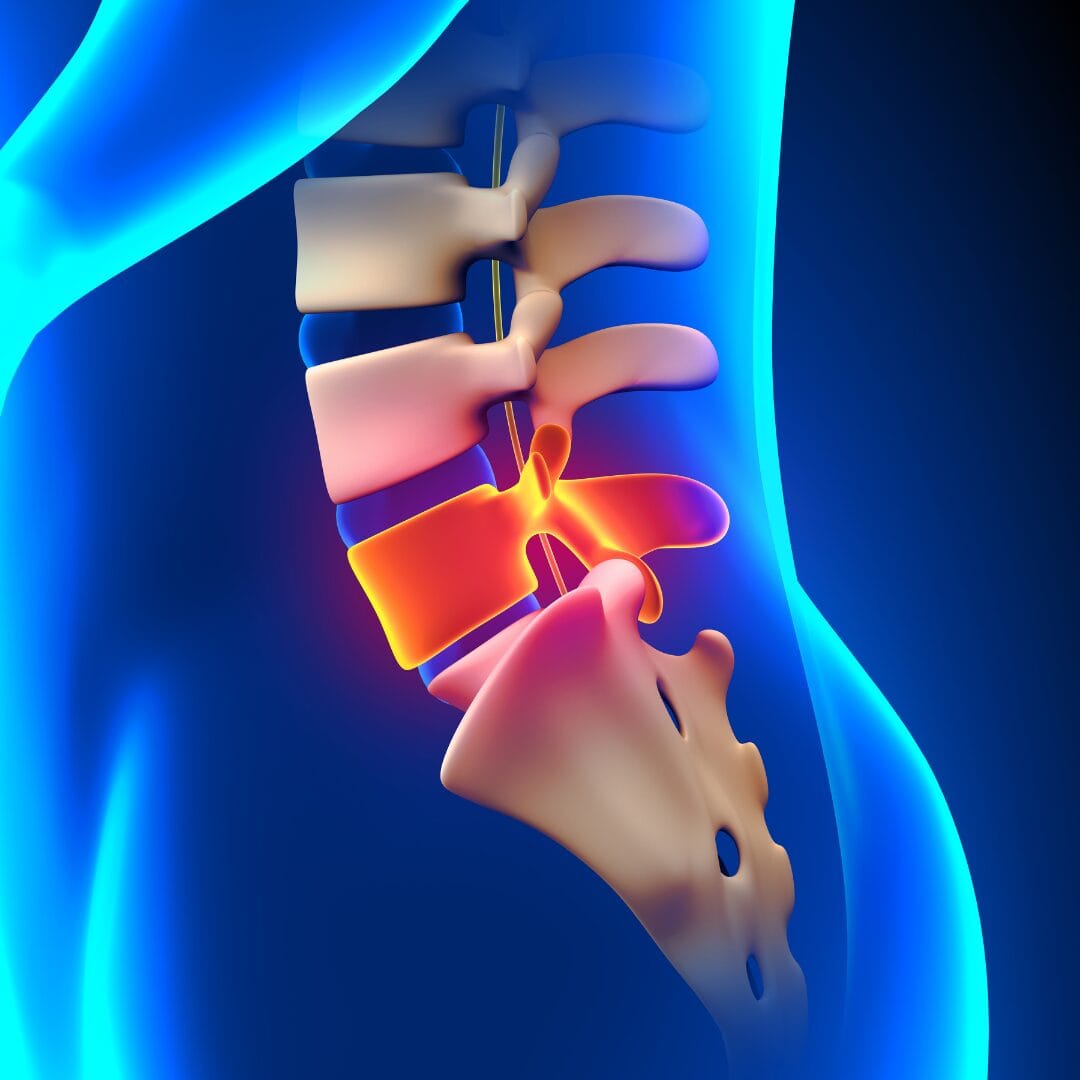
When you sit — especially slouched — the lumbar discs absorb 40% more pressure than when you stand. Eight hours of this, five days a week, adds up to significant cumulative disc loading. Discs get their nutrition from movement; prolonged static sitting starves them.
Your hip flexors shorten and tighten
The iliopsoas — the primary hip flexor — runs from the lumbar spine through the pelvis to the femur. Prolonged sitting keeps it shortened. Over time it loses flexibility and starts pulling the lower lumbar spine forward, creating excessive lordosis and compressing the facet joints.
Your glutes and core switch off
Sitting deactivates the gluteal muscles (which stabilise the pelvis) and reduces core muscle engagement. These muscles are the primary dynamic supports of the lumbar spine. When they are weak from disuse, the spine relies entirely on passive structures (ligaments, discs, joint capsules) — which are not designed for that role.
Forward head position strains the upper back
For every 2.5cm the head moves forward from its neutral position, the effective load on the cervical and upper thoracic spine roughly doubles. A head positioned 5–7cm in front of the shoulders — typical for someone looking at a monitor that's too low — creates enormous sustained load on the upper back and neck, which manifests as upper back pain and headaches.
Rounded shoulders compress the thoracic spine
The typical desk posture — shoulders rolled forward, thoracic spine flexed — compresses the anterior vertebral bodies and stretches the posterior muscles and ligaments chronically. The result is thoracic stiffness, restricted rotation, and pain that radiates between the shoulder blades.
No movement means no recovery
The spine recovers from sustained loading through movement — walking, standing, changing position. Office work eliminates most of these natural recovery opportunities. The back never fully unloads during the day, so the cumulative fatigue of sitting compounds hour by hour.
8 Things You Can Do Starting Today
Move for 2 minutes every 30 minutes
This is the single highest-impact change. Stand up, walk to the water cooler, do 5 hip circles. Anything that breaks the static loading pattern. Set a phone reminder if needed. No ergonomic chair compensates for sitting for 3 hours straight.
Fix your monitor height — eyes level with the top third of the screen
If your monitor is too low, your head drops forward all day. Stack books under it, buy a monitor arm, or use a laptop stand. This single adjustment reduces upper back and neck load more than any other ergonomic change.
Your feet should be flat on the floor, knees at 90 degrees
If your chair is too high, your feet dangle and your pelvis tilts backward, flattening the lumbar curve. If it's too low, your hips flex more than 90 degrees, increasing disc pressure. Adjust the chair height until your knees are level with or just below your hips, feet flat.
Use lumbar support — real support, not just a feature
The lumbar support on your chair should maintain the natural inward curve of your lower back. If it doesn't reach your lumbar spine (it often doesn't — most chair backs touch the mid-back), roll up a small towel and place it at belt level. Check that you feel a gentle support, not a push.
Stretch your hip flexors daily
Get into a half-kneeling position (one knee on the floor, other foot forward). Gently push your hips forward until you feel a stretch in the front of the hip of the kneeling leg. Hold 30 seconds each side. Do this every morning before sitting down. Tight hip flexors pulling on the lumbar spine cause more office back pain than almost anything else.
Strengthen your glutes — they hold your pelvis steady
Glute bridges: lie on your back, knees bent, feet flat. Push through your heels to lift your hips until your body forms a straight line from shoulders to knees. Hold 2 seconds, lower slowly. 3 sets of 15 daily. Takes 5 minutes, directly counters the glute shutdown from sitting.
Strengthen your core — not with crunches
Crunches flex the spine under load — the opposite of what you want. Bird-dog: on hands and knees, extend the opposite arm and leg simultaneously, hold 5 seconds, alternate. Dead bug: lie on your back, extend opposite arm and leg while keeping your lower back pressed to the floor. These build the deep stabilising muscles that support the lumbar spine without compressing it.
Walk — at least 20 minutes a day outside of work
Walking loads and unloads the spine rhythmically, drives nutrient exchange into the discs, and activates the glutes and core in a functional pattern. People who walk 20 minutes daily report significantly less back pain than those who don't — independent of what chair they use at work.
Quick Daily Routine — 10 Minutes
- Morning (before sitting): Hip flexor stretch — 30 sec each side; Cat-cow — 10 reps; Thoracic rotation — 8 reps each side
- During work: Stand up for 2 minutes every 30 minutes. Walk to get water. Use the stairs.
- Evening: Glute bridges — 3×15; Bird-dog — 3×10 each side; Child's pose — 60 seconds
- Daily: 20-minute walk — morning, evening, or lunch. The timing doesn't matter; the consistency does.
When Self-Management Is Not Enough
Most postural back pain responds to the measures above within 4–6 weeks. But some back pain has a structural cause that exercises and ergonomics cannot address. At that point, continuing to self-manage delays treatment and can allow the underlying problem to progress.
Visit a Spine Specialist If You Have Any of These
- Back pain lasting more than 6 weeks without improvement despite ergonomic changes and exercise
- Pain that radiates down the leg, especially below the knee — this suggests nerve compression (sciatica or disc herniation), not purely postural pain
- Numbness, tingling, or weakness in either leg or foot
- Pain severe enough to wake you from sleep, or that is worst first thing in the morning and improves through the day (possible inflammatory spinal condition)
- Back pain in someone under 40 who has not had a clear precipitating cause — younger people should not have significant structural back pain from sitting alone
- Any change in bladder or bowel control with back pain — this is a medical emergency
Our Spine Specialists
Dr. Pudari Manoj Kumar
Dr. G. Uday Sekhar Reddy
Dr. L. Sreeram
Dr. L. Sri Dharani
Frequently Asked Questions
Other Departments
Back Pain That Won't Quit After 6 Weeks?
Don't let a treatable problem become a chronic one. Our spine specialists at Pure Ortho Hospitals, Sainikpuri will tell you exactly what is causing your pain and what will actually fix it — not just manage it.
Call 8686868208More from Pure Ortho Hospitals
This article is for patient education only. Please consult a qualified specialist before making any treatment decisions.