

PRP Injection for Joint Pain — How It Works, Who It Helps, and What to Realistically Expect
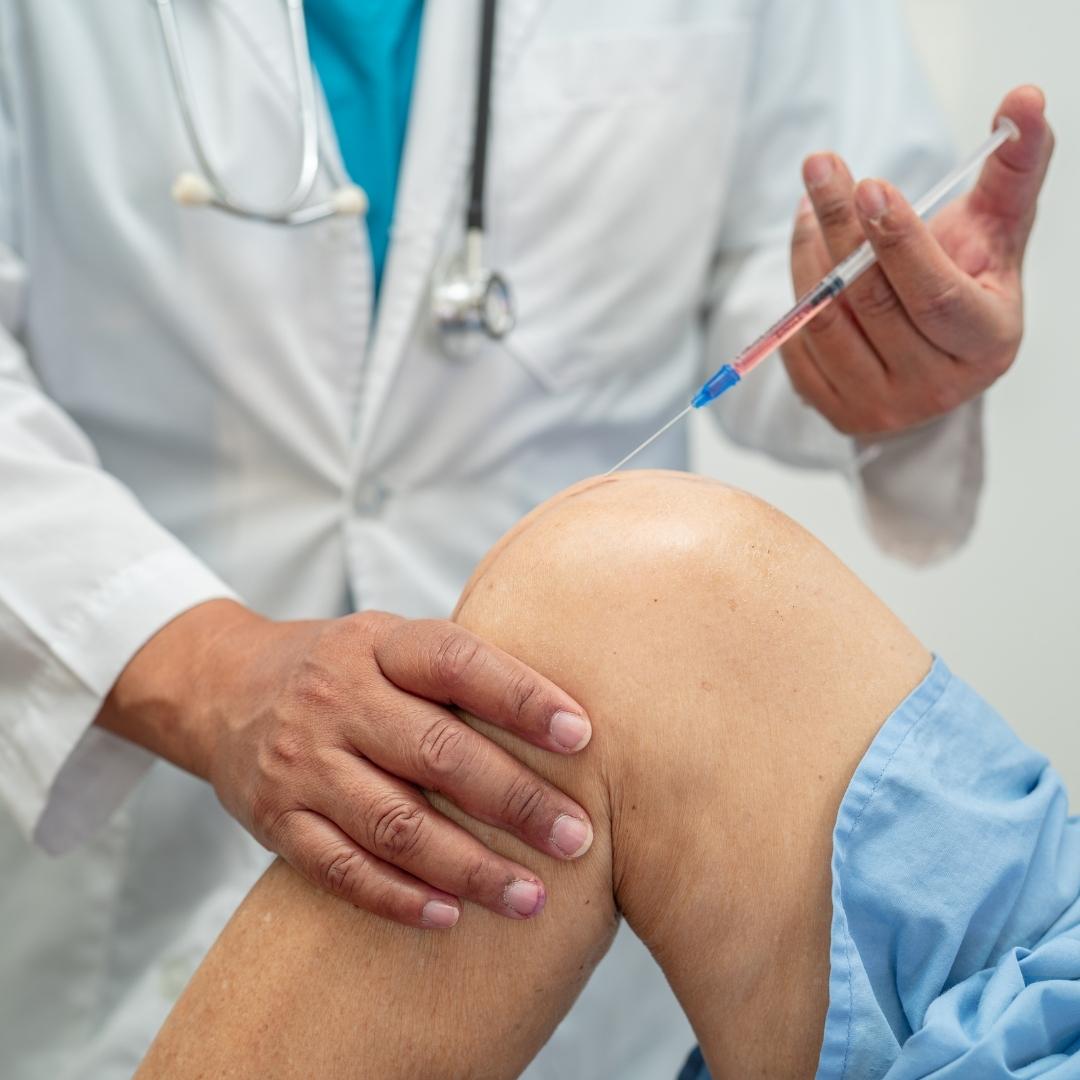
Every few years a treatment enters orthopaedics with significant enthusiasm, often from sports medicine, and PRP is one that has earned its place. Not because it reverses joint degeneration — it does not — but because in the right patients with the right conditions, it reduces pain and improves function in ways that more conservative treatments do not, without the side effects of repeated corticosteroid injections and without surgery.
India's rapidly ageing population has made this conversation more urgent. With osteoarthritis affecting an estimated 15% of Indians over 60, and with joint replacement surgery out of reach or out of preference for many, regenerative treatments like PRP are a meaningful bridge. This article explains what PRP actually does, where the evidence is clear, what the procedure involves, and what realistic outcomes look like.
What PRP Is — and What It Is Not
PRP stands for Platelet-Rich Plasma. It is made from the patient's own blood. The blood is drawn (typically 20-60 ml), placed in a centrifuge, and spun at specific speeds that separate blood components by density. The result is a layer of plasma highly concentrated with platelets — typically 3-8 times the concentration found in normal blood.
Platelets are not just clotting agents. They contain alpha granules packed with growth factors — including Platelet-Derived Growth Factor (PDGF), Transforming Growth Factor-Beta (TGF-β), Vascular Endothelial Growth Factor (VEGF), Insulin-Like Growth Factor (IGF-1), and Epidermal Growth Factor (EGF). When activated, these growth factors signal tissue repair and cell proliferation. In a joint environment, they appear to modulate the inflammatory state, stimulate chondrocyte (cartilage cell) activity, and alter the joint fluid composition.
What PRP is not: it is not a cartilage replacement. It does not regrow cartilage that has been lost. It does not reverse the structural changes of severe osteoarthritis. It works by modifying the biological environment of the joint to reduce pain and slow progression — not by structurally rebuilding tissue that is already gone.
A corticosteroid injection provides fast, potent anti-inflammatory relief — but repeated use can accelerate cartilage breakdown and cause tissue damage at the injection site. PRP uses the body's own biology to reduce inflammation and promote repair. The response is slower (2-6 weeks) but may be more durable, and there is no risk of the cartilage-degrading effect associated with repeated cortisone use.
The Conditions Where PRP Has the Best Evidence
Knee Osteoarthritis
Multiple well-designed randomised controlled trials show PRP superior to saline placebo and comparable or superior to hyaluronic acid injections for pain and function in early to moderate knee OA (Kellgren-Lawrence grade 1-3). Most effective when cartilage loss is not yet complete.
Lateral Epicondylitis (Tennis Elbow)
One of the strongest evidence bases for PRP. Chronic tennis elbow — tendinopathy of the common extensor origin — responds significantly better to PRP than to cortisone at 6-month and 12-month follow-up. Cortisone provides faster initial relief but inferior longer-term outcomes.
Plantar Fasciitis
Chronic plantar fasciitis unresponsive to physiotherapy and stretching responds well to PRP. Studies show statistically significant improvement in pain scores and return to function. Often used after 3-6 months of conservative treatment failure.
Rotator Cuff Tendinopathy
Partial rotator cuff tears and chronic tendinopathy — not complete ruptures — respond to PRP. Studies show improvement in pain and shoulder function scores. Complete tears still require surgical repair; PRP addresses the tendinopathic tissue around partial injuries.
Achilles Tendinopathy
Chronic Achilles tendinopathy — particularly mid-portion tendinopathy that has not responded to eccentric loading programmes — shows clinically meaningful improvement with PRP in randomised trials. Insertional tendinopathy has more variable results.
Hip Osteoarthritis
Less studied than knee OA but with growing evidence. Hip PRP shows improvement in pain and function scores at 6 months compared to baseline, though randomised data comparing it to active comparators is limited. Technically more demanding — requires image guidance.
PRP vs. Other Injection Options
The Procedure — Step by Step
Assessment and Imaging
Before PRP, the orthopaedic specialist reviews X-rays and MRI to confirm the diagnosis, grade the severity of the joint or tendon condition, and determine whether PRP is the appropriate treatment. Severe end-stage arthritis with complete cartilage loss (bone-on-bone) is generally better served by joint replacement than PRP.
Blood Draw
20-60 ml of blood is drawn from the arm vein — the same as a routine blood test. No special preparation is required before the procedure. NSAIDs and aspirin are typically stopped 5-7 days before to avoid interference with platelet function.
Centrifugation
The blood is placed in a sterile centrifuge and spun for approximately 15 minutes. The spinning separates the blood into red blood cells (bottom), platelet-poor plasma (top), and the platelet-rich layer (middle, drawn off and prepared for injection). The entire preparation happens in the clinic — no external laboratory is required.
Activation (Optional)
Some protocols activate the platelets with calcium chloride or thrombin to trigger growth factor release before injection. Others use unactivated PRP, relying on natural activation from collagen in the tissue after injection. Both approaches have evidence; the choice depends on the condition and the treating physician's protocol.
Ultrasound-Guided Injection
The PRP is injected into the joint or tendon under real-time ultrasound guidance at Pure Ortho Hospitals. Ultrasound guidance significantly improves accuracy — particularly for the hip, shoulder, and smaller joints where blind injection risks missing the target. Local anaesthetic is applied to the skin before the injection for comfort.
Post-Injection Protocol
Rest for 24-48 hours after the injection. A post-injection flare — increased soreness — is common for 48-72 hours and should be managed with ice and paracetamol only. NSAIDs are avoided for 2-3 weeks, as they suppress the inflammatory response that PRP is designed to harness. Physiotherapy is typically resumed after 1 week.
What to Expect — A Realistic Timeline
Injection Day
Procedure takes 45-60 minutes. Rest recommended for the remainder of the day.
Post-injection Flare
Increased soreness is normal and expected — it indicates the biological response is occurring. Ice and paracetamol for comfort. No NSAIDs.
Return to Light Activity
Walking and low-impact movement can resume. Avoid high-impact activities. Physiotherapy may restart.
Early Improvement (Some Patients)
Some patients notice improvement in this window. Others take longer — this is not a sign the treatment has not worked. NSAIDs can resume after 3 weeks if needed.
Review Appointment
Assessment of response. If a second injection is part of the protocol, it is typically given at this stage. Most patients see meaningful improvement by this timepoint.
Full Effect
Maximum benefit is typically seen at 3-6 months. This is also the timepoint used in most clinical trials for outcome assessment.
Consider Repeat Treatment
If benefit has started to wane, a repeat injection can be considered. Responders typically maintain benefit for 12-18 months per treatment cycle.
Who Is Not a Good Candidate for PRP
PRP Is Not Appropriate For
- Severe end-stage osteoarthritis with complete cartilage loss (grade 4, bone-on-bone) — joint replacement is the appropriate treatment
- Complete tendon ruptures — structural repair is needed before biologic support
- Active joint infection (septic arthritis) — any injection into an infected joint is contraindicated
- Active inflammatory arthritis flare (rheumatoid, psoriatic) — disease modification and rheumatology management takes precedence
- Blood disorders, platelet dysfunction, or active anticoagulation therapy
- Active cancer, particularly haematological malignancy
- Skin infection over the planned injection site
Common Misconceptions
"PRP regrows cartilage"
PRP does not regrow lost cartilage. It modulates the biological environment to reduce inflammation and may slow further loss — but it does not replace structural tissue.
PRP reduces pain and slows progression
In appropriate patients, PRP reduces joint pain, improves function, and may slow the rate of further joint degeneration — a meaningful clinical benefit.
"If PRP doesn't work in 2 weeks, it failed"
PRP works biologically over weeks to months. Expecting corticosteroid-speed results misunderstands the mechanism. Most patients see improvement at 6-8 weeks.
Post-flare soreness is a good sign
The 48-72 hour post-injection flare indicates the growth factors are activating the body's repair processes. It is not a sign of failure or adverse reaction.
"PRP works for everyone with joint pain"
PRP is effective for specific conditions and stages. It does not work equally well for all joint pain. Appropriate patient selection by an orthopaedic specialist is essential.
Results depend on patient selection
Early to moderate OA, tendinopathies, and specific conditions at appropriate stages have the best outcomes. The diagnosis and severity determine suitability.
"PRP completely avoids joint replacement"
In severe arthritis, PRP is not an alternative to joint replacement. It may delay the need in carefully selected patients, but it is not a substitute for structural intervention when that becomes necessary.
PRP can meaningfully delay surgery in some patients
For patients with early-moderate OA who are not yet candidates for or ready for joint replacement, PRP can provide 12-18 months of significant pain relief and functional improvement.
Broader Regenerative Options
PRP is the most established and evidence-supported regenerative treatment in orthopaedics today, but it sits within a wider field that includes:
- Bone Marrow Aspirate Concentrate (BMAC) — contains mesenchymal stem cells alongside platelets and growth factors. More complex to prepare, more expensive, and with a growing evidence base particularly for cartilage defects. At an earlier evidence stage than PRP for most indications.
- Hyaluronic Acid (Viscosupplementation) — not a regenerative treatment, but a lubricant injection that restores joint fluid viscosity. Different mechanism from PRP, can be used in combination or as an alternative depending on the clinical picture.
- Prolotherapy — injection of hyperosmolar dextrose to trigger a local repair response. Older technique with a specific evidence base, particularly for ligament laxity and certain tendinopathies.
At Pure Ortho Hospitals, the choice between these options — or combination approaches — is made after a full assessment of the diagnosis, severity, and treatment history. There is no single regenerative injection that is right for every patient.
Before Your PRP Appointment — Preparation Checklist
- Stop NSAIDs (ibuprofen, naproxen, diclofenac) 5-7 days before the injection
- Stop aspirin 7-10 days before (check with your cardiologist if on aspirin for cardiac reasons before stopping)
- Stay well hydrated — adequate hydration makes blood draw easier and may support platelet quality
- No alcohol for 48 hours before the procedure
- Arrange transport — driving immediately after is possible for most, but having someone with you is recommended
- Wear loose, easy-to-remove clothing over the injection site
- Bring all previous X-rays and MRI reports for the specialist to review
Our Regenerative Orthopaedics Specialists
Dr. V.S. Abhilash Kumar S
Dr. G. Uday Sekhar Reddy
Dr. Sai Krishna C.S
Dr. L. Sreeram
Frequently Asked Questions
Other Departments
Want to Know If PRP Is Right for Your Joint Condition?
PRP works well for specific conditions at the right stage. The first step is an assessment with an orthopaedic specialist who can review your imaging and recommend the appropriate treatment. Book a consultation at Pure Ortho Hospitals, Sainikpuri, Hyderabad.
Call 8686868208More from Pure Ortho Hospitals
This article is for patient education only. Please consult a qualified specialist before making any treatment decisions.