
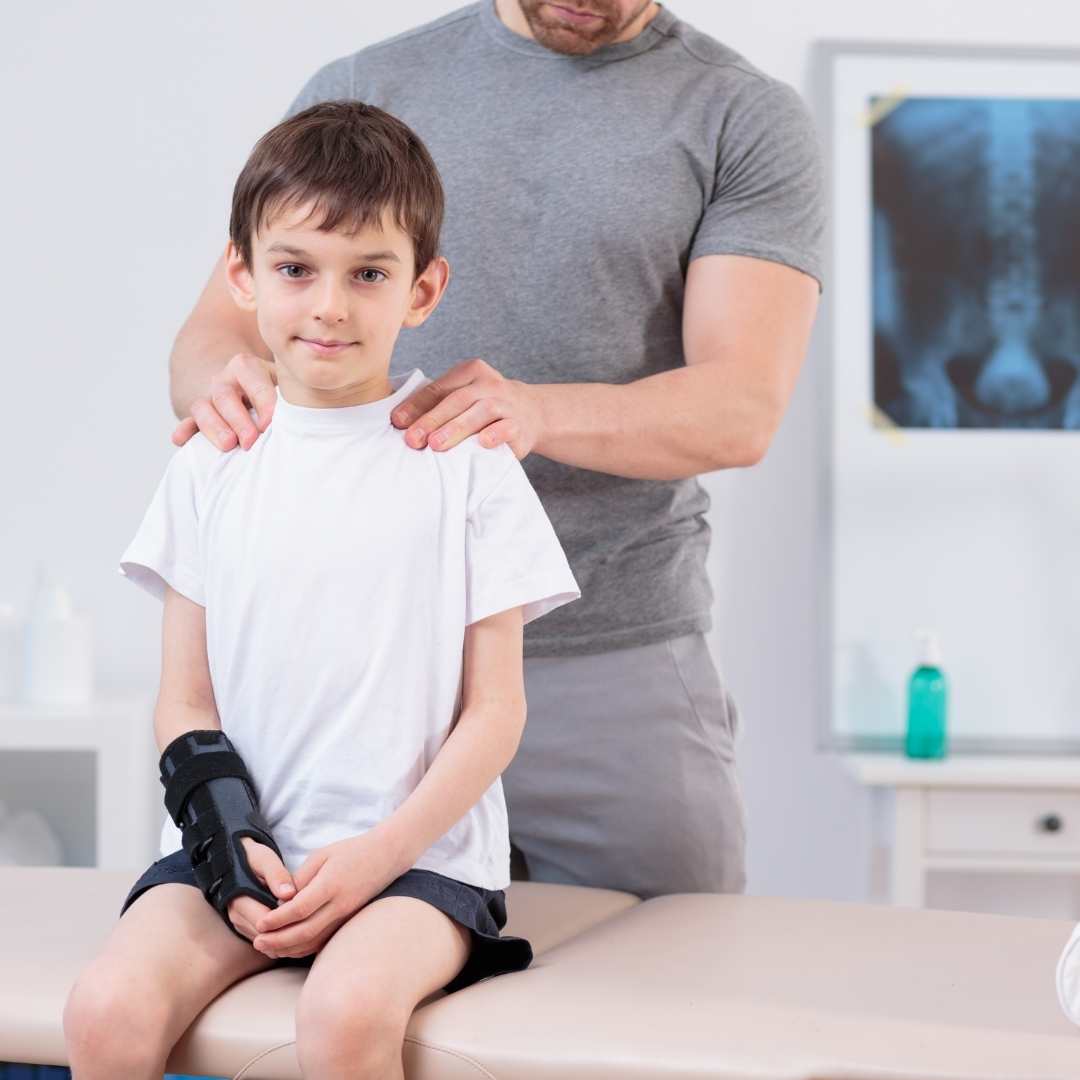
When a parent notices that their child walks differently, complains of leg pain at night, has feet that seem too flat, or has a spine that does not look straight, the natural first question is whether this is normal. Many childhood orthopaedic findings are part of normal development and correct on their own. Some require monitoring. A few require early intervention to prevent long-term problems.
The challenge for parents is knowing which is which — and knowing when a visit to a specialist is genuinely warranted versus when watchful waiting is the right approach. This guide covers the most common paediatric bone and joint questions that parents in Hyderabad bring to Pure Ortho Hospitals, Sainikpuri.
Why Children Are Not Small Adults
Children's bones contain growth plates — areas of developing cartilage near the ends of bones where growth occurs. These plates are softer and more vulnerable than surrounding bone, making them the weakest point in a child's skeleton during injury. A force that sprains a ligament in an adult may fracture a growth plate in a child — which is why children's injuries cannot be assessed or treated with the same assumptions as adult injuries.
Children's bones also remodel more rapidly than adult bone, allowing them to correct some deformities that would be permanent in adults. This is both an advantage (mild deformities can self-correct) and a reason timing matters — interventions that use this remodelling capacity are most effective at specific windows of skeletal development.
Normal Developmental Milestones — What Looks Wrong But Is Not
Normal Developmental Findings by Age — Parents' Reference
Flat feet — arch not yet developed. Bow legs (genu varum) — normal until age 2. In-toeing from foot or tibial rotation — usually self-corrects.
Bow legs beginning to straighten. Knock-knees (genu valgum) developing — normal developmental stage. Flat feet still common.
Knock-knees peak around age 3-4 and gradually straighten. Arch beginning to develop. Growing pains common 3-12 years.
Most developmental variants should have self-corrected. Persistent flat feet, bow legs, or knock-knees beyond this age warrant evaluation.
Rapid growth phase — scoliosis screening important. Spondylolysis in young athletes. Apophyseal injuries at growth plate attachment sites.
Common Paediatric Orthopaedic Conditions
Flat Feet (Pes Planus)
Very common in young children — the arch develops gradually until age 6. Flexible flat feet that form an arch on tiptoe are almost always normal. Rigid flat feet, painful flat feet, or flat feet with a tight Achilles tendon warrant evaluation. Most children with flat feet have no functional problems.
Bow Legs (Genu Varum)
Normal and expected in children under 2. Should progressively correct as the child begins walking. Bow legs persisting beyond age 3, severe bowing, or one leg significantly more bowed than the other warrants evaluation to rule out Blount's disease or nutritional rickets.
Knock-Knees (Genu Valgum)
Peak at ages 3-4 and gradually resolve by age 7-8. A physiological process of normal leg alignment development. Severe knock-knees, those not resolving by age 8, or accompanied by pain or limp warrant specialist review.
In-Toeing
Feet pointing inward during walking. Most cases in young children are due to normal rotational variants in the foot, tibia, or hip — correcting spontaneously by age 8-10. Persistent, severe, or worsening in-toeing beyond this age, or cases causing significant tripping, may require assessment.
Scoliosis
Lateral curvature of the spine — can develop during adolescent growth spurts. Early detection allows for better management before skeletal maturity. Visible signs: one shoulder higher than the other, one hip more prominent, rib hump when bending forward. Annual screening during adolescence is valuable.
Growing Pains
Aching or throbbing pain in the thighs, calves, or behind the knees — typically in the evenings or at night in children aged 3-12. Both legs are usually affected. The child is pain-free in the morning and active during the day. Considered a normal part of development. Localised bone pain, single-limb pain, or daytime pain requires evaluation.
Perthes Disease
Avascular necrosis of the femoral head in children aged 4-10. Causes a painless limp initially, progressing to hip and groin pain. Early diagnosis allows for protective management to preserve the hip joint's shape during healing — a process that can take 2-4 years. Delayed diagnosis risks permanent hip deformity.
Slipped Capital Femoral Epiphysis (SCFE)
The femoral head slips off the neck of the femur through the growth plate — most commonly in overweight adolescents aged 10-16 during the growth spurt. Causes hip or knee pain and a limp. Requires urgent surgical treatment to prevent avascular necrosis. Any adolescent with unexplained hip or thigh pain needs a hip X-ray.
Clubfoot
One or both feet rotated inward and downward at birth. Present at delivery. Treatment must begin within the first weeks of life using the Ponseti method of serial casting — achieves correction without surgery in most cases. Delayed treatment significantly worsens outcomes.
Spondylolysis
A stress fracture of the posterior arch of a lumbar vertebra — common in young athletes involved in sports requiring repeated back extension (gymnastics, cricket, tennis, swimming). Causes persistent lower back pain in an active child. Missed if not specifically looked for with MRI or CT.
Growth Plate (Physeal) Fractures
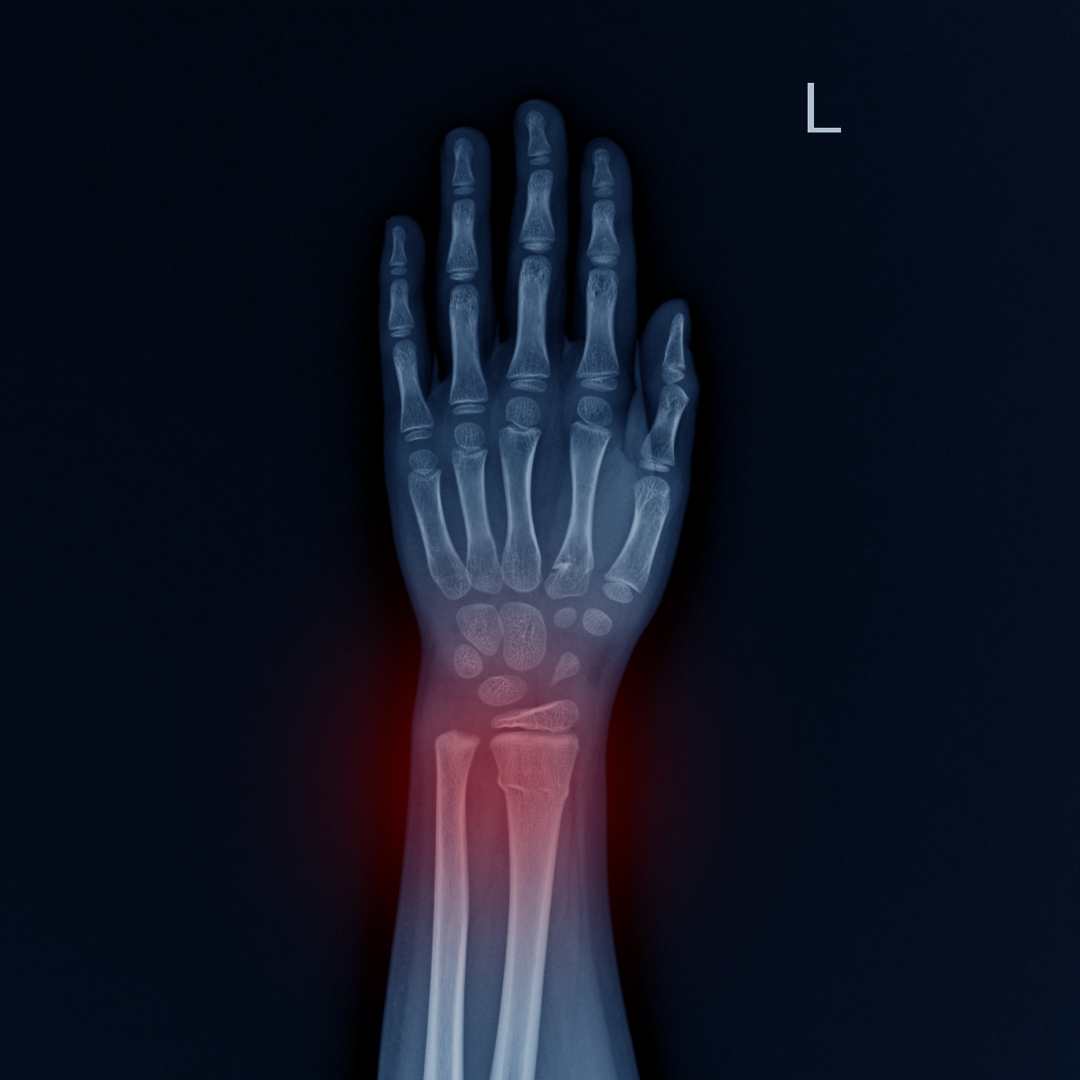
Fractures through the growth plate at the ends of children's long bones — classified using the Salter-Harris system. Growth plate injuries require orthopaedic assessment because improper management can result in growth disturbance. Common sites: distal radius (wrist), distal tibia (ankle), proximal humerus (shoulder).
Osgood-Schlatter Disease
Painful bony bump just below the knee, where the patellar tendon attaches to the shinbone — common in active adolescents during rapid growth. Caused by repetitive stress at the growing bone attachment. Typically resolves after skeletal maturity. Activity modification and physiotherapy manage symptoms.
Signs That Always Warrant a Specialist Visit
Bring Your Child for Evaluation If You Notice
- A limp that persists for more than 1-2 weeks without a clear minor injury
- Refusal to bear weight on a limb
- Swelling, warmth, or redness over a bone or joint
- Back pain in a child — not normal and always warrants evaluation
- One leg appearing shorter than the other
- Visible spinal curvature or uneven shoulder/hip height
- Hip or groin pain in a child — particularly with a limp
- Fever alongside joint pain — possible infection requiring urgent treatment
Call Pure Ortho Hospitals, Sainikpuri: 8686868208
How Children's Fractures Are Different
A child who falls from a height and complains of wrist or ankle pain needs an X-ray that is assessed by someone familiar with paediatric bone anatomy. Growth plates have a characteristic appearance on X-ray that can be confused with fractures by those unfamiliar with them — and conversely, growth plate fractures can be missed on X-rays that appear normal to the untrained eye.
What makes paediatric fracture management different
- Growth plates (physes) are structurally weaker than ligaments — what sprains a ligament in an adult fractures a growth plate in a child
- Salter-Harris classification of growth plate fractures determines risk of growth disturbance and guides treatment decisions
- Children's bones remodel more rapidly — some degree of angular deformity that is acceptable in a child would require surgery in an adult
- Certain fractures unique to children: greenstick fractures (incomplete), torus (buckle) fractures — these require different management from adult fractures
- Follow-up growth monitoring is essential after growth plate fractures to detect any growth arrest early
When to Choose Watchful Waiting vs Specialist Visit
General guidance for parents
- Watchful waiting is appropriate for: Flat feet without pain in children under 6, mild bow legs under age 2, mild knock-knees ages 3-5, in-toeing that is not causing significant tripping, growing pains that are bilateral and resolve by morning
- Monitor and review if not improving: Flat feet with pain at any age, bow legs beyond age 3, knock-knees beyond age 8, in-toeing beyond age 10, growing pains with other symptoms
- See a specialist promptly: Any limp lasting more than 2 weeks, back pain in a child, hip pain with a limp, fever with joint pain, visible spinal curvature, refusal to bear weight
- See a specialist urgently: Suspected fractures in a child, fever with a red swollen joint (possible septic arthritis), sudden severe hip pain in an adolescent
Meet the Specialists at Pure Ortho Hospitals
Dr. G. Uday Sekhar Reddy
MBBS, MS Ortho, MCh Ortho
Dr. V.S. Abhilash Kumar S
MBBS, MS Ortho, FIJR, FISS (S.Korea, USA) — Clinical Director
Dr. Sai Karthikeya Badri
MBBS, D. Ortho, DNB
Dr. Pudari Manoj Kumar
MBBS, MS Ortho, FIJR, FIRJR
Dr. L. Sreeram
MPT (Ortho), FDOR, MIAP
Dr. L. Sri Dharani
BPT, MIAP, PTOTA (Canada)
Frequently Asked Questions
Other Departments at Pure Ortho Hospitals
Not Sure If Your Child's Bones Need Attention?
A specialist evaluation at Pure Ortho Hospitals, Sainikpuri, Hyderabad gives you a clear, honest answer — is this normal development, or does it need intervention? Most paediatric orthopaedic conditions are best managed early.
Call 8686868208More from Pure Ortho Hospitals
This article is for patient education only. Please consult a qualified orthopaedic surgeon before making any treatment decisions regarding your child's health.