

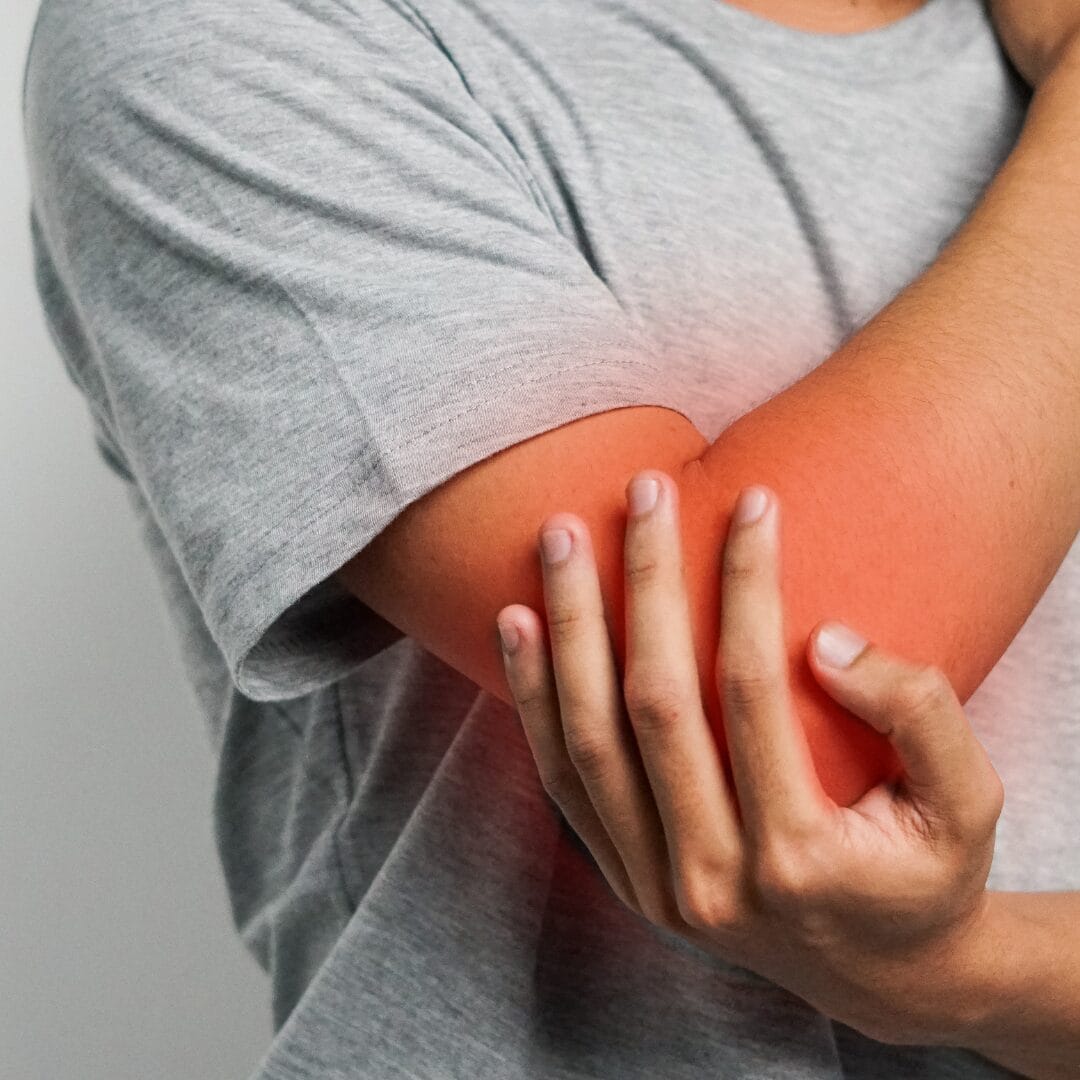
The name is misleading. Most people who develop tennis elbow have never played tennis in their life — and will never play it. What they do have in common is repetitive use of their forearm, wrist, and grip. Painters, carpenters, office workers who spend hours on a keyboard and mouse, chefs, plumbers, and musicians are all regularly seen with the same diagnosis.
Tennis elbow is one of the most common causes of elbow pain in adults — and one of the most frequently mismanaged. People treat it with rest alone, then return to the activity that caused it and wonder why it comes back. Understanding what is actually happening in the elbow changes how you approach recovery.
What Is Tennis Elbow?
Tennis elbow is the common name for lateral epicondylitis — inflammation or degeneration of the tendons that connect the forearm muscles to the lateral epicondyle, the bony prominence on the outer side of the elbow. The tendons most commonly involved are those of the extensor carpi radialis brevis (ECRB) muscle, which controls wrist extension and plays a central role in grip.
Despite the word "itis" (which implies inflammation), research has shown that chronic tennis elbow often involves tendon degeneration rather than active inflammation — a condition called tendinosis. This distinction matters for treatment, because anti-inflammatory approaches alone are often insufficient for a condition that is fundamentally about tendon tissue breakdown from repetitive overload.
Who Gets Tennis Elbow — and Why
The common factor across all patients with tennis elbow is repetitive loading of the wrist extensors and grip muscles — not the sport. Anyone who performs the same forearm-dominant movement repeatedly over time is at risk.
Office Workers
Prolonged keyboard and mouse use with sustained wrist extension
Painters
Repeated brushing and rolling motions with constant forearm engagement
Carpenters
Screwdriving, hammering, and gripping tools for extended periods
Chefs and Cooks
Repetitive chopping, stirring, and lifting heavy pots and pans
Plumbers and Mechanics
Wrench and spanner use, pipe fitting — high torque with repetition
Musicians
Guitar, violin, and keyboard players who practice for hours daily
Gym Goers
Barbell rows, lat pulldowns, and forearm curls — particularly with improper form
Tennis Players
Yes — but only a minority of tennis elbow cases. Backhand technique errors are the classic cause in this group.
Age is also a factor. Tennis elbow peaks between ages 35 and 54 — when tendons have lost some of their elasticity and recover more slowly from repetitive stress. Below 35, it is less common. Above 55, other elbow conditions become more frequent.
Tennis Elbow vs Golfer's Elbow — Understanding the Difference
These two conditions are mirror images of each other in terms of anatomy, but they produce pain at completely different locations and involve different muscle groups. Knowing which one you have determines the treatment approach.
Tennis Elbow (Lateral)
- Pain on the outer side of the elbow
- Lateral epicondyle is the painful point
- Wrist extensor tendons involved
- Pain worsens with wrist extension and gripping
- More common of the two conditions
- Aggravated by lifting palm-down
Golfer's Elbow (Medial)
- Pain on the inner side of the elbow
- Medial epicondyle is the painful point
- Wrist flexor and pronator tendons involved
- Pain worsens with wrist flexion and gripping
- Less common than tennis elbow
- Aggravated by lifting palm-up
Both conditions can exist simultaneously in the same patient — though this is less common. Self-diagnosis between the two is unreliable because both produce elbow and forearm pain with grip. A physical examination by an orthopaedic specialist can distinguish them accurately in a single visit.
Symptoms — What Tennis Elbow Feels Like
Outer Elbow Pain
Aching or burning pain centred on the outer side of the elbow, at or just below the bony prominence
Pain With Gripping
Shaking hands, opening jars, turning a doorknob, or lifting anything with the palm down provokes sharp pain
Weak Grip
Difficulty holding objects, dropping things unexpectedly — grip strength is measurably reduced
Pain Radiating Down the Forearm
Pain may extend from the elbow into the outer forearm and sometimes the wrist
Pain When Bending or Straightening
Extending the elbow fully or certain loaded positions reproduce the pain
Morning Stiffness
Elbow feels stiff and uncomfortable in the morning — loosens as the day progresses
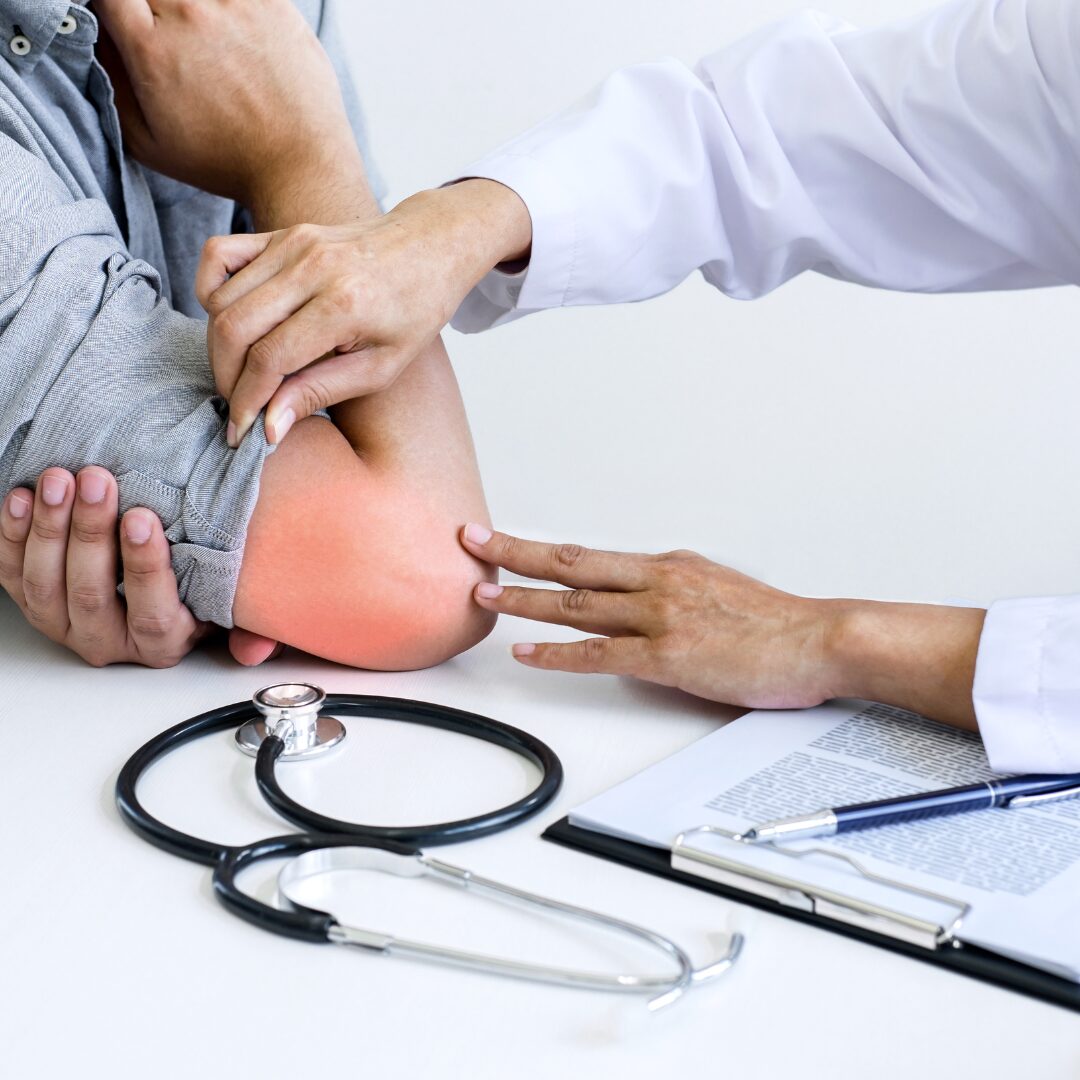
The pain of tennis elbow is typically very specific — pressing on the lateral epicondyle reproduces it immediately. This is one of the most reliable clinical signs and forms part of the physical examination at Pure Ortho Hospitals, Sainikpuri.
How Tennis Elbow Develops — The Progression
Tennis elbow rarely appears overnight. It builds through a predictable sequence of events that most patients, looking back, can trace clearly.
Overload Phase
Repetitive activity exceeds the tendon's capacity to recover. Microscopic tears begin accumulating.
Early Symptoms
Mild aching after activity. Resolves with rest. Patients often ignore this stage.
Persistent Pain
Pain during activity and into rest periods. Grip strength starts declining. Daily tasks become difficult.
Chronic Tendinosis
Tendon tissue has degenerated. Pain is constant. Conservative treatment at this stage takes significantly longer.
Stage 1 and 2 are when treatment is most effective and recovery is fastest. Most patients present at Stage 3, having ignored the earlier warning signs. Stage 4 — chronic tendinosis — requires more intensive intervention and a longer recovery timeline.
Elbow Pain After the Gym — Is It Tennis Elbow?
Gym-related elbow pain from pulling exercises — rows, lat pulldowns, pull-ups, forearm curls, or cable work — is a common presentation in Hyderabad's fitness-active population. The mechanism is similar to occupational tennis elbow: repetitive eccentric loading of the wrist extensors beyond their recovery capacity.
The difference is that gym-related cases often develop faster — because training volume is high and sessions are frequent — and they are sometimes accompanied by other elbow problems like bicep tendinitis or olecranon bursitis. A proper examination distinguishes these, because the treatment approaches are different.
If your elbow pain started during or after a gym programme and has persisted beyond two weeks, it warrants evaluation. Continuing to train through this type of pain reliably makes it worse.
How Tennis Elbow Is Diagnosed
Diagnostic process at Pure Ortho Hospitals, Sainikpuri
- Clinical history — what you do for work, how long symptoms have been present, what makes it worse
- Physical examination — tenderness at lateral epicondyle, resisted wrist extension test, grip strength assessment
- Cozen's test and Mill's test — specific clinical tests that reproduce pain and confirm the diagnosis
- Ultrasound — shows tendon thickening, tears, and degenerative changes in real-time; guides injection placement
- MRI — used in complex or refractory cases or when other elbow pathology is suspected
- Distinction from other conditions — radial tunnel syndrome, posterior interosseous nerve compression, and referred pain from the cervical spine can all mimic tennis elbow
Treatment — From Conservative to Surgical
The vast majority of tennis elbow cases resolve with conservative management — but the key word is "managed." Simply resting and returning to the same activity that caused it is not treatment. It is a cycle that leads to chronic tendinosis.
Treatment options your specialist may discuss
- Activity modification — identifying and reducing the specific movements that load the affected tendon
- Physiotherapy — eccentric strengthening exercises for the wrist extensors are the most evidence-supported approach for tennis elbow
- Pain management — short-term anti-inflammatory medication for acute flares
- Corticosteroid injection — targeted injection to reduce acute inflammation; provides short-term relief but not a long-term solution in isolation
- Platelet-Rich Plasma (PRP) injection — biological treatment using the patient's own growth factors to promote tendon healing; increasingly used for chronic cases
- Extracorporeal Shock Wave Therapy (ESWT) — stimulates healing in chronic tendinosis cases not responding to other treatment
- Surgical release — considered only after 6-12 months of thorough conservative treatment without adequate improvement
The physiotherapy component is the most important and the most frequently skipped. Patients who receive a cortisone injection without following it with a structured rehabilitation programme typically see their symptoms return within weeks. The injection reduces pain; the physiotherapy rebuilds the tendon's tolerance to load. Both are needed.
Tennis Elbow Surgery — When and What
Surgery for tennis elbow is uncommon — fewer than 10% of patients reach the point where it is considered. When it is recommended, it typically involves releasing or removing the degenerated tendon tissue at the lateral epicondyle, allowing healthy tissue to regenerate in its place.
Arthroscopic (keyhole) techniques are available for this procedure at Pure Ortho Hospitals, Sainikpuri, allowing most patients to undergo the procedure with smaller incisions, less tissue disruption, and faster return to activity than traditional open techniques.
Recovery after surgery typically involves 4-6 weeks of restricted activity followed by a structured physiotherapy programme over 3-4 months before return to full use.
Why Ignoring Tennis Elbow Makes It Much Harder to Treat
The most common reason tennis elbow becomes chronic is simple: people ignore the early signals and continue the activity that is causing the problem. When they finally seek treatment — often after 6-12 months — the tendon has degenerated significantly. What would have taken 6-8 weeks to resolve at Stage 2 can take a year to manage at Stage 4.
Early evaluation at Pure Ortho Hospitals, Sainikpuri catches this condition at a point where the right physiotherapy programme can resolve it completely. Delayed presentation limits the options and extends the recovery timeline substantially.
Meet the Specialists at Pure Ortho Hospitals
Tennis elbow and elbow conditions are managed by the Sports Medicine and Orthopaedic team at Pure Ortho Hospitals, Sainikpuri, with in-house physiotherapy and arthroscopy available.
Dr. V.S. Abhilash Kumar S
MBBS, MS Ortho, FIJR, FISS (S.Korea, USA) — Clinical Director, Sports Medicine & Robotic Joint Replacement
Dr. G. Uday Sekhar Reddy
MBBS, MS Ortho, MCh Ortho
Dr. Pudari Manoj Kumar
MBBS, MS Ortho, FIJR, FIRJR
Dr. Sai Karthikeya Badri
MBBS, D. Ortho, DNB
Dr. L. Sreeram
MPT (Ortho), FDOR, MIAP
Dr. L. Sri Dharani
BPT, MIAP, PTOTA (Canada)
Frequently Asked Questions
Other Departments at Pure Ortho Hospitals
Elbow and upper limb care at Pure Ortho Hospitals, Sainikpuri is supported by a complete orthopaedic and physiotherapy team.
Elbow Pain That Keeps Coming Back Needs Proper Evaluation
Tennis elbow treated with rest alone will return. Visit Pure Ortho Hospitals, Sainikpuri, Hyderabad for a proper assessment and a treatment plan that actually addresses the root cause.
Call 8686868208More from Pure Ortho Hospitals
This article is for patient education only. Please consult a qualified orthopaedic surgeon before making any treatment decisions.