

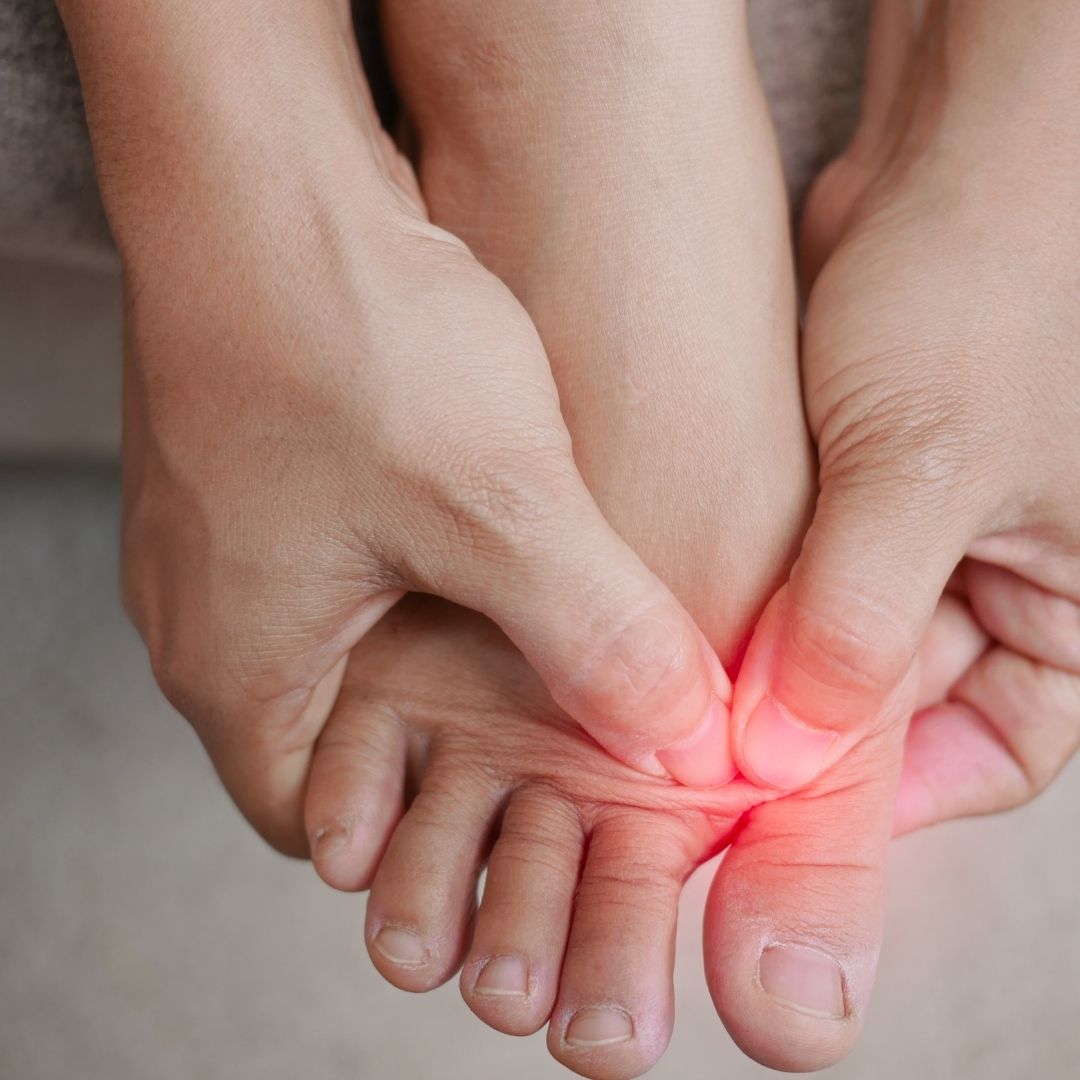
Many people notice the bump appearing at the base of their big toe and assume it is simply a callus or something that comes with age. Others are told by family members that they have a bunion and decide to simply live with it. For years, this works — discomfort is manageable, footwear is adjusted, and the bump is accepted as an inconvenience rather than a condition requiring attention.
The problem is that bunions are progressive. Without intervention, the deformity worsens — the big toe angles further inward, the bump becomes more prominent, secondary problems develop in the other toes, and what was a manageable inconvenience becomes a significant functional problem. Understanding the condition and its trajectory is what helps patients decide whether and when treatment makes sense.
What Is a Bunion?
A bunion — the medical term is hallux valgus — is a deformity of the first metatarsophalangeal joint, where the big toe (hallux) meets the first metatarsal bone. In a normal foot, the first metatarsal points straight forward and the big toe aligns with it. In hallux valgus, the metatarsal drifts inward (medially) while the big toe angles toward the other toes (valgus). The joint protrudes on the inner side of the foot, forming the characteristic bump.
The bump itself is not a bone growth. It is the displaced head of the first metatarsal, which is now pointing in the wrong direction and protruding beyond the normal foot contour. Over time, the joint surfaces that should be aligned are no longer in their correct relationship — leading to cartilage wear, arthritic changes, and pain within the joint itself.
What Causes Bunions?
Hereditary Foot Structure
The strongest factor — bunions run in families. A tendency toward ligamentous laxity, flat arch, or a specific first metatarsal shape increases susceptibility. The deformity is not caused by footwear alone, but footwear significantly accelerates it in predisposed feet.
Narrow or Pointed Footwear
Shoes that compress the forefoot push the big toe inward and accelerate deformity in already susceptible feet. High heels shift weight forward onto the forefoot, increasing the forces that drive deformity progression.
Flat Feet
Flatfoot (pes planus) changes the mechanical forces across the forefoot in ways that predispose to hallux valgus. Patients with flat feet tend to develop bunions earlier and more severely.
Inflammatory Arthritis
Rheumatoid arthritis causes joint inflammation and ligament laxity that can produce hallux valgus as part of a broader forefoot deformity pattern.
Hypermobility
Generalised joint laxity — common in women — allows the first metatarsal to drift inward more readily than in a stiffer foot structure.
Age
Soft tissue changes and cumulative mechanical loading over decades contribute to progressive deformity in predisposed individuals, regardless of footwear habits.
Grades of Deformity
Bunion severity is measured by the angle between the first metatarsal and the big toe (hallux valgus angle) on standing X-ray. The grade determines treatment options and surgical approach.
Mild Deformity
Minimal bump. Some pain with tight footwear. Conservative management effective. Surgery optional.
Moderate Deformity
Visible bump. Pain with most footwear. Big toe angled toward second toe. Surgery often considered.
Severe Deformity
Prominent bump. Big toe crossing over or under second toe. Calluses. Significant footwear difficulties. Surgery usually recommended.
Dislocation
Severe angulation with joint malalignment. Multiple toe deformities. Requires complex surgical correction.
Symptoms — Beyond the Bump
Joint Pain and Swelling
Pain at the bunion site, worsened by walking and tight footwear. Swelling and redness over the prominence.
Footwear Difficulties
Finding shoes that fit comfortably becomes increasingly challenging as the deformity progresses.
Second Toe Problems
The big toe pressing against the second toe causes hammer toe, crossover toe, or calluses under the second metatarsal head.
Skin Irritation
Repeated friction of the bunion against footwear causes bursitis — a fluid-filled sac forming over the prominence — and skin thickening.
Pain Walking
As deformity and joint cartilage changes progress, pain occurs with walking — not only with footwear pressure.
Reduced Activity
Pain and footwear restrictions progressively limit walking, exercise, and participation in activities the patient previously managed without difficulty.
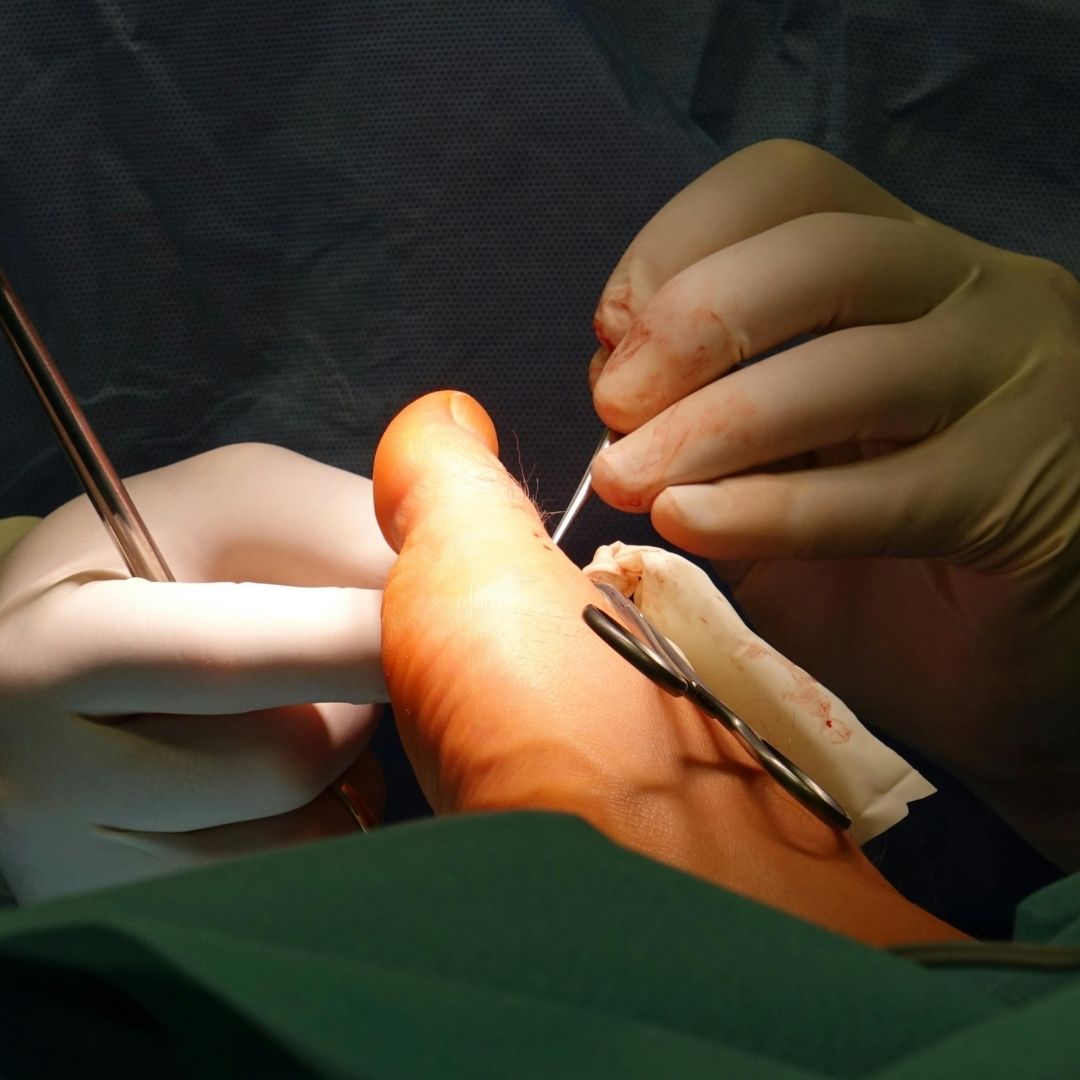
Treatment — Conservative and Surgical
Conservative management — reducing pain, not correcting deformity
- Wide toe box footwear — the single most important conservative measure. Shoes with adequate width at the forefoot reduce pressure on the bunion and slow progression.
- Bunion pads and spacers — reduce friction between the bunion and footwear; toe spacers keep the big toe from pressing against the second.
- Custom orthotics — may redistribute foot pressure and slow progression in flat-footed patients, though evidence for halting deformity is limited.
- Anti-inflammatory management — for painful flares and bursitis, not for long-term deformity management.
- Night splinting — maintains alignment during sleep and may slow progression, particularly in adolescents with flexible deformities.
Surgical correction — osteotomy and realignment
- Chevron osteotomy — a V-shaped cut in the metatarsal head that allows it to be repositioned. Standard for mild to moderate bunions. Fixation with screws.
- Scarf osteotomy — a longer Z-shaped cut through the metatarsal shaft, allowing greater correction. Used for moderate to severe deformity.
- Lapidus procedure — fusion of the joint between the first metatarsal and the medial cuneiform bone, for severe deformity or significant hypermobility. More powerful correction.
- Akin osteotomy — additional correction at the base of the big toe, often combined with metatarsal osteotomy.
- Soft tissue correction — release of the tight structures on the outer side and repair of the stretched structures on the inner side of the joint, performed alongside bony correction.
Consider a Specialist Consultation If
- Bunion pain is affecting your daily walking or activity
- You cannot find footwear that fits comfortably
- The second toe is being pushed out of position
- The deformity is noticeably worsening year by year
Call Pure Ortho Hospitals, Sainikpuri: 8686868208
Meet the Specialists at Pure Ortho Hospitals
Dr. G. Uday Sekhar Reddy
MBBS, MS Ortho, MCh Ortho
Dr. V.S. Abhilash Kumar S
MBBS, MS Ortho, FIJR, FISS (S.Korea, USA) — Clinical Director
Dr. Sai Karthikeya Badri
MBBS, D. Ortho, DNB
Dr. L. Sreeram
MPT (Ortho), FDOR, MIAP
Dr. L. Sri Dharani
BPT, MIAP, PTOTA (Canada)
Frequently Asked Questions
Other Departments at Pure Ortho Hospitals
A Bunion Gets Worse Without Attention — Get It Assessed Now
Early evaluation at Pure Ortho Hospitals, Sainikpuri, Hyderabad tells you exactly where your bunion stands — and whether conservative management or surgical correction is the right path for you.
Call 8686868208More from Pure Ortho Hospitals
This article is for patient education only. Please consult a qualified orthopaedic surgeon before making any treatment decisions.