


You get out of bed in the morning. The moment your foot touches the floor, there it is — a sharp, stabbing pain in the heel. You limp through the first few minutes, and then, strangely, it starts to ease. By midday it is almost gone. The next morning, it happens again.
This pattern — morning heel pain that fades with movement — is one of the most recognisable signs of plantar fasciitis. It affects millions of people across India, from middle-aged adults and working professionals to teachers who stand all day and people who have recently started running. And yet, it is one of the most undertreated foot conditions, largely because people assume it will go away on its own.
Sometimes it does. Often it doesn't — and when it becomes chronic, it is significantly harder to treat. Understanding what is happening, and when to see a specialist at Pure Ortho Hospitals, Sainikpuri, Hyderabad, makes a real difference.
What Is Plantar Fasciitis?
The plantar fascia is a thick band of fibrous tissue that runs along the bottom of your foot, connecting your heel bone (calcaneus) to the base of your toes. It acts like a shock absorber and supports the arch of your foot during walking, running, and standing.
Plantar fasciitis occurs when this tissue becomes inflamed — most commonly at the point where it attaches to the heel bone. Repeated stress over time causes micro-tears in the fascia. The body tries to repair them, but when the stress continues faster than healing can keep up, inflammation sets in and the characteristic pain begins.
The word "fasciitis" simply means inflammation of the fascia. It is not an infection and it is not a fracture — though it is sometimes mistaken for both.
Why Does It Hurt Most in the Morning?
The morning pain pattern is what makes plantar fasciitis distinctive — and understanding why it happens explains a great deal about the condition.
During sleep, the foot is relaxed and the plantar fascia is in a shortened, rested position. As the hours pass, micro-inflammation from the previous day settles. When you stand up and take your first steps, the fascia is abruptly stretched from its shortened state. This sudden stretch — applied to already-inflamed tissue — causes the sharp pain on those first steps.
As you walk and the tissue gradually warms up and loosens, the pain typically eases. This is why many patients report that the pain is worst right after rest — whether first thing in the morning or after sitting for a long period — and improves with movement.
Plantar Fasciitis vs Heel Spur — What Is the Difference?
These two conditions are closely related and often confused. Many patients who are told they have a "heel spur" actually have plantar fasciitis, and vice versa.
Plantar Fasciitis
- Inflammation of the plantar fascia
- Soft tissue problem — not visible on X-ray
- Classic morning pain pattern
- Pain at base of heel, sometimes arch
- Responds well to conservative treatment
Heel Spur (Calcaneal Spur)
- Bony growth on underside of heel bone
- Visible on X-ray
- Develops over time from chronic tension
- Often accompanies plantar fasciitis
- Does not always cause pain on its own
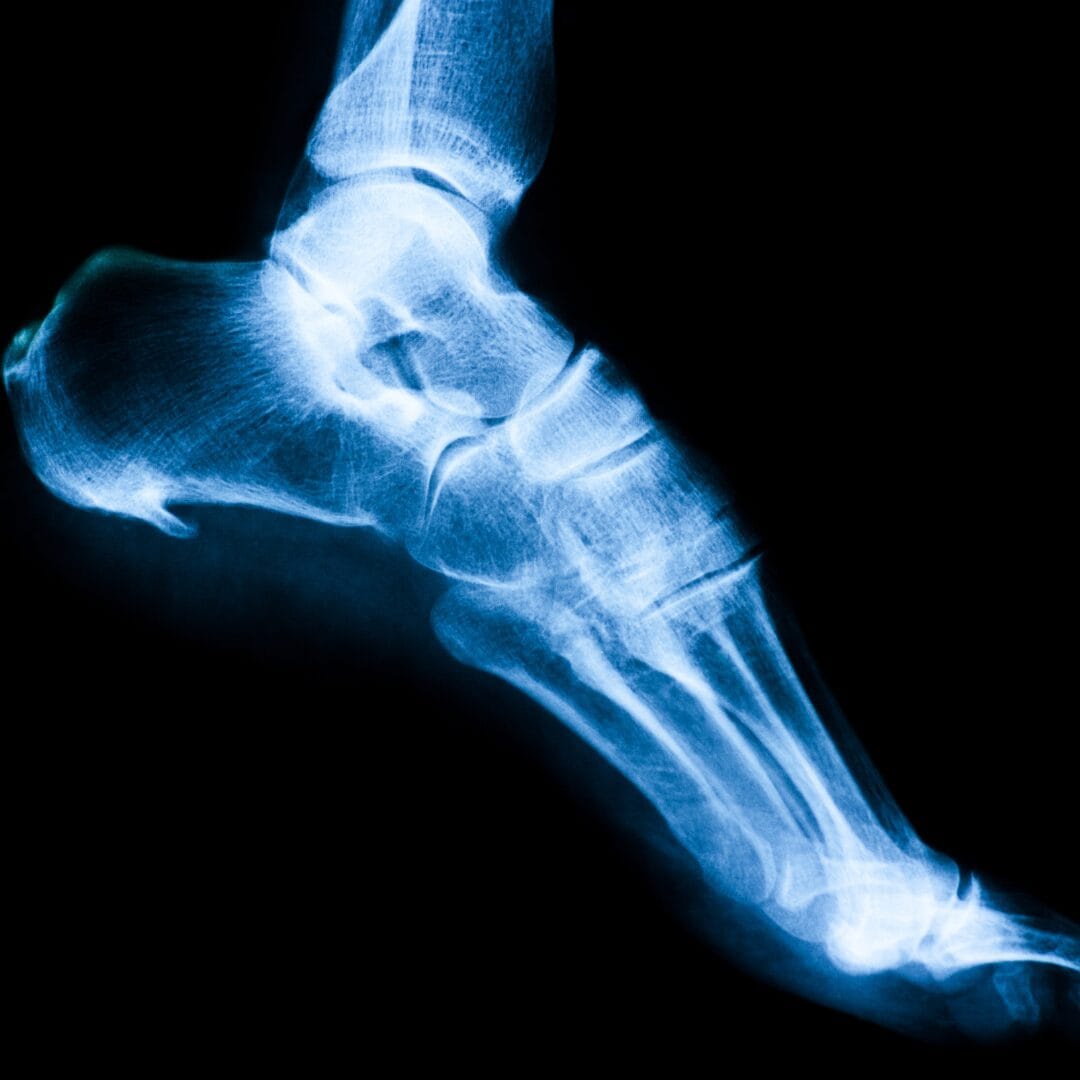
A heel spur does not automatically cause pain. Many people have heel spurs visible on X-ray but no symptoms at all. In other patients, the spur contributes to irritation of surrounding tissue. What matters clinically is the combination of symptoms, examination findings, and imaging — not the X-ray alone.
Symptoms — What Plantar Fasciitis Feels Like
Sharp Morning Pain
Intense heel pain on the first steps after waking — the hallmark symptom
Pain After Rest
Pain returns after sitting for long periods — eases again with movement
Heel Tenderness
Pain when pressing on the bottom or inner side of the heel
Arch Pain
Some patients feel pain along the arch of the foot, not just the heel
Pain During Prolonged Standing
Standing on hard surfaces for extended periods worsens symptoms
Stiffness
Foot feels tight and stiff, particularly in the morning or after inactivity
In most cases, only one foot is affected — though bilateral plantar fasciitis does occur. The pain is usually in the underside of the heel, near where the fascia attaches to the bone. It rarely travels up the leg unless there is nerve involvement alongside it.
Who Gets Plantar Fasciitis?
Plantar fasciitis is not random. Certain factors significantly increase the likelihood of developing it. Understanding these helps explain why some people are more susceptible than others.
Age
Most common between 40 and 60 years, when tissue elasticity declines
Prolonged Standing
Teachers, healthcare workers, factory workers on feet for long hours
Excess Body Weight
Increased load on the plantar fascia with every step
Flat Feet or High Arches
Both alter load distribution on the fascia
Tight Calf Muscles
Limited ankle flexibility increases tension on the plantar fascia
Sudden Activity Increase
Starting running or intense activity without gradual buildup
Hard Flooring
Working or walking long hours on concrete or stone surfaces
Diabetes
Associated with tissue changes that increase plantar fasciitis risk
How Plantar Fasciitis Is Diagnosed
Diagnosis of plantar fasciitis is primarily clinical — meaning a detailed history and physical examination are the most important tools. The characteristic symptom pattern is highly specific to this condition. However, imaging is also used to confirm the diagnosis and rule out other causes of heel pain.
Diagnostic process at Pure Ortho Hospitals
- Clinical history — when pain started, morning pattern, occupation, activity level
- Physical examination — tenderness at heel insertion point, ankle flexibility assessment, arch evaluation
- X-ray — checks for heel spur, bone abnormalities, stress fractures
- Ultrasound — shows plantar fascia thickness and inflammation in real-time
- MRI — used in complex or refractory cases to assess soft tissue in detail
- Assessment of contributing factors — weight, footwear, flat feet, diabetes
Other conditions can mimic plantar fasciitis — nerve entrapment, stress fractures, fat pad atrophy, and rheumatological conditions among them. A proper evaluation rules these out before treatment begins. Treating the wrong condition wastes time and may worsen the actual problem.
Stages of Severity
Plantar fasciitis exists on a spectrum. Where a patient sits on that spectrum determines what treatment approach is appropriate.
Mild
Morning pain only. Eases quickly. Daily life largely unaffected.
Moderate
Pain during and after activity. Some limitation in walking and standing.
Severe
Pain most of the day. Significant impact on walking, work, and daily activity.
Chronic
Symptoms persisting for 6+ months. May need more intensive intervention.
Treatment — What Pure Ortho Evaluates for Your Case
Most plantar fasciitis cases respond well to non-surgical treatment — but the right treatment depends on severity, how long the condition has been present, and what contributing factors exist. There is no single protocol that works for everyone.
Treatment paths your specialist may discuss
- Rest and activity modification — reducing the activities that aggravate the condition
- Physiotherapy — calf stretching, plantar fascia stretching, strengthening programme
- Supportive footwear and orthotics — proper arch support reduces fascia strain
- Night splints — maintain mild stretch on the fascia during sleep, reducing morning pain
- Anti-inflammatory medication — short-term relief for acute inflammation
- Corticosteroid injection — targeted injection for significant inflammation in selected cases
- Extracorporeal Shock Wave Therapy (ESWT) — for chronic cases not responding to other treatment
- Platelet-Rich Plasma (PRP) injection — biological treatment for resistant cases
- Surgical release — considered only when all conservative options have failed over many months
Surgery for plantar fasciitis is uncommon — the vast majority of patients improve without it. When it is recommended, it typically involves a plantar fascia release performed minimally invasively under local or regional anaesthesia.
Recovery — What to Expect
Plantar fasciitis is not a condition that heals overnight. Tissue inflammation takes time to resolve, and the contributing factors — tight calves, flat feet, occupational demands — need to be addressed alongside direct treatment. Patients who expect a quick fix often discontinue treatment too early and end up with chronic symptoms.
General recovery timeline
- Week 1-4: Activity modification, initial treatment begins, some pain reduction
- Month 1-3: Progressive physiotherapy, significant improvement in most cases
- Month 3-6: Full resolution in majority of patients with consistent treatment
- 6+ months: Chronic cases may need additional interventions — discussed with specialist
The single biggest predictor of a good outcome is starting treatment early and being consistent with it. Patients who wait a year before seeking help, or who start and stop treatment multiple times, consistently take longer to recover.
Do Not Ignore These Signs
- Heel pain with significant swelling, redness, or warmth — may indicate infection or fracture
- Pain that is constant rather than worse after rest
- Numbness or tingling in the heel or foot — possible nerve involvement
- Pain following a specific injury or fall
- Symptoms that have not improved at all after 6 weeks of self-management
These warrant an orthopaedic evaluation. Call 8686868208 or visit Pure Ortho Hospitals, Sainikpuri.
Why Delaying Treatment Makes Things Worse
Plantar fasciitis is one of those conditions where early intervention is genuinely more effective than waiting. In the early stages, the inflammation is limited and responds well to relatively simple treatment. In chronic cases — where the condition has been present for six months or more — the tissue changes become more structural, treatment takes longer, and outcomes are less predictable.
Many patients spend months trying home remedies, changing footwear, or following online advice before seeing a specialist. By the time they arrive at Pure Ortho Hospitals, the condition has often become significantly harder to treat than it needed to be. If morning heel pain has been present for more than 4-6 weeks, a specialist evaluation is worth getting sooner rather than later.
Meet the Specialists at Pure Ortho Hospitals
Plantar fasciitis and heel conditions are treated by the Foot and Ankle team alongside physiotherapy, with support from related departments as needed.
Dr. G. Uday Sekhar Reddy
MBBS, MS Ortho, MCh Ortho
Dr. V.S. Abhilash Kumar S
MBBS, MS Ortho, FIJR, FISS (S.Korea, USA) — Clinical Director
Dr. Pudari Manoj Kumar
MBBS, MS Ortho, FIJR, FIRJR
Dr. Sai Karthikeya Badri
MBBS, D. Ortho, DNB
Dr. L. Sreeram
MPT (Ortho), FDOR, MIAP
Dr. L. Sri Dharani
BPT, MIAP, PTOTA (Canada)
Dr. Kranthi Kumar Reddy
MBBS, MD, C.Diab
Frequently Asked Questions
Other Departments at Pure Ortho Hospitals
Foot and ankle care is part of a complete bone and joint hospital. Pure Ortho Hospitals, Sainikpuri offers full orthopaedic services under one roof.
Heel Pain That Comes Back Every Morning Needs Attention
Do not wait until a manageable condition becomes a chronic one. Visit Pure Ortho Hospitals, Sainikpuri for a proper evaluation of your heel pain — and find out what is actually causing it.
Call 8686868208More from Pure Ortho Hospitals
This article is for patient education only. Please consult a qualified orthopaedic surgeon before making any treatment decisions.