

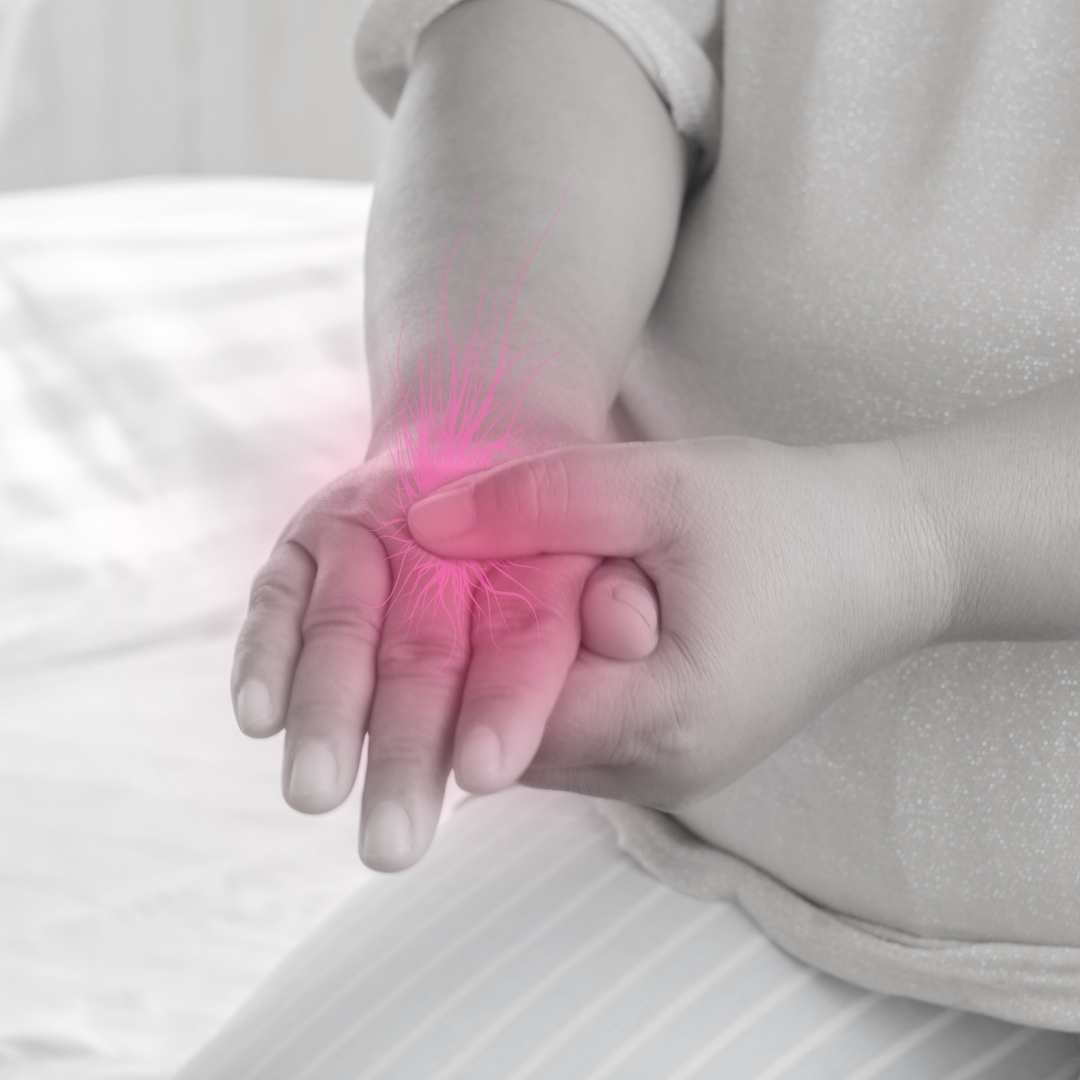
It starts subtly. Tingling in the fingers when typing. A burning sensation in the hand that comes and goes. Then the waking up at 2 AM with a hand so numb and heavy that it needs to be shaken vigorously before it starts to feel normal again. This pattern — the nocturnal symptoms that force patients to shake their hands awake — is one of the most recognisable presentations in hand surgery, and it points strongly toward carpal tunnel syndrome.
Carpal tunnel syndrome is the most common peripheral nerve compression disorder in the world. It is also one of the most undertreated — because many patients assume the numbness is simply from sleeping on the arm, or that tingling fingers are something to live with rather than something to address.
What Is the Carpal Tunnel?
The carpal tunnel is a narrow passageway in the wrist — formed by the carpal bones on three sides and a tough ligament (the transverse carpal ligament) on the fourth. Running through this tunnel are nine flexor tendons and one critically important nerve: the median nerve.
The median nerve supplies sensation to the thumb, index finger, middle finger, and the inner half of the ring finger. It also controls the small muscles at the base of the thumb that allow fine pinch and grip. When the tunnel becomes narrowed — from inflammation, swelling, or any other cause — the median nerve is the first structure to suffer because it is the most pressure-sensitive.
Median Nerve Distribution — Where Symptoms Appear
The little finger being spared is one of the most clinically useful distinguishing features of carpal tunnel syndrome. Patients who experience numbness or tingling in all five fingers — including the little finger — are less likely to have carpal tunnel syndrome and more likely to have a different cause of hand symptoms, such as ulnar nerve compression at the elbow or a cervical disc problem.
Why Night Symptoms Are the Hallmark
The nocturnal pattern of carpal tunnel syndrome is not random. During sleep, most people naturally flex the wrist — curling the hand inward in a relaxed position. This posture narrows the carpal tunnel further, increasing pressure on the median nerve. Simultaneously, the lack of hand movement during sleep reduces the normal pumping action that clears fluid from the tunnel.
The result is that by 2-3 AM, the nerve has been under increasing compression for several hours. The burning, tingling, and numbness become intense enough to wake the patient. Shaking the hand vigorously helps because it temporarily redistributes fluid and restores circulation — reducing pressure enough for symptoms to ease.
This pattern is almost diagnostic on its own. If your specialist knows that you are regularly woken at night by tingling in the thumb, index, and middle fingers — and that shaking the hand relieves it — carpal tunnel syndrome is the leading diagnosis even before any test is performed.
What Causes Carpal Tunnel Syndrome?
Repetitive Wrist Use
Prolonged typing, mouse use, assembly work, or any repetitive hand and wrist movement that increases tendon inflammation inside the tunnel.
Diabetes
Diabetic neuropathy affects nerve function and increases susceptibility to compression. Carpal tunnel syndrome is significantly more common in diabetics and often more severe.
Thyroid Disorders
Hypothyroidism causes tissue swelling that can narrow the carpal tunnel. Treating the thyroid condition often improves symptoms.
Pregnancy
Fluid retention during pregnancy increases pressure in the carpal tunnel. Symptoms often resolve after delivery but require management during pregnancy.
Obesity
Increased soft tissue and fluid in the wrist narrows the tunnel. Weight loss can improve mild symptoms.
Previous Wrist Fracture
A malunited or poorly healed wrist fracture can alter the shape of the carpal tunnel, causing late-onset nerve compression years after the original injury.
Rheumatoid Arthritis
Inflammation of the joint lining (synovitis) increases tunnel pressure. Carpal tunnel syndrome is a well-recognised complication of rheumatoid disease.
No Identifiable Cause
In a proportion of patients, no specific contributing factor is identified. This is termed idiopathic carpal tunnel syndrome and does not change the treatment approach.
Symptoms — The Full Spectrum
Night Numbness
Waking with numb, heavy hands needing to be shaken — the most characteristic symptom
Burning Fingertips
A burning or electric sensation in the thumb, index, and middle fingers — often worse with prolonged wrist flexion
Tingling During Driving
Gripping a steering wheel maintains wrist flexion — a position that consistently reproduces carpal tunnel symptoms
Weak Grip
Difficulty unscrewing bottle caps, opening jars, or fine tasks like sewing — the median nerve controls the pinch muscles
Dropping Objects
Weakness in the thumb muscles causes unexplained dropping — particularly of small objects requiring precision grip
Symptoms Easing with Movement
Symptoms are worst with rest or prolonged static positions — shaking the hand or moving the wrist brings temporary relief
Severity — How Far Has It Progressed?
Intermittent tingling and numbness, mainly at night. No persistent weakness. Good response to conservative management.
Frequent symptoms during day and night. Some grip weakness. Conservative management with physiotherapy and splinting; surgery often beneficial.
Constant numbness, significant muscle wasting at the thumb base, marked weakness. Surgery is the primary recommendation — nerve damage risk if further delayed.

How Carpal Tunnel Is Diagnosed
Diagnostic process at Pure Ortho Hospitals, Sainikpuri
- Clinical history — symptom distribution, night pattern, occupational and medical history
- Phalen's test — holding the wrists fully flexed for 60 seconds reproduces symptoms
- Tinel's sign — tapping over the carpal tunnel produces tingling in the median nerve distribution
- Grip and pinch strength testing — measures functional impact of nerve compression
- Nerve conduction study (NCS) — measures electrical signal speed through the median nerve; confirms diagnosis, quantifies severity, and guides treatment decisions
- Assessment of contributing conditions — diabetes, thyroid, rheumatoid arthritis
Treatment — Conservative First, Surgical When Needed
Treatment options at Pure Ortho Hospitals, Sainikpuri
- Wrist splinting at night — holds the wrist in a neutral position during sleep, preventing the flexion that increases tunnel pressure; most effective for mild-moderate cases
- Activity modification — reducing repetitive wrist flexion, keyboard ergonomics, taking breaks from sustained grip activities
- Corticosteroid injection — targeted injection into the carpal tunnel reduces inflammation; provides significant short-to-medium term relief and is both diagnostic and therapeutic
- Managing contributing conditions — optimising blood sugar in diabetics, thyroid treatment — often improves symptoms significantly
- Open carpal tunnel release — surgical division of the transverse carpal ligament through a small palm incision; highly effective, one of the most reliable hand procedures in surgery
- Endoscopic carpal tunnel release — same procedure through smaller incisions using a camera; faster return to work, less post-operative discomfort
Carpal tunnel release has an excellent success rate — the majority of patients experience complete or near-complete resolution of symptoms. The earlier surgery is performed before significant nerve damage has occurred, the faster and more complete the recovery. Patients with severe, longstanding carpal tunnel who have developed muscle wasting may see slower recovery as nerve regeneration takes time.
Do Not Delay Evaluation If You Have
- Constant numbness that does not ease even with movement
- Visible muscle wasting at the base of the thumb (thenar eminence)
- Significant weakness in thumb pinch — cannot pick up small objects
- Symptoms in both hands simultaneously
These suggest more advanced nerve compression. Call Pure Ortho Hospitals, Sainikpuri: 8686868208
The Hyderabad IT Workforce — A High-Risk Group
Carpal tunnel syndrome is increasingly common in Hyderabad's desk-based workforce for the same reason as cervical spondylosis: sustained, repetitive wrist and hand loading from keyboard and mouse use for 8-10 hours daily. The combination of sustained wrist flexion, repetitive tendon movement, and lack of adequate breaks creates the conditions for carpal tunnel development in people far younger than the condition's classical demographic.
If you are a desk-based worker in Hyderabad with persistent hand tingling, burning fingertips, or night symptoms — a nerve conduction study at Pure Ortho Hospitals, Sainikpuri will tell you definitively what is happening and how advanced it is, before the nerve damage progresses further.
Meet the Specialists at Pure Ortho Hospitals
Dr. G. Uday Sekhar Reddy
MBBS, MS Ortho, MCh Ortho
Dr. V.S. Abhilash Kumar S
MBBS, MS Ortho, FIJR, FISS (S.Korea, USA) — Clinical Director
Dr. Pudari Manoj Kumar
MBBS, MS Ortho, FIJR, FIRJR
Dr. L. Sreeram
MPT (Ortho), FDOR, MIAP
Dr. Kranthi Kumar Reddy
MBBS, MD, C.Diab
Frequently Asked Questions
Other Departments at Pure Ortho Hospitals
Numb Hands at Night Are Not Normal — Get Evaluated
Carpal tunnel syndrome gets worse without treatment. The earlier it is assessed, the more options you have and the faster you recover. Visit Pure Ortho Hospitals, Sainikpuri, Hyderabad.
Call 8686868208More from Pure Ortho Hospitals
This article is for patient education only. Please consult a qualified orthopaedic surgeon before making any treatment decisions.