
Frozen Shoulder — Why the Shoulder Locks Up, What the Three Stages Mean, and How It Is Treated
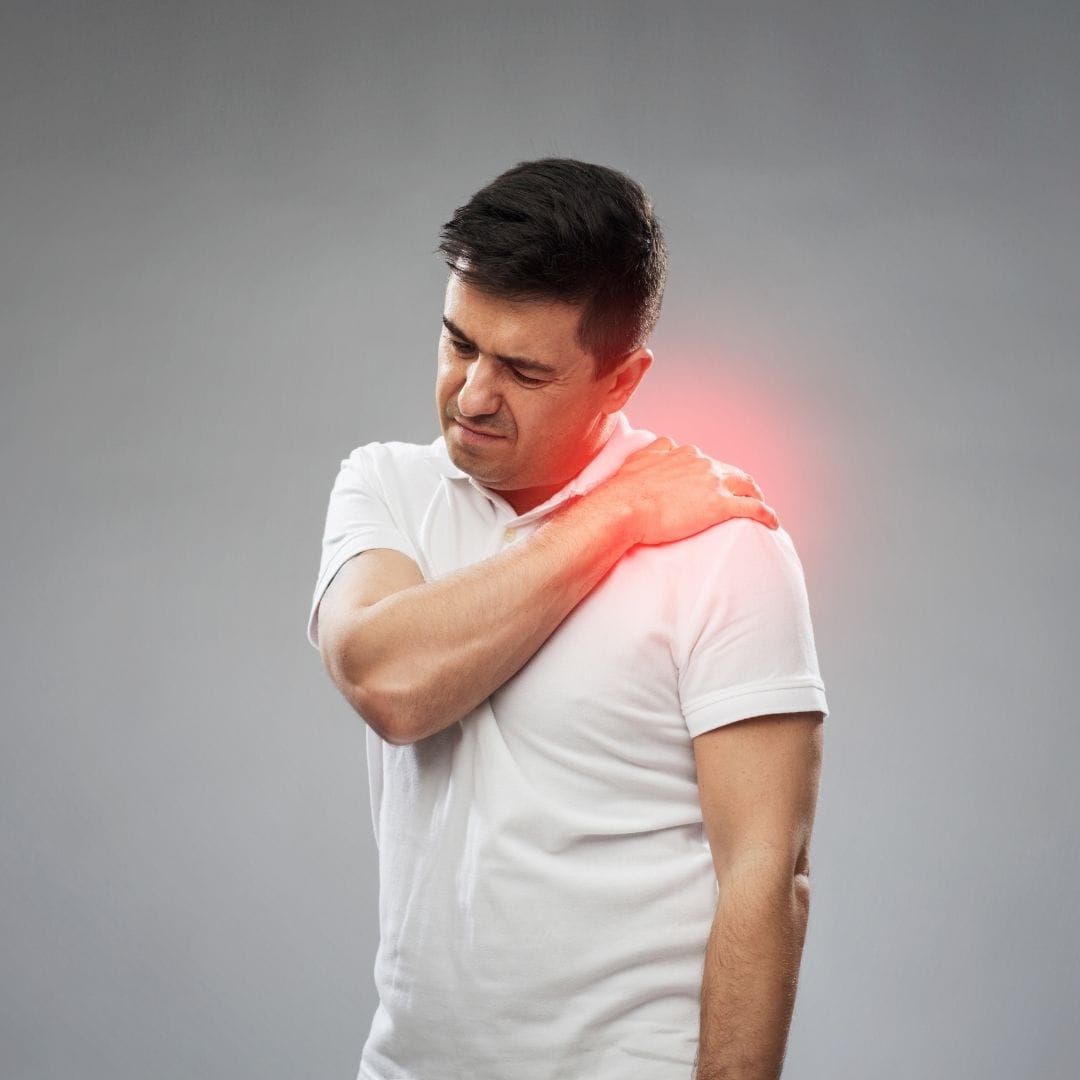
Most people with frozen shoulder describe the same experience. It starts with shoulder pain that seems unremarkable — perhaps after sleeping on that side, or after a minor strain. Over the following weeks the pain increases and the shoulder gradually stops moving. Reaching behind the back becomes impossible. Lifting the arm above the head causes a sharp stop. Getting dressed becomes a daily struggle.
Frozen shoulder — the medical term is adhesive capsulitis — affects roughly 2–5% of the general population and up to 20% of people with diabetes. It is not just painful. Left untreated or mismanaged, it can last years. Treated correctly — with the right intervention at the right stage — recovery is significantly faster.
What Is Actually Happening Inside the Shoulder
The shoulder joint is surrounded by a capsule — a flexible envelope of connective tissue that holds the joint fluid and allows a wide range of movement. In frozen shoulder, this capsule becomes inflamed, thickens, and develops adhesions (scar tissue bands) that physically restrict how far the joint can move.
Unlike a rotator cuff tear, where the muscles and tendons are damaged, frozen shoulder is a capsular problem. The structures themselves are intact — they are just trapped inside a tight, scarred capsule that will not let them move freely. This is why both active movement (the patient trying to move) and passive movement (the doctor moving the arm) are restricted — the capsule limits both equally.
The Three Stages
Freezing Stage
Gradual onset of shoulder pain, often worse at night. Movement starts to become restricted. This is the most painful stage. Many patients are not yet diagnosed — the pain is often attributed to a strain or rotator cuff problem.
Frozen Stage
Pain may reduce slightly but stiffness is now severe. Range of motion is significantly limited in all directions. Daily activities — dressing, driving, reaching — are substantially impaired. This is the stage most patients seek medical attention.
Thawing Stage
Gradual return of motion. Pain continues to ease. With appropriate physiotherapy this stage can be shortened. Without it, recovery can take the full 2 years or longer in some patients.
The total natural history without any treatment is 1–3 years. That figure is often quoted as reassurance — "it resolves on its own." What it does not mention is that even after the natural resolution, up to 40% of patients have some residual stiffness or pain. Treatment shortens the active phase and improves the final outcome.
Who Gets Frozen Shoulder
Diabetes
People with diabetes have 2–4 times the normal risk. Frozen shoulder in diabetics tends to be more severe, slower to resolve, and more likely to be bilateral (affecting both shoulders). Blood sugar control is part of the management.
Thyroid Disorders
Both hypothyroidism and hyperthyroidism are associated with frozen shoulder. The mechanism is not fully understood but thyroid function should be checked in any patient with adhesive capsulitis without an obvious cause.
Shoulder Immobilisation
Prolonged immobilisation after shoulder surgery, fracture, or injury — particularly if the shoulder is kept in a sling for weeks without physiotherapy — allows the capsule to stiffen. Post-operative physiotherapy exists partly to prevent this.
40–60 Years, Women
Frozen shoulder is most common between 40 and 60. Women are affected slightly more than men, particularly around the perimenopausal period. Hormonal factors are suspected but not conclusively proven.
Cardiovascular Disease
People with a history of cardiac disease or who have had cardiac surgery have a higher incidence of frozen shoulder. Dupuytren's contracture (thickening of the palm tissue) and Parkinson's disease are also associated.
Idiopathic (No Clear Cause)
In many cases, frozen shoulder develops without any identifiable trigger. This is called primary or idiopathic adhesive capsulitis. The shoulder simply starts stiffening — which makes it more important to recognise and treat early.

Red Flags — When to See a Doctor Urgently
Do Not Wait With These
- Shoulder pain after a fall or direct trauma — rule out fracture or dislocation first
- Significant weakness in the arm alongside pain — rotator cuff tear or nerve involvement
- Fever or swelling with warmth over the joint — possible septic arthritis, which is a surgical emergency
- Shoulder pain with chest pain, jaw pain, or sweating — cardiac origin until proven otherwise
- Night pain that is constant and not relieved by any position — tumour or infection
- Rapid onset total loss of movement (days, not weeks) — this is not typical frozen shoulder, needs urgent imaging
Treatment by Stage
Pain Control and Gentle Movement
NSAIDs for pain. Intra-articular corticosteroid injection provides significant early pain relief — evidence shows it is most effective in the first 6 weeks of the condition. Gentle pendulum exercises. Aggressive stretching at this stage worsens the inflammation and delays recovery.
Progressive Physiotherapy
Capsular stretching — posterior capsule stretch, cross-body adduction, sleeper stretch. Shoulder mobilisation techniques performed by a trained physiotherapist. Heat before sessions to improve tissue flexibility. The goal is to gradually increase range of motion without provoking a pain flare.
Hydrodilatation
Image-guided injection of saline into the joint capsule to distend and break adhesions. Performed under ultrasound guidance. Often combined with corticosteroid and local anaesthetic in the same injection. Can significantly accelerate recovery in the frozen stage.
Active Strengthening
As range of motion returns, rotator cuff and periscapular muscle strengthening begins. Prevents the muscle wasting that occurs during months of restricted movement. Return to full function — including overhead activity and sport — is the goal.
Arthroscopic Capsular Release
Keyhole surgery under general anaesthesia. The thickened, contracted capsule is released at multiple points. Typically followed by immediate physiotherapy on the operating table to maximise the range gained under anaesthesia. Success rate is high — most patients see dramatic improvement within weeks of surgery.
Manipulation Under Anaesthesia (MUA)
The shoulder is gently but forcibly moved through its full range while the patient is sedated. An older technique being replaced by arthroscopic release in most centres, but still used in selected cases where controlled capsular stretching under anaesthesia is the appropriate option.
Myths and Facts
"It will go away on its own — just wait"
While frozen shoulder does eventually resolve naturally, waiting without treatment prolongs the painful phase and worsens the final outcome. Appropriate treatment shortens the timeline significantly.
Stage-appropriate treatment shortens recovery
Injections in the early stage and physiotherapy in the frozen stage can reduce the total duration from 2–3 years to under 12 months in most cases.
"Push through the pain and stretch as hard as you can"
Aggressive stretching in the freezing stage provokes more inflammation and makes the condition worse. Movement must be matched to the stage.
Stage-matched exercises are essential
Gentle movement in the painful stage, progressive stretching in the stiff stage, and strengthening in the recovery stage — the programme must evolve with the condition.
"Frozen shoulder only affects old people"
While more common over 40, frozen shoulder can occur at any age, particularly in people with diabetes, thyroid disorders, or after shoulder immobilisation from any cause.
Diabetes is the biggest risk factor — any age
Any person with diabetes who develops shoulder stiffness should be evaluated promptly — they are at far higher risk and tend to have a more prolonged course.
Our Shoulder Specialists
Dr. V.S. Abhilash Kumar S
Dr. G. Uday Sekhar Reddy
Dr. L. Sreeram
Dr. L. Sri Dharani
Frequently Asked Questions
Other Departments
Shoulder Stiffening and Not Getting Better?
Frozen shoulder responds much better to early treatment than to waiting. Book a shoulder assessment at Pure Ortho Hospitals, Sainikpuri, Hyderabad.
Call 8686868208More from Pure Ortho Hospitals
This article is for patient education only. Please consult a qualified specialist before making any treatment decisions.