

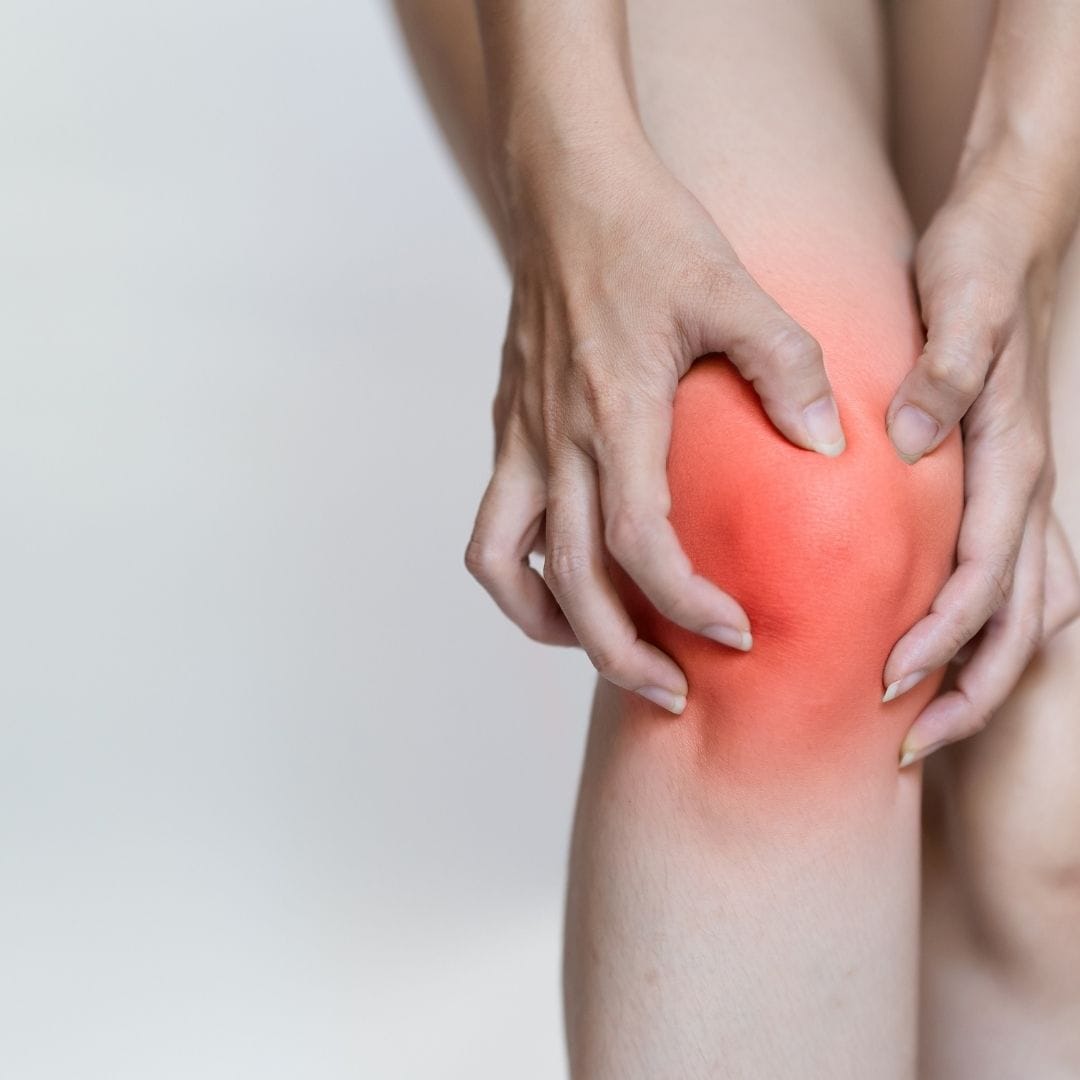
The swelling appeared over a few days. It sits directly over the kneecap — soft, fluctuant, tender to touch, but surprisingly, the knee itself bends and straightens without much pain. The joint is not stiff in the morning the way arthritic knees are. Moving the knee does not reproduce the symptoms the way a meniscus tear would. This is knee bursitis — and the characteristic pattern makes it one of the more reliably diagnosable conditions around the knee.
Knee bursitis is frequently misidentified as knee arthritis by patients — understandably, because both involve knee pain and swelling. But they are fundamentally different conditions. Arthritis is inside the joint. Bursitis is outside it. The distinction matters because the treatment, the prognosis, and the urgency are completely different.
What Is a Bursa?
A bursa is a small, closed, fluid-filled sac that sits between tissues — typically between a tendon or muscle and a bony prominence — to reduce friction during movement. The knee has approximately a dozen bursae around it, several of which are clinically significant when they become inflamed. Normally these sacs contain only a tiny amount of fluid. When irritated, infected, or subject to repeated trauma, they fill with excess fluid, enlarge, and become painful.
Which Bursa Is Affected — Location Tells the Story
Prepatellar Bursa
Sits directly over the patella (kneecap). Inflamed by repeated kneeling — carpet fitters, plumbers, gardeners. Produces the characteristic soft dome-shaped swelling over the front of the knee. Also called "housemaid's knee."
Infrapatellar Bursa
Sits below the patellar tendon. Irritated by repetitive jumping and kneeling. Produces swelling just below the kneecap. Common in athletes who jump — volleyball, basketball — and in clergy who kneel frequently.
Pes Anserine Bursa
Sits on the inner side of the knee below the joint line, where three tendons insert. Common in patients with knee arthritis, obesity, or diabetes. Causes medial knee pain that is often mistaken for worsening arthritis. Responds well to injection.
Iliotibial Band Bursa
At the outer side of the knee beneath the IT band. Common in runners with IT band syndrome. Causes lateral knee pain with running, particularly on downhill terrain.
Baker's Cyst (Popliteal Bursa)
A cyst behind the knee that develops from fluid tracking out of the joint — usually in the context of knee arthritis or a meniscus tear. The cyst itself is not the problem — the underlying joint condition causing excess fluid is what needs to be addressed.
Septic Bursitis
Bacterial infection of a bursa — usually from a skin break over the swelling. Presents as a red, warm, very tender, rapidly enlarging bursa — often with fever. Requires urgent assessment and antibiotics. If not treated promptly, infection can spread.
Bursitis vs Arthritis — How to Tell the Difference
Knee Bursitis
- Localised swelling at a specific point around the knee
- Soft, fluctuant swelling — presses in like a water balloon
- Knee movement often relatively preserved
- Tenderness at the bursa, not throughout the joint
- No significant morning stiffness of the joint
- X-ray often normal
- Onset often rapid (days)
Knee Arthritis
- Generalised knee pain throughout the joint
- Swelling inside the joint — feels like a puffy, warm knee
- Reduced range of movement, especially full bending
- Morning stiffness lasting 30+ minutes
- Crepitus (grinding) with movement
- X-ray shows joint space narrowing and bone spurs
- Gradual onset over months and years
Symptoms by Bursa Type
Prepatellar (Kneecap)
Visible dome-shaped swelling over the kneecap. Tender to direct pressure. Kneeling painful. Knee movement relatively comfortable.
Infrapatellar (Below Kneecap)
Swelling and pain just below the patellar tendon. Worsens with jumping and kneeling. Tenderness directly below the kneecap.
Pes Anserine (Inner Knee)
Pain on the inner side of the knee about 5-7 cm below the joint line. Worse at night. Climbing stairs painful. Common in overweight patients with osteoarthritis.
Baker's Cyst (Behind Knee)
Fullness or bulge behind the knee. May cause tightness with full knee bending. Can rupture — producing sudden calf pain and swelling mimicking a DVT.
Septic Bursitis (Infected)
Rapidly enlarging swelling, red, hot, very tender. Often fever and general unwellness. History of skin break or trauma over the area. Urgent assessment needed.
IT Band Bursa (Outer Knee)
Lateral knee pain at the outer knee that comes on at a predictable point during running. Burning quality. Common in distance runners increasing mileage.
What Causes Knee Bursitis?
- Repetitive friction or pressure — occupations or activities involving repeated kneeling are the most common cause of prepatellar and infrapatellar bursitis
- Direct trauma — a single blow to the kneecap can cause haemorrhage into the bursa and subsequent inflammation
- Underlying knee arthritis — the excess joint fluid of arthritis can decompress into adjacent bursae, creating Baker's cysts and pes anserine bursitis
- Diabetes and obesity — both increase susceptibility to pes anserine bursitis significantly
- Gout or rheumatoid arthritis — inflammatory conditions predispose to bursal inflammation from crystal deposition or synovial involvement
- Bacterial infection — most commonly from a skin break over the bursa allowing bacteria to enter; Staphylococcus aureus is the most common organism
Treatment
Diagnosis at Pure Ortho Hospitals, Sainikpuri
- Clinical examination — location of swelling, warmth, tenderness, range of movement assessment, and signs of infection
- Ultrasound — confirms bursal swelling, distinguishes bursitis from a joint effusion, guides aspiration and injection
- Bursal fluid analysis — aspirated fluid examined for infection (septic bursitis), gout crystals, or haemorrhage
- X-ray — assesses underlying knee arthritis, calcification within the bursa, or bony changes
- MRI — when the diagnosis is uncertain or when intra-articular pathology (meniscus, cartilage) needs to be assessed alongside the bursitis
Treatment at Pure Ortho Hospitals, Sainikpuri
- Activity modification — avoiding the kneeling, friction, or repetitive loading that is causing the inflammation. Knee pads for those who cannot avoid kneeling.
- Ice and compression — reduces acute swelling and pain in the initial inflammatory phase
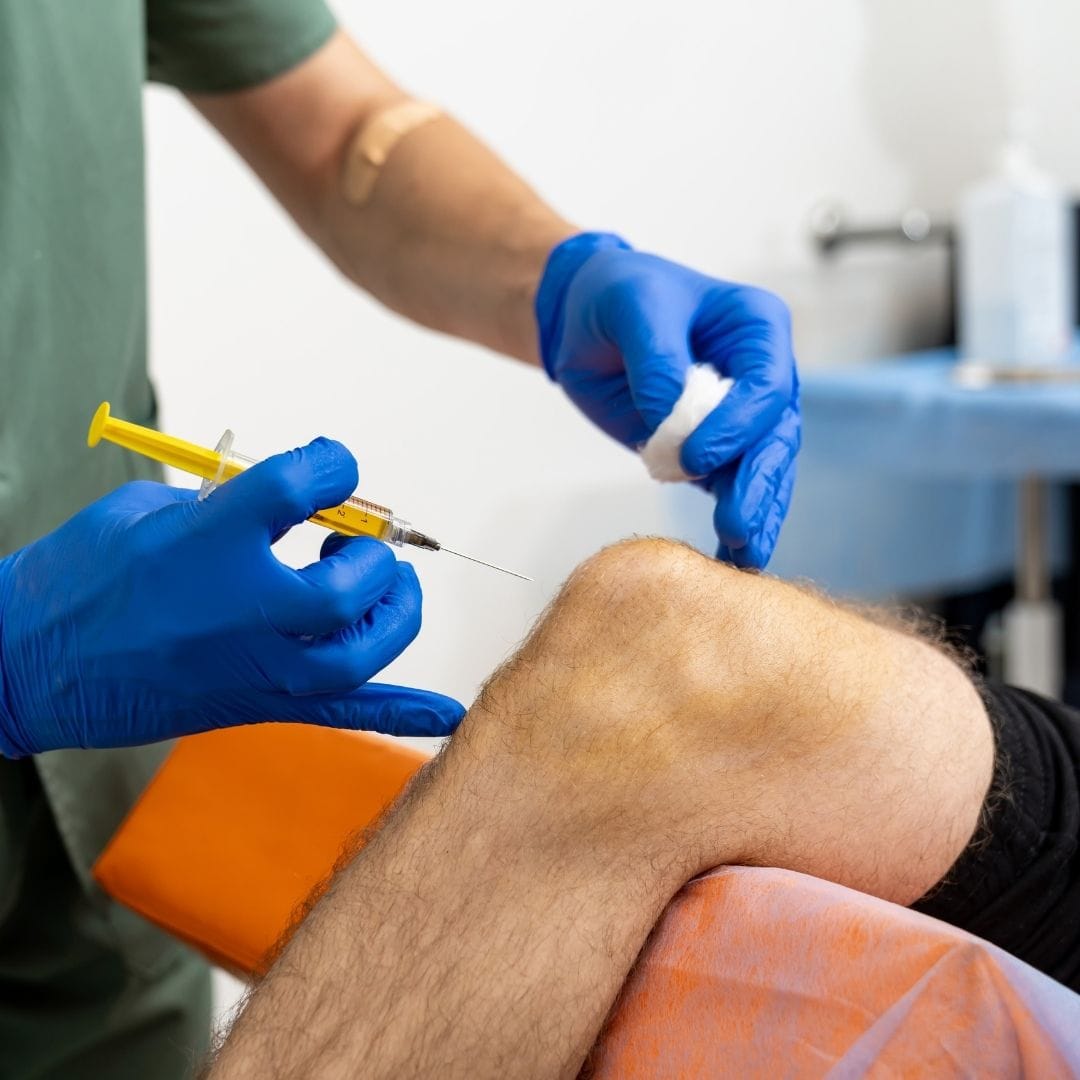
- Aspiration — draining the bursa fluid with a needle, guided by ultrasound. Relieves pressure immediately. The fluid is sent for testing when infection or gout is possible.
- Corticosteroid injection — injecting anti-inflammatory medication into the bursa after aspiration. Highly effective for non-septic bursitis. Often provides complete resolution.
- Antibiotics — for confirmed septic bursitis. Oral antibiotics for mild infection; intravenous for severe or spreading infection.
- Surgical bursectomy — removing the chronically thickened bursa when multiple aspiration and injection cycles have not resolved the problem. Day procedure, rapid recovery.
- Treating the underlying cause — managing knee arthritis or gout that is driving recurrent bursitis is essential to prevent recurrence.
Seek Urgent Assessment If the Knee Swelling Is
- Red and warm with rapid enlargement over 24-48 hours
- Associated with fever or feeling generally unwell
- Following a cut, graze, or puncture wound over the kneecap area
- In a diabetic patient — infection spreads faster and more aggressively
Septic bursitis needs same-day assessment. Call Pure Ortho Hospitals, Sainikpuri: 8686868208
Meet the Specialists at Pure Ortho Hospitals
Dr. G. Uday Sekhar Reddy
MBBS, MS Ortho, MCh Ortho
Dr. V.S. Abhilash Kumar S
MBBS, MS Ortho, FIJR, FISS (S.Korea, USA) — Clinical Director
Dr. Sai Karthikeya Badri
MBBS, D. Ortho, DNB
Dr. L. Sreeram
MPT (Ortho), FDOR, MIAP
Dr. Kranthi Kumar Reddy
MBBS, MD, C.Diab
Frequently Asked Questions
Other Departments at Pure Ortho Hospitals
Knee Swelling That Is Not Going Away Needs to Be Assessed
Most knee bursitis resolves quickly with the right treatment. Septic bursitis needs same-day attention. Either way — visit Pure Ortho Hospitals, Sainikpuri, Hyderabad and get a clear answer.
Call 8686868208More from Pure Ortho Hospitals
This article is for patient education only. Please consult a qualified orthopaedic surgeon before making any treatment decisions.