


Two patients walk into Pure Ortho Hospitals, Sainikpuri with the same diagnosis on their MRI report: meniscus tear. One is 24, plays football every weekend, and remembers the exact moment his knee twisted during a tackle. The other is 58, did nothing unusual, and noticed the pain after simply standing up from a low chair. Same structure torn — completely different story, and in many cases, a different treatment path.
Understanding which type of meniscus tear you have changes how the condition should be approached, what to expect from treatment, and what the realistic outlook is. This guide explains both.
What Is the Meniscus?
The knee has two C-shaped cartilage pads called menisci — one on the inner side (medial meniscus) and one on the outer side (lateral meniscus). They sit between the thighbone and shinbone, acting as cushions that absorb shock, distribute weight evenly across the joint, and add stability during movement.
The medial meniscus is more commonly torn than the lateral meniscus — partly because it is less mobile and more firmly attached, making it more vulnerable to shear forces during twisting movements of the knee.
Sports Tear vs Degenerative Tear — The Critical Distinction
This is the single most important distinction in understanding a meniscus tear, because it changes everything about how the condition is approached.
Traumatic / Sports Tear
- Sudden onset during a specific activity
- Usually involves twisting or pivoting with foot planted
- Patient typically remembers the exact moment
- Common ages: teens to 40s
- Often associated with ACL injury in the same incident
- Tear tissue is generally healthier — better repair potential
- Common in football, cricket, badminton, basketball
Degenerative Tear
- Gradual onset, often no specific triggering event
- Can occur from minor movements — squatting, twisting while standing
- Patient often cannot recall any specific incident
- Common ages: 40s and above
- Often coexists with early knee arthritis
- Tear tissue is weakened by age — poorer repair potential
- Builds up from years of cumulative joint wear
This distinction directly affects surgical decision-making. A traumatic tear in a young, healthy patient has good tissue quality that often allows for meniscus repair — stitching the tear back together so it can heal. A degenerative tear in an older patient typically has poorer quality tissue that is less likely to heal even if repaired, which is why trimming (partial meniscectomy) is more often the appropriate surgical approach in this group.
Tear Patterns — What the MRI Report Describes
Bucket Handle Tear
A long fragment of meniscus flips into the joint space — like the handle of a bucket. Can cause the knee to lock or get stuck in a bent position. Usually requires surgical treatment due to the mechanical block it creates.
Horizontal Tear
Splits the meniscus into upper and lower layers. Common in degenerative tears. Can sometimes be managed conservatively depending on size and symptoms.
Radial Tear
Runs from the inner edge toward the outer rim of the meniscus, like a crack. Can significantly affect the meniscus's shock-absorbing function depending on size and location.
Flap Tear
A loose flap of torn meniscus tissue that can catch in the joint, causing intermittent locking, catching, or a sensation of something moving inside the knee.
Posterior Horn Tear
Involves the back portion of the meniscus — the most common location for both traumatic and degenerative tears, particularly in the medial meniscus.
Complex Tear
A combination of tear patterns in the same meniscus, often seen in advanced degenerative cases or significant trauma. Surgical approach depends on the specific pattern combination.
Why Tear Location Matters — The Blood Supply Zones
The meniscus has three zones based on blood supply, and this single factor is one of the biggest determinants of whether a tear can heal — with or without surgical repair.
Good blood supply. Best healing potential. Tears here are the best candidates for surgical repair or even conservative healing.
Limited blood supply. Variable healing potential. Repair may be attempted depending on tear pattern and patient factors.
Minimal to no blood supply. Poor healing potential. Tears here typically do not heal on their own and are usually treated with trimming rather than repair.
This is the scientific basis for the frequently asked question "can a meniscus tear heal on its own." The honest answer depends almost entirely on where the tear is located. A small tear in the outer red zone has a real chance of healing with conservative management. A tear in the inner white zone, regardless of size, is unlikely to heal without surgical intervention if it is causing symptoms.
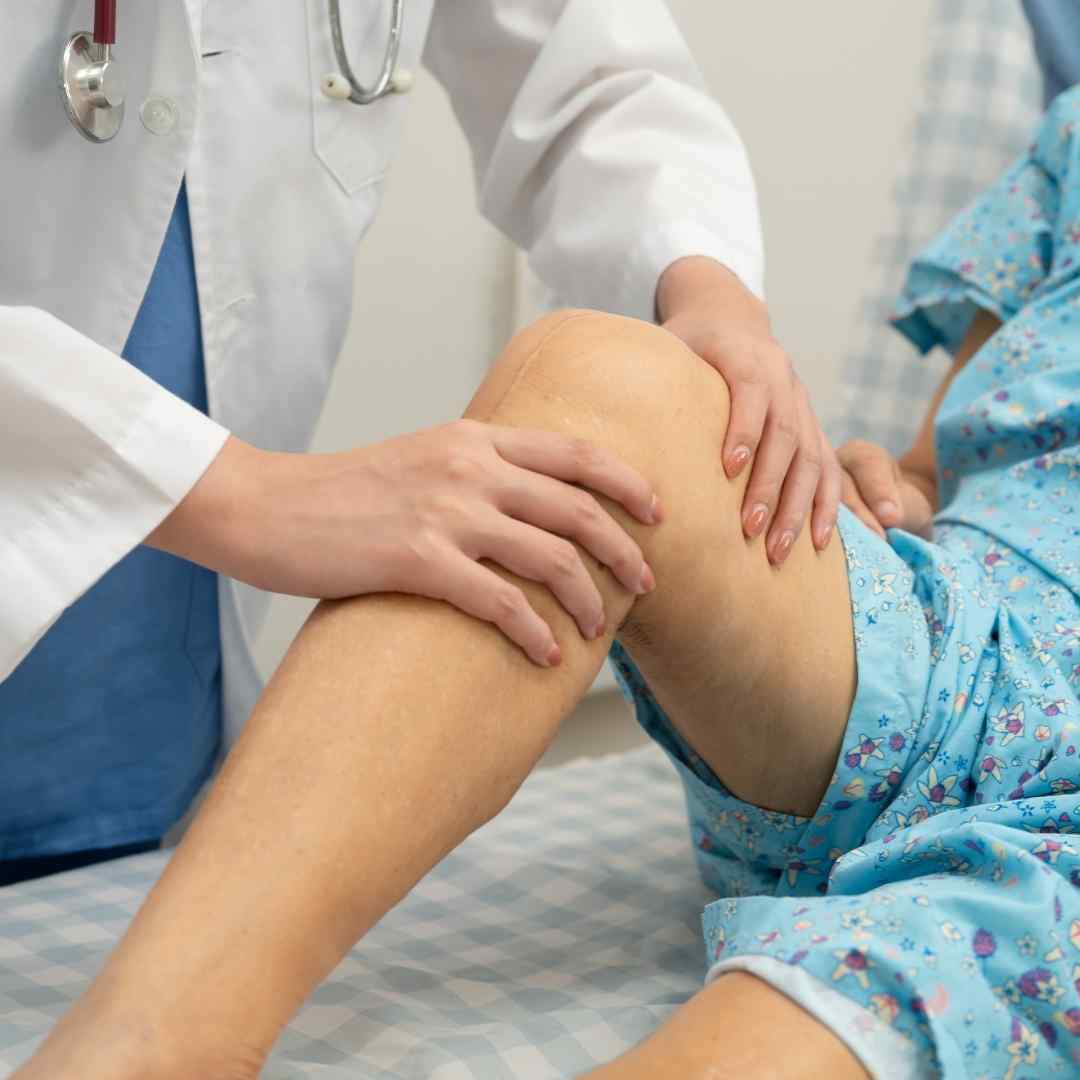
Symptoms of a Meniscus Tear
Joint Line Pain
Pain along the inner or outer edge of the knee joint, often the most localised symptom
Swelling
Develops over several hours after a traumatic tear; can be recurrent with degenerative tears
Locking or Catching
The knee gets stuck or catches during movement — a strong indicator of a mechanically significant tear like a bucket handle
Giving Way
A sense the knee is unstable or about to buckle, particularly when twisting or pivoting
Limited Range of Motion
Difficulty fully straightening or bending the knee, especially in the days after a traumatic tear
Clicking Sensation
An audible or palpable click during certain movements — common but not specific to meniscus tears alone
How Meniscus Tears Are Diagnosed
Diagnostic process at Pure Ortho Hospitals, Sainikpuri
- Clinical history — mechanism of injury (or absence of one), pain pattern, locking episodes, prior knee problems
- Physical examination — McMurray test and Thessaly test reproduce symptoms by stressing the meniscus; joint line tenderness assessment
- X-ray — does not show the meniscus directly but identifies any associated arthritis or bone changes
- MRI — the definitive imaging study; shows tear location, pattern, zone, and any associated ligament or cartilage damage
- Combined ACL assessment — when a tear is traumatic, the ACL is assessed simultaneously, as the two injuries frequently occur together
Treatment — Matched to Tear Type, Not Just Tear Presence
A meniscus tear on an MRI report does not automatically mean surgery. Treatment decisions are based on the combination of tear location, pattern, size, the patient's symptoms, age, and activity demands — not the presence of a tear alone.
Treatment options your specialist may discuss
- Physiotherapy and activity modification — the first approach for many degenerative tears and smaller traumatic tears without mechanical symptoms
- Anti-inflammatory management — for pain and swelling control during the acute phase
- Arthroscopic partial meniscectomy — trimming the torn, damaged portion of meniscus to remove the source of mechanical symptoms; the most common surgical procedure for meniscus tears
- Arthroscopic meniscus repair — stitching the tear together to preserve the meniscus; appropriate for tears in the better blood-supply zones, particularly in younger patients with good tissue quality
- Combined ACL and meniscus surgery — when both structures are torn together, typically addressed in the same surgical procedure
The shift toward preserving as much meniscus tissue as possible — repair over trimming wherever feasible — reflects long-term evidence that removing meniscus tissue accelerates arthritis development. This is why a careful, tear-specific assessment at Pure Ortho Hospitals, Sainikpuri matters more than a generic surgical recommendation.
Recovery Time — What to Expect
General recovery timelines
- Conservative management: Improvement typically seen within 4-8 weeks with consistent physiotherapy
- After meniscectomy (trimming): Walking same day, light activity within 1-2 weeks, full recovery 4-6 weeks
- After meniscus repair: Longer recovery due to healing time needed — restricted weight-bearing initially, full recovery typically 3-4 months
- Combined ACL and meniscus surgery: Recovery follows the longer ACL reconstruction timeline, typically 6-9 months for full return to sport
See a Specialist Promptly If You Have
- Your knee is locked and will not fully straighten or bend
- Significant swelling developing within hours of a twisting injury
- A sense the knee is giving way repeatedly
- Pain and mechanical symptoms persisting beyond 2-3 weeks
Call Pure Ortho Hospitals, Sainikpuri: 8686868208
Meet the Specialists at Pure Ortho Hospitals
Dr. G. Uday Sekhar Reddy
MBBS, MS Ortho, MCh Ortho
Dr. V.S. Abhilash Kumar S
MBBS, MS Ortho, FIJR, FISS (S.Korea, USA) — Clinical Director
Dr. Pudari Manoj Kumar
MBBS, MS Ortho, FIJR, FIRJR
Dr. Sai Karthikeya Badri
MBBS, D. Ortho, DNB
Dr. L. Sreeram
MPT (Ortho), FDOR, MIAP
Dr. L. Sri Dharani
BPT, MIAP, PTOTA (Canada)
Frequently Asked Questions
Other Departments at Pure Ortho Hospitals
Locking, Catching, or Persistent Knee Pain Needs Evaluation
Whether your meniscus tear came from a sports injury or built up gradually, the right treatment depends on the specific tear. Visit Pure Ortho Hospitals, Sainikpuri, Hyderabad for a thorough evaluation.
Call 8686868208More from Pure Ortho Hospitals
This article is for patient education only. Please consult a qualified orthopaedic surgeon before making any treatment decisions.