

Shoulder Impingement — Why Your Shoulder Hurts When You Lift Your Arm
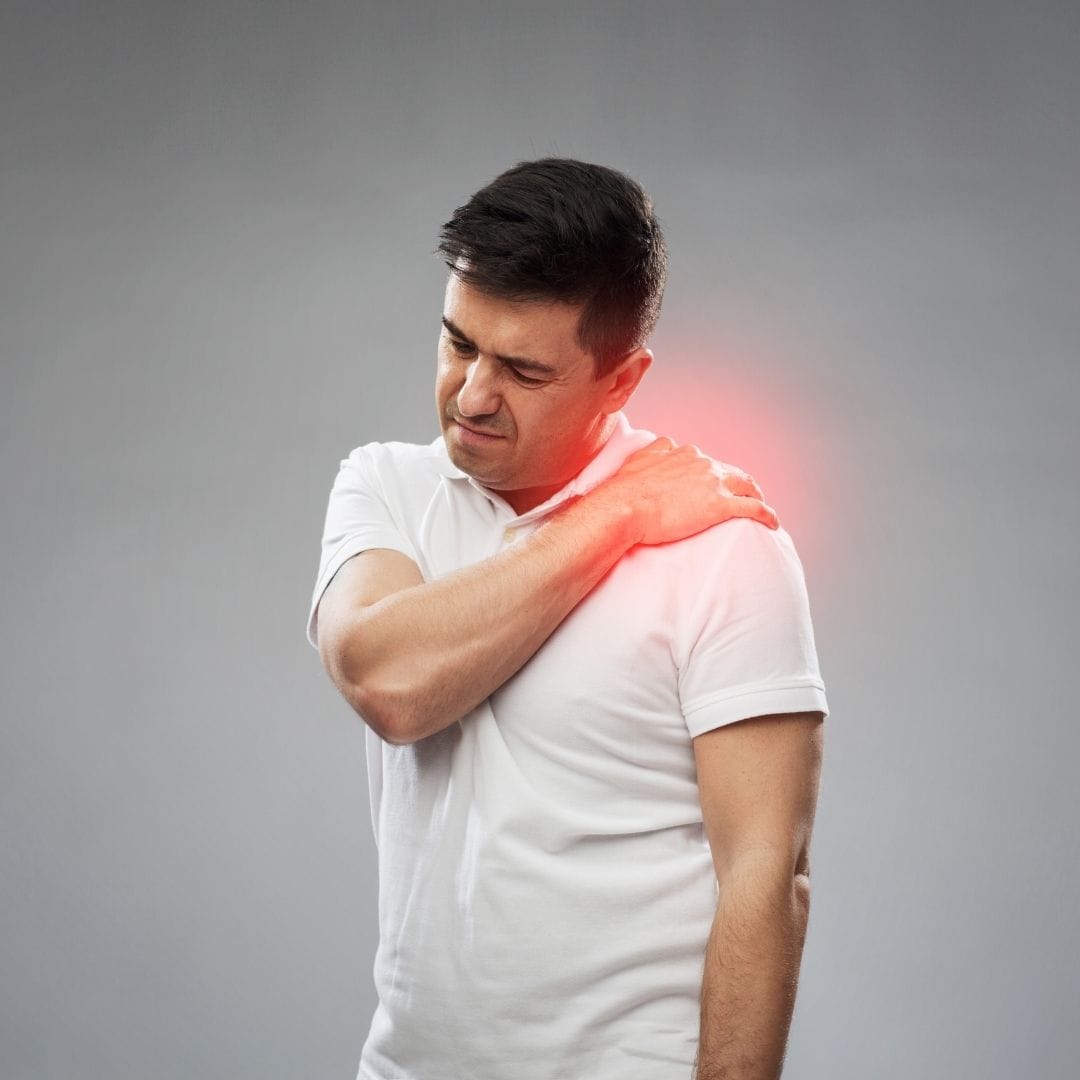
Shoulder pain that appears specifically when raising the arm — but not at rest and not at full elevation — is one of the most characteristic presentations in musculoskeletal medicine. The person can swing a cricket bat at low speeds without issue, can reach forward without pain, but lifting their hand above shoulder height to take something off a shelf produces a sharp, familiar pain. This is the painful arc of shoulder impingement.
Shoulder impingement is among the most common causes of shoulder pain in adults — particularly in those involved in overhead sport, swimming, gym training, or professions requiring repeated overhead reach. It is also one of the most effectively treated conditions when managed properly from the start. The frustration is that many patients with impingement are told to "rest the shoulder" without addressing the underlying mechanics that caused it, leading to repeated bouts of pain and eventual rotator cuff damage that rest alone will never prevent.
What Is Shoulder Impingement?
The subacromial space is the gap between the rotator cuff tendons (which lie on top of the humeral head) and the underside of the acromion — the bony shelf that forms the roof of the shoulder joint. Running through this space is the supraspinatus tendon and the subacromial bursa (a fluid-filled cushioning sac).
During arm elevation, the humeral head rises and the subacromial space narrows. In a healthy shoulder, this is managed by the rotator cuff muscles pulling the humeral head downward and centring it in the socket — maintaining adequate space. When rotator cuff function is reduced, posture is poor, or the space is narrowed by bone or inflammation, the supraspinatus tendon and bursa are compressed between the humeral head and acromion — producing the pain, inflammation, and over time, tendon damage of impingement syndrome.
The Painful Arc — The Defining Feature
Arm Elevation and Where Pain Occurs
Pain-Free Zone
Arm at side to early elevation. Subacromial space wide. No compression.
Painful Arc
Subacromial space at its narrowest. Rotator cuff and bursa compressed against acromion. Maximum pain.
Pain Eases
Arm fully overhead. Space widens again as the shoulder rotates. Pain often lessens or disappears.
This pattern — pain in the middle of the range, but not at the beginning or end — is almost diagnostic of shoulder impingement when present. A patient who can fully raise the arm overhead but has significant pain getting there has a different problem from one who cannot get the arm above 90 degrees at all. The arc pattern helps distinguish impingement from rotator cuff tear, frozen shoulder, and acromioclavicular joint pathology.
What Causes Shoulder Impingement?
Rotator Cuff Weakness
The primary mechanical cause. Weak rotator cuff muscles fail to hold the humeral head down during elevation, allowing it to ride upward and compress the subacromial structures. Most cases of impingement have a significant rotator cuff weakness component that physiotherapy directly addresses.
Poor Posture
Rounded shoulders and a forward head position — extremely common in desk-based workers — change the orientation of the acromion, narrowing the subacromial outlet. This is why impingement is increasingly common in Hyderabad's office-working population.
Repetitive Overhead Activity
Swimming, cricket bowling, badminton, volleyball, painting, and other overhead activities create repeated subacromial compression that accelerates wear and inflammation in the supraspinatus tendon and bursa.
Hooked or Curved Acromion
The acromion varies in shape between individuals. A hooked (Type 3) or curved (Type 2) acromion reduces the subacromial outlet more than a flat (Type 1) acromion, creating a structural predisposition to impingement.
Subacromial Bursitis
Inflammation and swelling of the bursa itself occupies space in an already narrow outlet, contributing to or directly causing impingement symptoms.
Rotator Cuff Tendon Thickening
Degenerative changes in the supraspinatus tendon thicken the tendon itself, reducing the space available within the already narrow subacromial outlet.
Symptoms — What Impingement Feels Like Day to Day
Painful Arc
Pain at 60-120 degrees of arm elevation — reaching for something overhead, putting on a shirt, combing hair
Night Pain
Sleeping on the affected shoulder is painful. Waking with shoulder discomfort is common — the shoulder rests in a position that loads the subacromial structures
Outer Shoulder Pain
Pain localised to the outer arm just below the shoulder tip — the referred pain pattern of supraspinatus and subacromial bursa pathology
Weakness with Elevation
Difficulty lifting the arm against resistance — particularly straight out to the side (abduction)
Pain Reaching Behind
Reaching behind to do up a bra strap, reach the back pocket, or fasten a seatbelt provokes pain
Progressive Worsening
Typically starts as occasional pain with specific activities, gradually becoming more constant and affecting a wider range of daily tasks

Diagnosis — What the Specialist Assesses
Assessment at Pure Ortho Hospitals, Sainikpuri
- Painful arc test — identifying the specific degree range at which pain occurs
- Neer's sign — the arm is passively raised with the shoulder internally rotated; pain indicates subacromial impingement
- Hawkins-Kennedy test — the arm is raised to 90 degrees and internally rotated; pain indicates subacromial compression
- Empty can test — tests supraspinatus strength and tendon integrity
- X-ray — assesses acromion shape, acromioclavicular joint, and calcification in the tendon
- Ultrasound — dynamic imaging of the subacromial space; can show bursal thickening and tendon changes in real time
- MRI — definitive assessment of rotator cuff integrity, bursal state, and excludes cuff tear when clinically suspected
Treatment — Why Physiotherapy Works and When Surgery Is Needed
Conservative treatment pathway — effective in most cases
- Rotator cuff strengthening physiotherapy — the primary treatment. Specifically strengthening the rotator cuff muscles restores their ability to pull the humeral head down during elevation, increasing the subacromial space mechanically. This is the single most effective intervention for most impingement cases.
- Scapular stabilisation exercises — the shoulder blade muscles control the position of the acromion relative to the rotator cuff. Weakness in these muscles worsens impingement; strengthening them directly increases outlet space.
- Posture correction — addressing the rounded shoulder posture that is the dominant modifiable risk factor in desk workers and gym-goers.
- Subacromial corticosteroid injection — reduces bursal inflammation and pain, creating a window for physiotherapy to be performed more effectively. Most useful as an adjunct to physiotherapy, not as a standalone treatment.
- Activity modification — temporary reduction in overhead activities during the acute phase; complete rest is counterproductive.
- Arthroscopic subacromial decompression — keyhole surgery to shave the underside of the acromion (acromioplasty) and remove inflamed bursal tissue, widening the outlet. Reserved for patients who have completed 3-6 months of proper physiotherapy without adequate improvement. Highly effective with rapid recovery.
See a Specialist If Your Shoulder Pain
- Has not improved after 4-6 weeks of rest and basic measures
- Is waking you at night consistently
- Is preventing you from returning to sport or gym
- Is accompanied by significant weakness — possible rotator cuff tear rather than impingement alone
Call Pure Ortho Hospitals, Sainikpuri: 8686868208
Meet the Specialists at Pure Ortho Hospitals
Dr. G. Uday Sekhar Reddy
MBBS, MS Ortho, MCh Ortho
Dr. V.S. Abhilash Kumar S
MBBS, MS Ortho, FIJR, FISS (S.Korea, USA) — Clinical Director
Dr. Sai Karthikeya Badri
MBBS, D. Ortho, DNB
Dr. L. Sreeram
MPT (Ortho), FDOR, MIAP
Dr. L. Sri Dharani
BPT, MIAP, PTOTA (Canada)
Frequently Asked Questions
Other Departments at Pure Ortho Hospitals
Shoulder Pain When Lifting? A Proper Assessment Takes 20 Minutes
Shoulder impingement responds well to structured treatment — but only if the right muscles are targeted in the right way. Visit Pure Ortho Hospitals, Sainikpuri, Hyderabad for a diagnosis-first approach.
Call 8686868208More from Pure Ortho Hospitals
This article is for patient education only. Please consult a qualified orthopaedic surgeon before making any treatment decisions.