

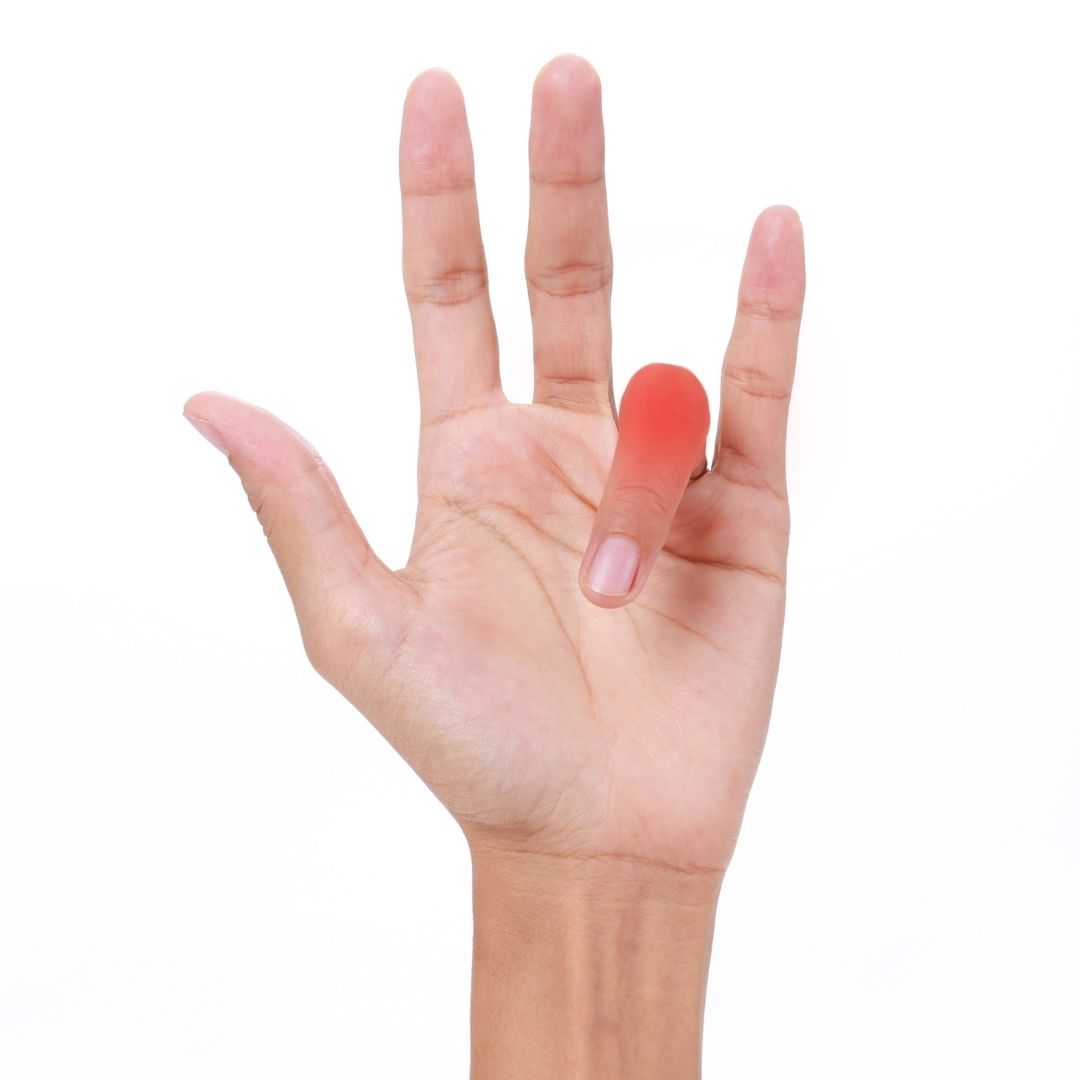
It usually starts as an oddity. A slight clicking when the finger bends. A morning stiffness that loosens after moving the hand a few times. Then the finger starts catching — bending smoothly but requiring extra force to straighten, accompanied by a sharp click. Eventually the finger locks in a bent position and has to be manually pulled straight with the other hand.
Trigger finger is one of the most common hand conditions — and one of the most under-recognised, because many patients assume the clicking and locking are arthritis or something that will simply resolve on its own. Understanding what is actually happening inside the tendon sheath explains why most cases do not improve without some form of treatment.
What Is Trigger Finger?
The flexor tendons of the fingers pass through a series of fibrous tunnels — called tendon sheaths — that keep them close to the bone and guide their movement during finger bending. At the base of each finger, a thickened ring of tissue called the A1 pulley forms the entry point to this tunnel.
In trigger finger (stenosing tenosynovitis), inflammation causes the tendon itself or its sheath to thicken. This thickening means the tendon can no longer glide smoothly through the narrowed A1 pulley — it catches and snaps through, producing the characteristic clicking. In severe cases, the thickened tendon nodule cannot pass through the pulley at all, locking the finger in a bent position.
Which Fingers Are Most Commonly Affected?
Most common. Called trigger thumb. Particularly common in diabetics.
Most commonly affected finger. Often the first to become severely locked.
Frequently involved, particularly in patients with multiple trigger fingers.
Common in adults. Associated with repetitive pinching and gripping.
Least commonly affected. Involvement suggests systemic condition.
What Causes Trigger Finger?
Diabetes
The strongest single risk factor. Diabetic patients are several times more likely to develop trigger finger — and more likely to have multiple fingers affected simultaneously. AGE-related tendon changes and fluid shifts contribute.
Repetitive Gripping
Sustained or repetitive gripping — tools, keyboards, phone scrolling — creates repeated friction at the A1 pulley that triggers the inflammatory thickening over time.
Rheumatoid Arthritis
Synovial inflammation in rheumatoid arthritis frequently involves tendon sheaths, predisposing to trigger finger — often multiple fingers bilaterally.
Hypothyroidism
Thyroid-related fluid accumulation in tissue thickens the tendon sheath and increases trigger finger risk, often alongside carpal tunnel syndrome.
Women over 40
Trigger finger is more common in women and incidence peaks between 40 and 60 years, suggesting hormonal factors in the tendon sheath tissue changes.
No Identifiable Cause
Many cases have no specific identifiable trigger — they develop through the gradual accumulation of minor sheath changes without any single precipitating factor.
Severity Grades — From Clicking to Locked
Triggering
Pain and tenderness at the base of the finger. Clicking may be felt but finger straightens freely.
Active Triggering
Finger catches during movement and requires extra force to straighten. Audible or palpable click. Still self-correctable.
Passive Triggering
Finger locks and cannot be straightened without help from the other hand. Significant functional impact.
Fixed Contracture
Finger permanently locked in flexion. Cannot be fully straightened even passively. Requires surgical intervention.
Symptoms — What Trigger Finger Feels Like
Morning Stiffness
The finger is most stiff first thing in the morning — loosening somewhat with use during the day
Clicking or Snapping
A distinct click or snap felt (and sometimes heard) when the finger bends or straightens
Tenderness at Base
A specific tender point at the base of the affected finger — the site of the A1 pulley
Locking
The finger gets stuck in a bent position, requiring manual assistance to straighten
Nodule
A small tender lump at the base of the finger — the thickened portion of the flexor tendon
Multiple Fingers
In diabetics and rheumatoid patients, several fingers may be affected simultaneously or sequentially

Treatment — From Splinting to Surgical Release
Treatment pathway at Pure Ortho Hospitals, Sainikpuri
- Activity modification and rest — reducing repetitive gripping activities. Appropriate for early Grade 1 cases.
- Night splinting — keeping the finger in a straight position during sleep prevents the overnight locking many patients experience first thing in the morning.
- Corticosteroid injection — injection into the tendon sheath at the A1 pulley site resolves symptoms in a significant proportion of patients. More effective in earlier grades and in non-diabetic patients. May be repeated once if partially effective.
- Blood sugar optimisation — for diabetic patients, improved glycaemic control improves treatment response and reduces recurrence after injection.
- Trigger finger release (surgical) — cutting the A1 pulley under local anaesthesia as a day procedure. Immediate resolution of locking. Return to light hand use within days. Highly effective with very low complication rate.
- Percutaneous release — a minimally invasive technique where a needle is used to release the pulley without a formal incision, in selected cases.
See a Specialist If Your Finger
- Is locked and cannot be straightened
- Has been clicking and catching for more than 4-6 weeks
- Multiple fingers are involved simultaneously
- Corticosteroid injection has not produced lasting relief
Call Pure Ortho Hospitals, Sainikpuri: 8686868208
Meet the Specialists at Pure Ortho Hospitals
Dr. G. Uday Sekhar Reddy
MBBS, MS Ortho, MCh Ortho
Dr. V.S. Abhilash Kumar S
MBBS, MS Ortho, FIJR, FISS (S.Korea, USA) — Clinical Director
Dr. Pudari Manoj Kumar
MBBS, MS Ortho, FIJR, FIRJR
Dr. L. Sreeram
MPT (Ortho), FDOR, MIAP
Dr. Kranthi Kumar Reddy
MBBS, MD, C.Diab
Frequently Asked Questions
Other Departments at Pure Ortho Hospitals
A Clicking or Locking Finger Is Easily Treated
Trigger finger responds well to treatment — especially when addressed early. Visit Pure Ortho Hospitals, Sainikpuri, Hyderabad for a hand evaluation.
Call 8686868208More from Pure Ortho Hospitals
This article is for patient education only. Please consult a qualified orthopaedic surgeon before making any treatment decisions.