

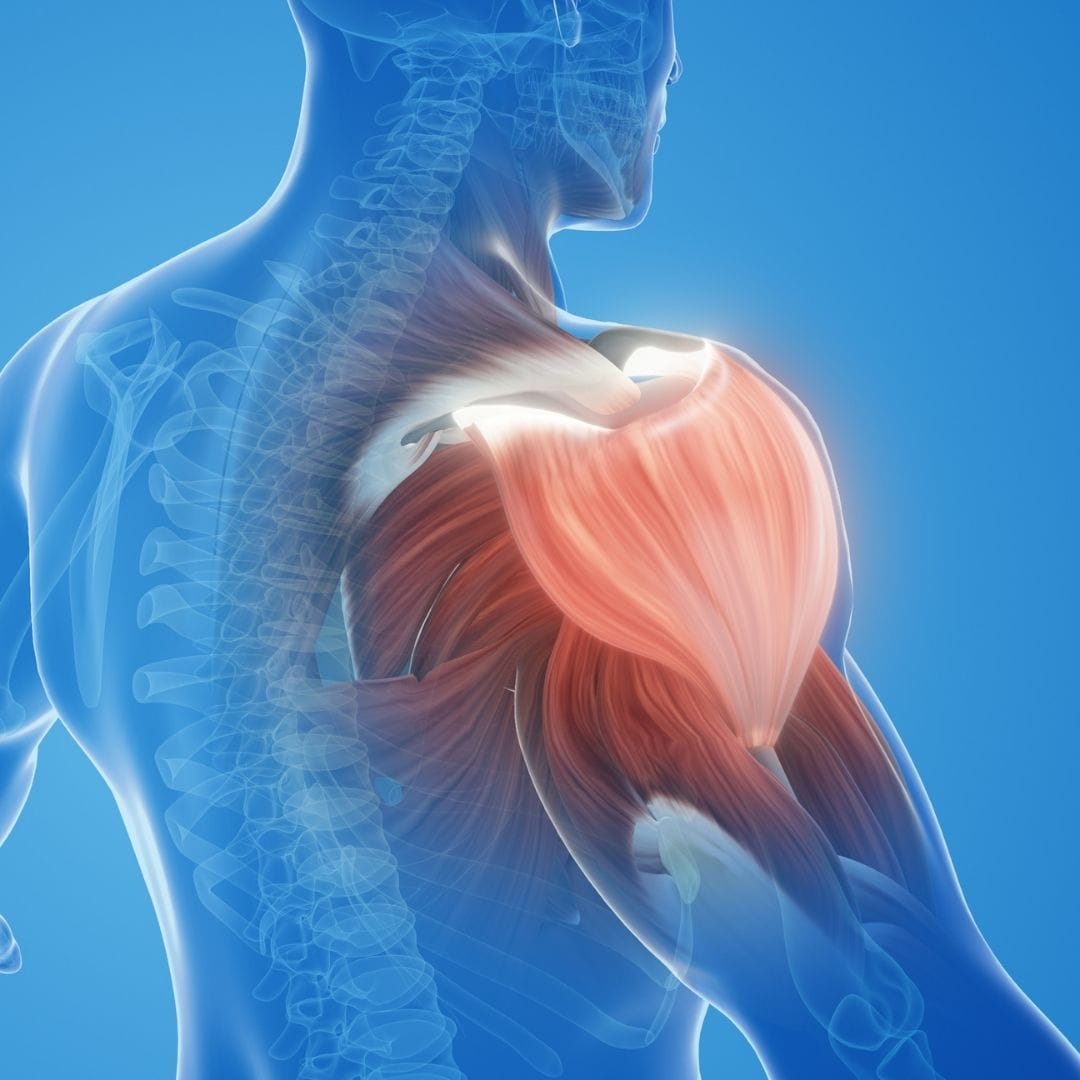
The shoulder is the most mobile joint in the human body — capable of reaching in every direction, rotating through a wide arc, and performing movements no other joint can match. That mobility comes at a structural price. The shoulder socket (glenoid) is shallow — more like a golf tee than a deep cup — and the ball (humeral head) is held in place primarily by soft tissue structures rather than bony containment. When those structures fail, the ball comes out.
The shoulder is the most frequently dislocated major joint in the human body. And unlike most injuries that heal with rest and time, a dislocated shoulder that has torn the labrum creates a structural deficit that makes every future dislocation easier and more likely — until the cycle is broken, usually with surgical repair.
What Happens During a Shoulder Dislocation
In anterior dislocation — the type that accounts for more than 95% of all shoulder dislocations — the humeral head is forced forward and out of the socket. As it exits, it tears the anterior labrum (the cartilage rim at the front of the socket) and stretches or tears the anterior glenohumeral ligaments. This combination of injuries is called a Bankart lesion.
Mechanism
Arm forced outward and backward — fall, tackle, sudden catch
Ball exits
Humeral head dislocates forward, out of the socket
Labrum tears
Anterior labrum avulses from socket rim — Bankart lesion
Ligaments stretch
Anterior capsule and ligaments permanently stretched
Structural deficit
Socket rim now damaged — shoulder inherently unstable
Re-dislocation
Next episode requires less force than the first
The Recurrence Problem — Why One Dislocation Often Leads to Many
This is the most important thing patients need to understand about shoulder dislocation. The first episode creates structural damage that does not fully repair on its own. A torn labrum does not re-attach to the bone rim with rest. Stretched ligaments do not return to their pre-injury tension without intervention. The shoulder remains structurally deficient — and progressively weaker with each repeat episode.
Young active patients — particularly those under 25 who play contact or overhead sport — face a particularly high recurrence risk without surgical intervention. The evidence is consistent across decades of research: in this population, the shoulder will dislocate again, often repeatedly, and each episode causes additional cartilage and bone damage that makes surgical repair progressively more difficult and outcomes less reliable.
Symptoms of Shoulder Dislocation
Severe Shoulder Pain
Immediate intense pain at the time of dislocation — the shoulder is visibly deformed
Loss of Normal Shape
The shoulder contour is flattened or abnormal — the humeral head is no longer in the socket
Arm Held Outward
The patient holds the arm away from the body in a fixed position — unable to move the shoulder
Numbness or Tingling
Axillary nerve is at risk during anterior dislocation — numbness over the outer shoulder is common
Apprehension
After the first episode, the patient feels dread when the arm is placed in the position that caused dislocation — a strong sign of instability
Repeated Giving Way
In recurrent instability — the shoulder slips partially out (subluxes) or fully dislocates with progressively minor provocations
What Is the Bankart Lesion — and the Hill-Sachs Lesion?
The two structural injuries of shoulder dislocation
- Bankart lesion — tear or avulsion of the anterior labrum from the front rim of the shoulder socket. The labrum normally deepens the socket and provides a bumper that prevents forward dislocation. When torn, this protective structure is lost. Bankart lesion is present in over 85% of first-time anterior dislocations.
- Hill-Sachs lesion — an impression fracture on the back of the humeral head where it impacted the socket rim during dislocation. Develops with repeated dislocations. When large, it can engage with the socket rim during shoulder elevation and contribute to ongoing instability — a factor that affects surgical planning.
- Bony Bankart — when the socket rim fractures rather than just the labrum tearing. More common with multiple dislocations. Reduces the bony surface of the socket and may require bone grafting procedures rather than soft tissue repair alone.
Treatment — From Emergency Reduction to Surgical Repair
Treatment pathway at Pure Ortho Hospitals, Sainikpuri
- Emergency reduction — returning the humeral head to the socket under sedation or anaesthesia. This should be performed by a trained clinician — self-reduction or untrained reduction risks fracture and nerve injury.
- Immobilisation — sling for 3-4 weeks after reduction. Nerve function assessed. X-ray to confirm reduction and check for associated fractures.
- MRI assessment — identifies Bankart lesion, Hill-Sachs size, capsular injury. Essential for planning definitive treatment, particularly in young patients.
- Physiotherapy — rotator cuff strengthening and shoulder stability work. Appropriate for older patients with low recurrence risk or those not suited for surgery.
- Arthroscopic Bankart repair — keyhole surgery reattaching the torn labrum to the socket rim using suture anchors. Gold standard for young active patients with confirmed Bankart lesion. Success rate above 90% for preventing recurrence.
- Latarjet procedure — bone grafting procedure for cases with significant bony Bankart lesion or large Hill-Sachs. Transfers a piece of the coracoid process to the front of the socket, restoring bony socket area.
Recovery After Bankart Repair
Week 1-4
Sling immobilisation. Gentle pendulum exercises only.
Week 4-8
Sling removed. Active range of motion begins. Physiotherapy starts.
Week 8-12
Progressive strengthening. External rotation increasing.
Month 3-4
Return to swimming, gym. Overhead loading begins.
Month 4-6
Return to non-contact sport. Confidence in overhead positions.
Month 6+
Return to contact sport. Full return to pre-injury activity level.
Do Not Attempt Self-Reduction — Go to Emergency If
- The shoulder has dislocated and will not return to position
- There is numbness over the outer shoulder after dislocation
- This is a second or subsequent dislocation — MRI and surgical assessment needed
Pure Ortho Hospitals 24x7 emergency: 8686868208
Meet the Specialists at Pure Ortho Hospitals
Dr. G. Uday Sekhar Reddy
MBBS, MS Ortho, MCh Ortho
Dr. V.S. Abhilash Kumar S
MBBS, MS Ortho, FIJR, FISS (S.Korea, USA) — Clinical Director
Dr. Sai Karthikeya Badri
MBBS, D. Ortho, DNB
Dr. L. Sreeram
MPT (Ortho), FDOR, MIAP
Dr. L. Sri Dharani
BPT, MIAP, PTOTA (Canada)
Frequently Asked Questions
Other Departments at Pure Ortho Hospitals
First Dislocation or Tenth — Get a Proper Shoulder Assessment
Whether this is your first dislocation or one in a long line, an MRI-based assessment at Pure Ortho Hospitals, Sainikpuri, Hyderabad tells you exactly what is damaged and whether surgery will break the cycle.
Call 8686868208More from Pure Ortho Hospitals
This article is for patient education only. Please consult a qualified orthopaedic surgeon before making any treatment decisions.