Robotic Knee Replacement Surgeon in Hyderabad — The Training Behind the Technology
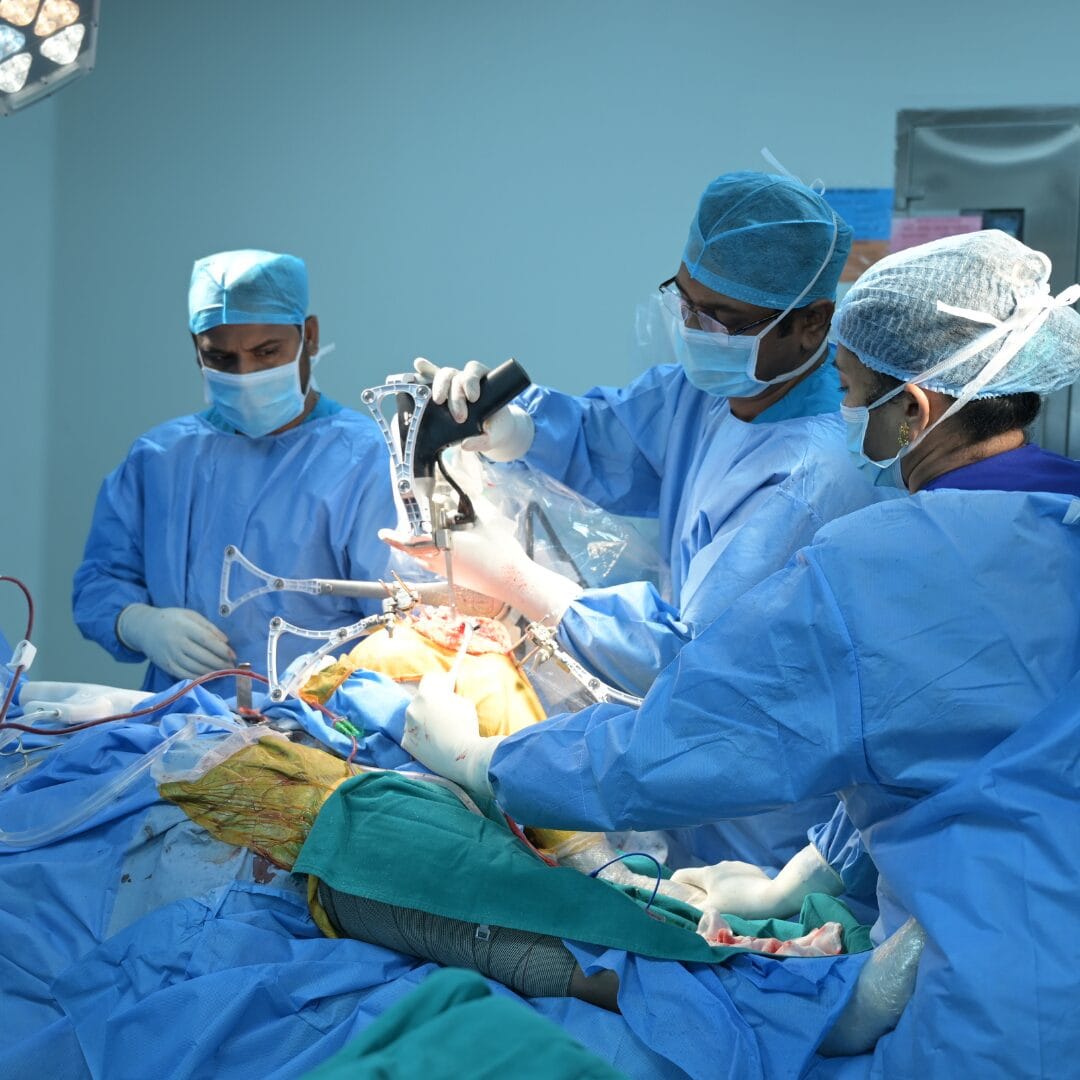
When a patient starts researching robotic knee replacement in Hyderabad, the first thing they find is a list of hospitals with robotic systems. What is harder to find — and what matters far more — is the training and experience of the surgeon using that system.
A robotic arm does not replace the surgeon. It enhances precision within the boundaries of the surgeon's plan. A poorly planned surgery executed with a robot is still a poorly planned surgery. The question to ask is not "does this hospital have a robotic system" but "what is this surgeon's specific training in joint replacement, and where did they learn it?"
What Robotic Knee Replacement Actually Does
Robotic knee replacement adds two things that conventional knee replacement does not have: pre-operative 3D planning based on CT imaging of the patient's own knee anatomy, and intraoperative robotic guidance that ensures the implant is placed according to that plan with precision not achievable by hand alone.
Robotic Knee Replacement
- 3D CT-based pre-operative plan specific to your anatomy
- Robotic arm guides bone cuts within planned boundaries
- Real-time feedback during surgery
- More accurate implant alignment and rotation
- Better joint feel and more natural knee movement
- Faster recovery in many patients
- Particularly valuable for complex or revision cases
Conventional Knee Replacement
- Standard X-ray planning
- Manual bone cuts using guides and instruments
- Surgeon judgment for alignment
- Good outcomes in experienced hands
- Established long-term data
- Available more widely
- Lower upfront cost in some centres
The precision advantage of robotic surgery matters most for alignment. Studies consistently show that robotic systems achieve more accurate implant alignment than conventional technique — and alignment is one of the strongest predictors of long-term implant survival. A well-aligned knee replacement lasts longer and functions better than a misaligned one, regardless of the quality of the implant.
What to Look For in a Joint Replacement Surgeon
Training and credentials that matter
- FIJR — Fellowship in Joint Replacement — dedicated post-graduate training in knee and hip replacement beyond the base MS Orthopaedics degree. High-volume supervised practice at a recognised joint replacement centre.
- International fellowship training — fellowship at institutions in South Korea, USA, UK, or Germany exposes the surgeon to higher volumes, more complex cases, and techniques not yet widely practised in India. This training gap is significant.
- Sports medicine and arthroscopy training — a joint replacement surgeon who also performs arthroscopy has a more complete understanding of joint mechanics and soft tissue handling — skills that directly affect replacement outcomes.
- Volume and experience — a surgeon performing 100+ joint replacements per year has a fundamentally different skill base than one performing 20. Ask directly about volume.
- Robotic system certification — not every surgeon who works in a hospital with a robot is certified to use it. The surgeon should have specific training and certification on the robotic platform being used.
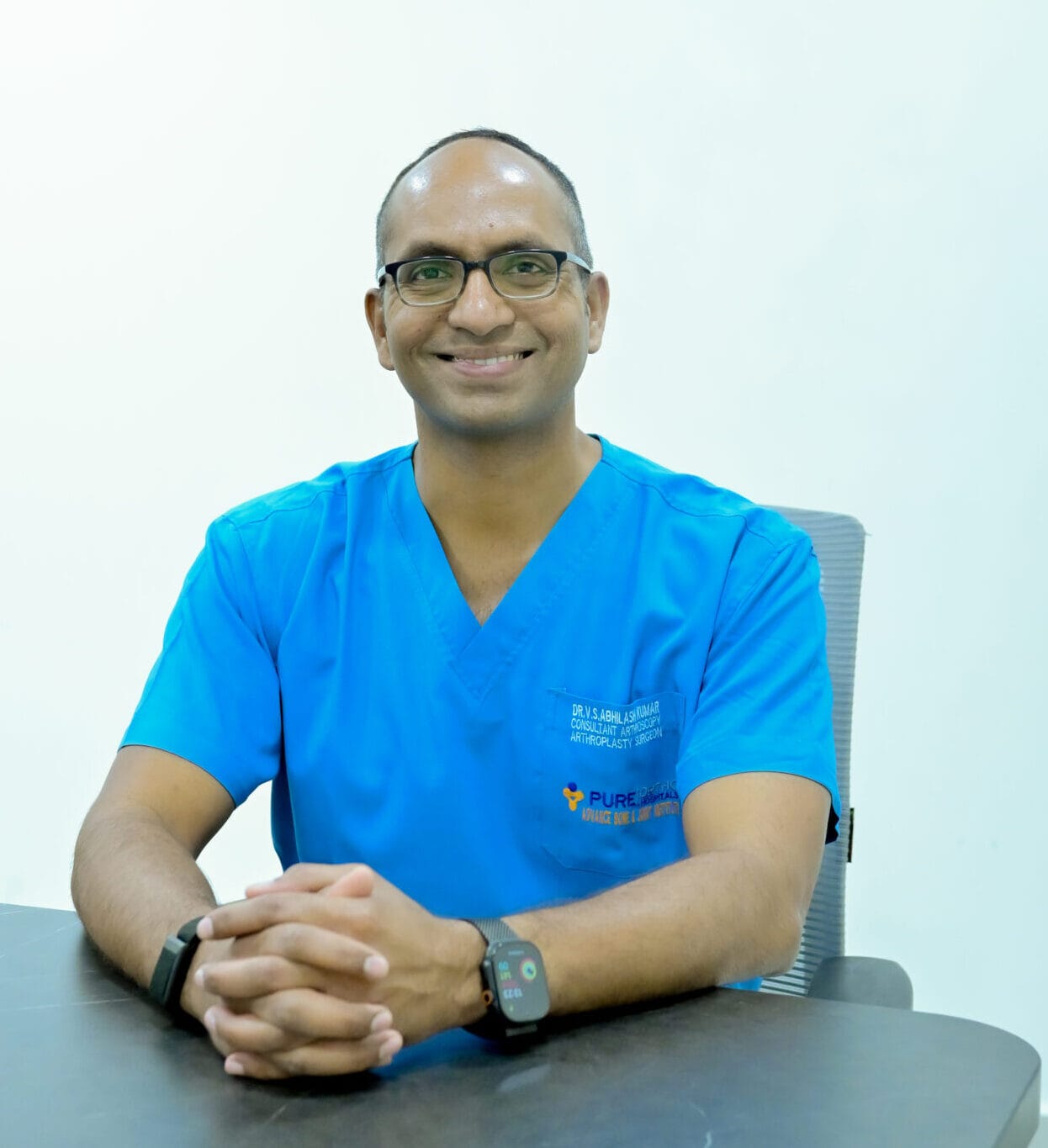
Meet Dr. V.S. Abhilash Kumar S — Clinical Director, Pure Ortho Hospitals Sainikpuri
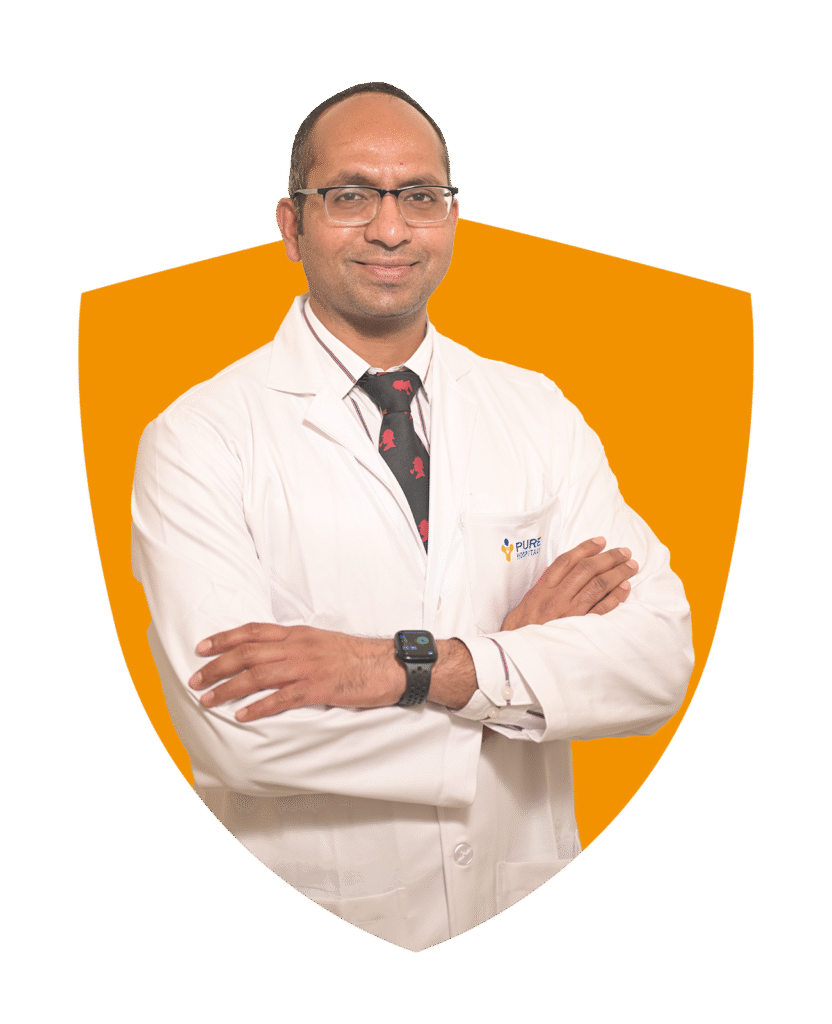
Dr. V.S. Abhilash Kumar S
Pure Ortho Hospitals, Sainikpuri, Hyderabad
MS Orthopaedics — Rangaraya Medical College
FIJR — Fellowship in Joint Replacement, Sunshine Hospitals
FISS — Shoulder Surgery Fellowship, Kyung Hee University, Seoul, South Korea
Training under Dr. Stephen Burkhart — San Antonio Orthopaedic Hospital, USA
17+ years surgical experience
The Training Journey — Why International Fellowship Matters
MBBS — Guntur Medical College
Medical degree from one of Andhra Pradesh's established government medical colleges.
MS Orthopaedics — Rangaraya Medical College
Post-graduate surgical training in orthopaedics — the foundation for all subsequent subspecialty training.
FIJR — Fellowship in Joint Replacement, Sunshine Hospitals
Dedicated fellowship in knee and hip replacement at one of India's high-volume joint replacement centres — supervised high-volume practice in primary and revision arthroplasty.
FISS — Kyung Hee University Hospital, Seoul, South Korea
Shoulder surgery fellowship in South Korea — a country with one of the highest standards of arthroscopic shoulder surgery training globally. Techniques in shoulder arthroscopy, Bankart repair, rotator cuff repair, and shoulder replacement.
Training under Dr. Stephen Burkhart — San Antonio, USA
Dr. Stephen Burkhart is one of the most cited shoulder surgeons in the world — the surgeon who developed several of the arthroscopic techniques now used globally. Training in his unit represents exposure to the highest level of arthroscopic technique.
This training journey — from India to South Korea to the USA — is not common among joint replacement surgeons practising in Hyderabad. The international fellowship exposure brings back techniques, volume experience, and a standard of practice that differs meaningfully from training confined to a single institution.
Conditions Treated
Dr. V.S. Abhilash Kumar S treats
- Robotic knee replacement — primary and complex knee replacement with 3D pre-operative planning and robotic guidance
- Robotic hip replacement — total hip replacement with robotic-assisted acetabular cup positioning
- Revision joint replacement — replacing failed or worn-out previous knee and hip implants
- ACL reconstruction — arthroscopic ligament reconstruction for ACL tears
- PCL reconstruction — posterior cruciate ligament reconstruction
- Meniscus repair and partial meniscectomy — arthroscopic meniscal surgery
- Shoulder arthroscopy — Bankart repair, rotator cuff repair, shoulder stabilisation
- Cartilage repair procedures — for knee and shoulder cartilage damage
Frequently Asked Questions
Other Departments at Pure Ortho Hospitals
Considering Knee Replacement? Talk to a Surgeon Who Has Done It in Three Countries.
Dr. V.S. Abhilash Kumar S brings international fellowship training from South Korea and the USA to every knee replacement he performs at Pure Ortho Hospitals, Sainikpuri, Hyderabad. Book a consultation.
Call 8686868208Joint Replacement Patient Guides — Pure Ortho Hospitals
This article is for patient education only. Please consult a qualified orthopaedic surgeon before making any treatment decisions.