

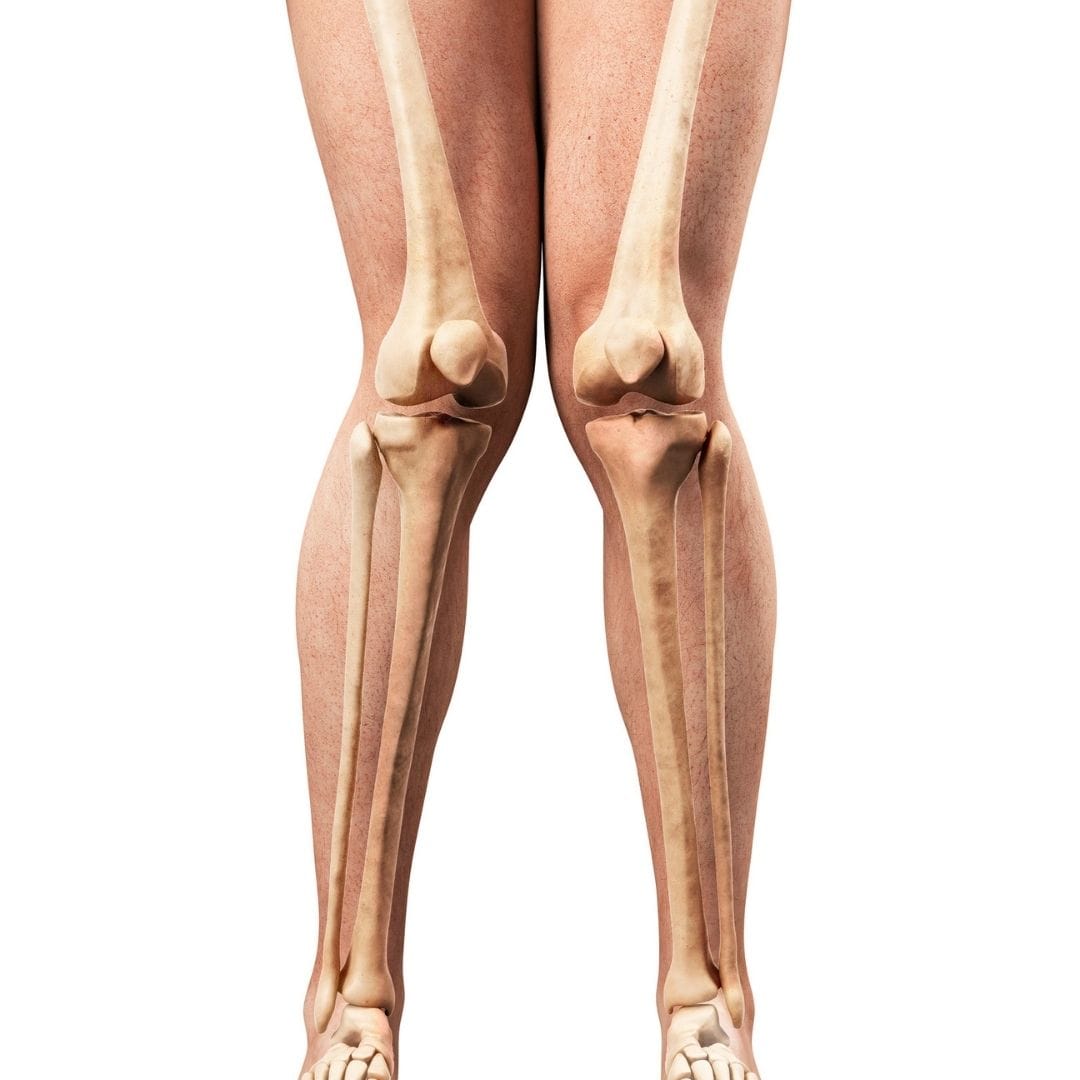
Parents notice it first — their child's knees turn in toward each other when they stand, while the feet and ankles stay apart. They search "knock knees" and find a mix of reassurance and alarm. Most paediatric knock knees are completely normal and self-correcting. But not all. And in adults, knock knees that were never corrected or developed later in life are a different matter — they cause real, measurable damage to the knee joint over time.
This guide covers what knock knees actually are, why they happen, how to tell normal childhood variation from a condition that needs treatment, and what the treatment options look like — from physiotherapy to surgical correction at Pure Ortho Hospitals, Sainikpuri, Hyderabad.
What Exactly Is a Knock Knee?
The medical term is genu valgum. When you stand with your feet slightly apart and your knees touch or nearly touch, but your ankles stay separated — that is a valgus knee alignment. The angle between the thigh bone (femur) and the shin bone (tibia), measured on a standing X-ray, is called the mechanical axis. In a normally aligned leg, this axis runs straight from the hip to the ankle through the centre of the knee. In genu valgum, the axis falls outside the centre of the knee, loading the outer (lateral) compartment of the joint more heavily than the inner (medial) compartment.
The opposite condition — bow legs, or genu varum — is where the knees angle outward and the ankles come together. Both are deformities of the mechanical axis. Knock knees and bow legs are not the same condition, even though both affect how the legs are aligned. The treatment approaches are different, and the arthritis patterns they cause are different.
Knock Knees (Genu Valgum)
- Knees angle inward toward each other
- Ankles and feet stay apart when standing
- Loads the outer (lateral) knee compartment
- Causes lateral compartment arthritis over time
- Corrected with distal femoral osteotomy (DFO)
- Common in children 3-7 years — usually self-correcting
Bow Legs (Genu Varum)
- Knees angle outward away from each other
- Ankles and feet come together when standing
- Loads the inner (medial) knee compartment
- Causes medial compartment arthritis over time
- Corrected with high tibial osteotomy (HTO)
- Common in toddlers under 2 — usually self-correcting
The Normal Leg Alignment Timeline in Children
Children's legs go through a predictable pattern of alignment change from birth to around age 9. Understanding this stops unnecessary worry — and also stops the genuinely abnormal cases from being dismissed as "just a phase."
Bow-legged
Normal. Legs naturally bowed from the foetal position in the womb.
Straightens
Legs move toward neutral alignment as walking develops.
Knock Knees
Normal developmental valgus phase. Knees touch or nearly touch. Peaks around age 4-5.
Adult Alignment
Legs reach adult alignment — slight valgus of 5-7 degrees is normal for life.
The gap between the ankles at the peak of the valgus phase — typically around age 4-5 — is usually 4-5 cm. Anything beyond 8-9 cm, or knock knees that appear only on one side, or deformity that persists past age 8-9 without improving, warrants an orthopaedic assessment. The key number on an X-ray is the tibiofemoral angle — beyond 11-12 degrees in a child, or any significant deformity in an adult, needs proper evaluation.
What Causes Knock Knees in Adults?
Childhood Deformity Not Corrected
Developmental knock knees that did not self-correct by age 9 and were never treated. The deformity was present all along — the adult is now experiencing its consequences.
Lateral Compartment Arthritis
When the outer compartment of the knee wears down more than the inner, the joint space narrows asymmetrically — pulling the alignment into valgus. The arthritis causes the deformity in these cases, rather than the reverse.
Rickets / Vitamin D Deficiency
Softening of bone from severe vitamin D or calcium deficiency in childhood causes the bones to bend under body weight. Historically common; still seen in patients with severe nutritional deficiency or malabsorption.
Rheumatoid Arthritis
RA erodes joint cartilage asymmetrically. When the lateral compartment is preferentially affected, progressive valgus deformity develops alongside the arthritis.
Growth Plate Injury
Injury to the femoral or tibial growth plate in childhood can cause asymmetric bone growth — one side of the bone grows faster than the other, pulling the leg into valgus alignment as the child grows.
Obesity
Excess body weight places abnormal forces across the knee. In some patients the lateral compartment absorbs more of this load, progressively driving the knee into valgus alignment over years.
Symptoms — What Knock Knees Actually Feel Like
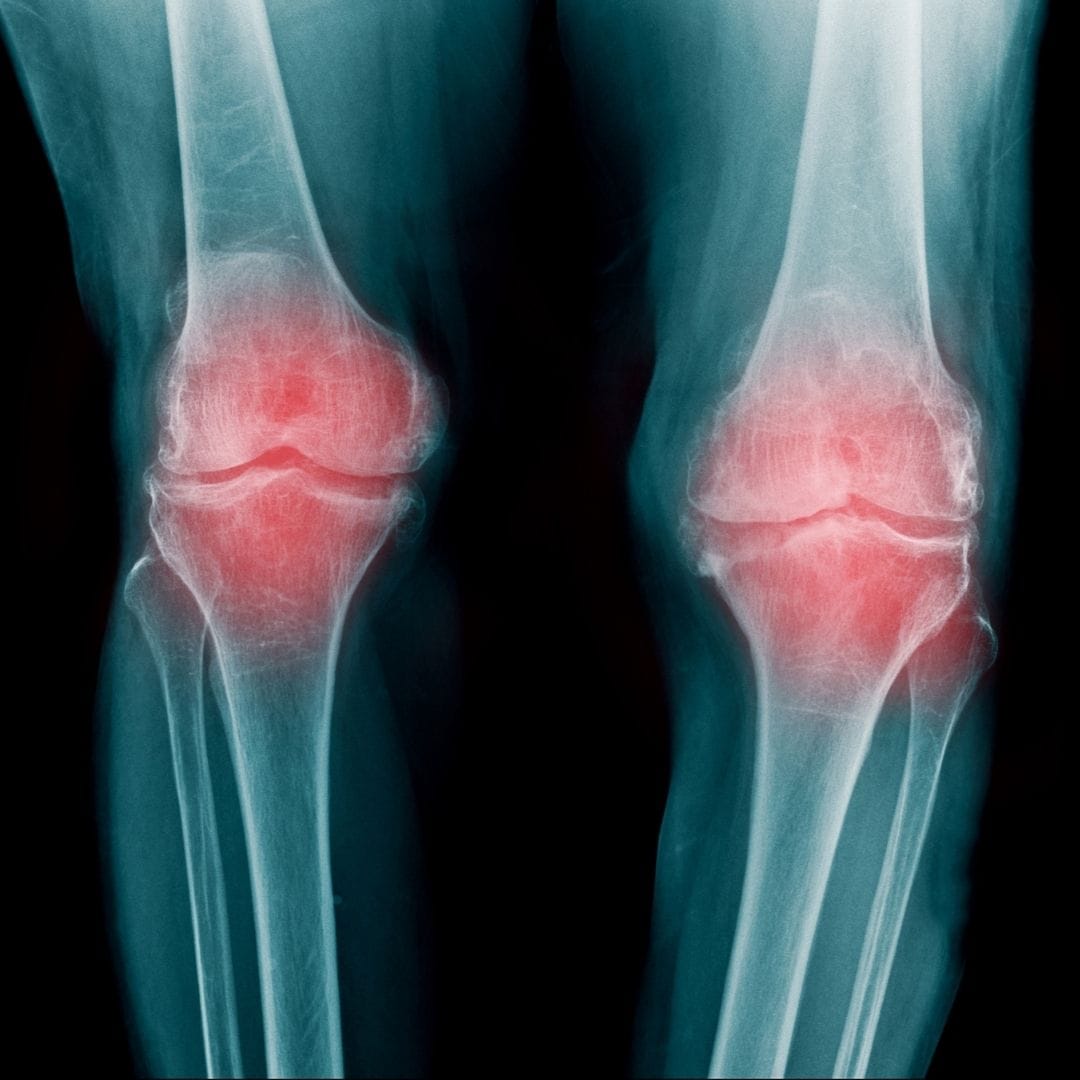
In children with normal developmental knock knees, there are no symptoms — just the appearance. In adults with persistent or severe genu valgum, the symptoms are directly related to the abnormal loading of the outer knee compartment:
- Knee pain on the outer side of the joint, worsening with walking and standing
- Difficulty walking long distances without pain or fatigue
- Knees rubbing or touching while walking, causing skin irritation
- Abnormal gait — people often describe walking awkwardly or feeling unstable
- Ankle pain from compensatory changes in foot mechanics below a valgus knee
- Hip pain from altered walking patterns over years
- Progressive increase in the deformity — particularly in arthritis-related cases
How Severe Is It? — What the Assessment Involves
Under 10 degrees valgus
- Mild inward angling of knees
- No or minimal symptoms
- Physiotherapy and monitoring
- Weight management if needed
- No surgery required at this stage
10-15 degrees valgus
- Visible deformity affecting gait
- Knee pain with activity
- Physiotherapy, bracing
- X-ray monitoring every 6-12 months
- Surgery considered if progressing
Over 15 degrees valgus
- Significant deformity, pain, gait difficulty
- Lateral compartment arthritis on X-ray
- Conservative measures not sufficient
- Osteotomy if joint preserved
- Knee replacement if end-stage arthritis
The assessment at Pure Ortho Hospitals, Sainikpuri starts with a standing full-leg X-ray from hip to ankle — both legs in the same film. This maps the mechanical axis precisely. Clinical examination assesses the degree of deformity, range of knee motion, ligament stability, and gait. In adult patients with symptoms, an MRI of the knee is added to assess cartilage damage and the state of the lateral compartment.
Treatment Options for Knock Knees
Physiotherapy
Hip abductor and external rotator strengthening reduces the dynamic valgus load on the knee. Quadriceps and VMO (inner quad) strengthening improves joint stability. Core strengthening improves overall alignment mechanics during walking. This is first-line for mild to moderate deformity in adults without significant arthritis.
Weight Loss
Each kilogram lost reduces knee joint force by approximately 4 kg. In obese patients with knock knees, targeted weight reduction significantly reduces symptoms and can slow the progression of lateral compartment arthritis. Not optional — essential alongside any other treatment.
Orthotics and Bracing
Lateral wedge insoles reduce valgus load on the knee by shifting foot contact slightly outward. Valgus unloading braces can provide symptomatic relief for moderate deformity. Neither corrects the underlying deformity — they manage symptoms and slow progression.
Distal Femoral Osteotomy (DFO)
The definitive surgical correction for knock knees in patients with a preserved knee joint. The femur is cut just above the knee and realigned to bring the mechanical axis back to neutral. Fixed with a plate and screws. Bone heals over 3-4 months. Joint-preserving — avoids or significantly delays knee replacement. Suitable for adults under 60 with moderate-severe deformity and reasonable cartilage.
Guided Growth (Children Only)
In children with significant knock knees who are still growing, a temporary implant (8-plate or staple) placed across one side of the growth plate slows growth on the outer side, allowing the inner side to catch up and gradually straighten the leg. Removed once correction is achieved. No cuts, no screws through bone — a minor procedure with fast recovery.
Knee Replacement
When significant knock knees have caused end-stage arthritis of the lateral compartment, total knee replacement is the most effective treatment. The new implant is placed in correct alignment regardless of the underlying bone deformity. At Pure Ortho Hospitals, Sainikpuri, robotic knee replacement with 3D pre-operative planning is particularly valuable in deformed knees — the plan accounts for the abnormal anatomy precisely.
What Distal Femoral Osteotomy (DFO) Involves
DFO is the surgical correction for knock knees when the joint cartilage is still reasonably preserved — the patient has significant deformity causing pain, but does not yet have the bone-on-bone arthritis that would indicate joint replacement. It is a joint-preserving procedure. The aim is to redistribute the load from the damaged lateral compartment to the healthier medial compartment, relieve pain, and prevent further joint damage.
DFO procedure at Pure Ortho Hospitals, Sainikpuri
- Pre-operative planning — full-leg standing X-ray maps the current mechanical axis. The surgeon calculates the exact correction angle needed to restore neutral alignment.
- Surgery — under general or spinal anaesthesia, the femur is cut just above the knee. The bone is either opened (opening wedge DFO) or wedged closed (closing wedge DFO) to achieve the planned correction. A low-profile plate with screws holds the corrected position.
- Hospital stay — typically 3-4 days.
- Weight-bearing — toe-touch weight-bearing for 6 weeks while the bone heals, then progressive weight-bearing as healing confirms on X-ray.
- Bone healing — 3-4 months for cortical bridging on X-ray. Full return to activity at 6-9 months.
- Expected outcome — significant pain relief, improved gait, and protected joint longevity. In appropriately selected patients, DFO delays knee replacement by 10-15 years or more.
Meet the Surgical Team at Pure Ortho Hospitals, Sainikpuri

Dr. G. Uday Sekhar Reddy
Pure Ortho Hospitals, Sainikpuri, Hyderabad
Fellowship in Joint Replacement — Parekhs Hospital, Pune
International Fellowship in Advanced Joint Replacement — Schön Klinik, Germany
Knee deformity correction, osteotomy, robotic knee replacement
Dr. V.S. Abhilash Kumar S
Dr. Pudari Manoj Kumar
Dr. L. Sreeram
See a Specialist If
- Your child's knock knees are not improving past age 8, or are worsening after age 7
- The deformity affects only one leg — this is rarely normal
- Your child walks with pain, trips frequently, or avoids running
- You are an adult with knock knees causing knee pain, gait difficulty, or swelling
- You have been told you need knee replacement and want to know if osteotomy is an option first
Call Pure Ortho Hospitals, Sainikpuri: 8686868208
Frequently Asked Questions
Other Departments at Pure Ortho Hospitals
Knock Knees Assessment at Pure Ortho Hospitals, Sainikpuri
Whether it is a parent concerned about a child's leg alignment or an adult with knee pain from uncorrected valgus deformity — one standing X-ray and a clinical examination gives you a clear answer. Book at Pure Ortho Hospitals, Sainikpuri, Hyderabad.
Call 8686868208More from Pure Ortho Hospitals
This article is for patient education only. Please consult a qualified orthopaedic surgeon before making any treatment decisions.