


The upper back — the thoracic spine — does not get the same attention as the lower back and neck, but the pain it produces is just as disruptive. The constant dull ache between the shoulder blades at the end of a long workday. The sharp pain on one side when reaching across. The stiffness that makes turning the head and trunk in the morning feel like moving through wet cement. For most people reading this, the cause is mechanical and the treatment is straightforward. For a small number, upper back pain is the first sign of something that needs urgent attention.
This article explains both — what causes upper back pain in the majority of cases, the red flags that make it a different problem, and what actually works to treat it.
Upper Back Anatomy — Why It Behaves Differently From the Lower Back
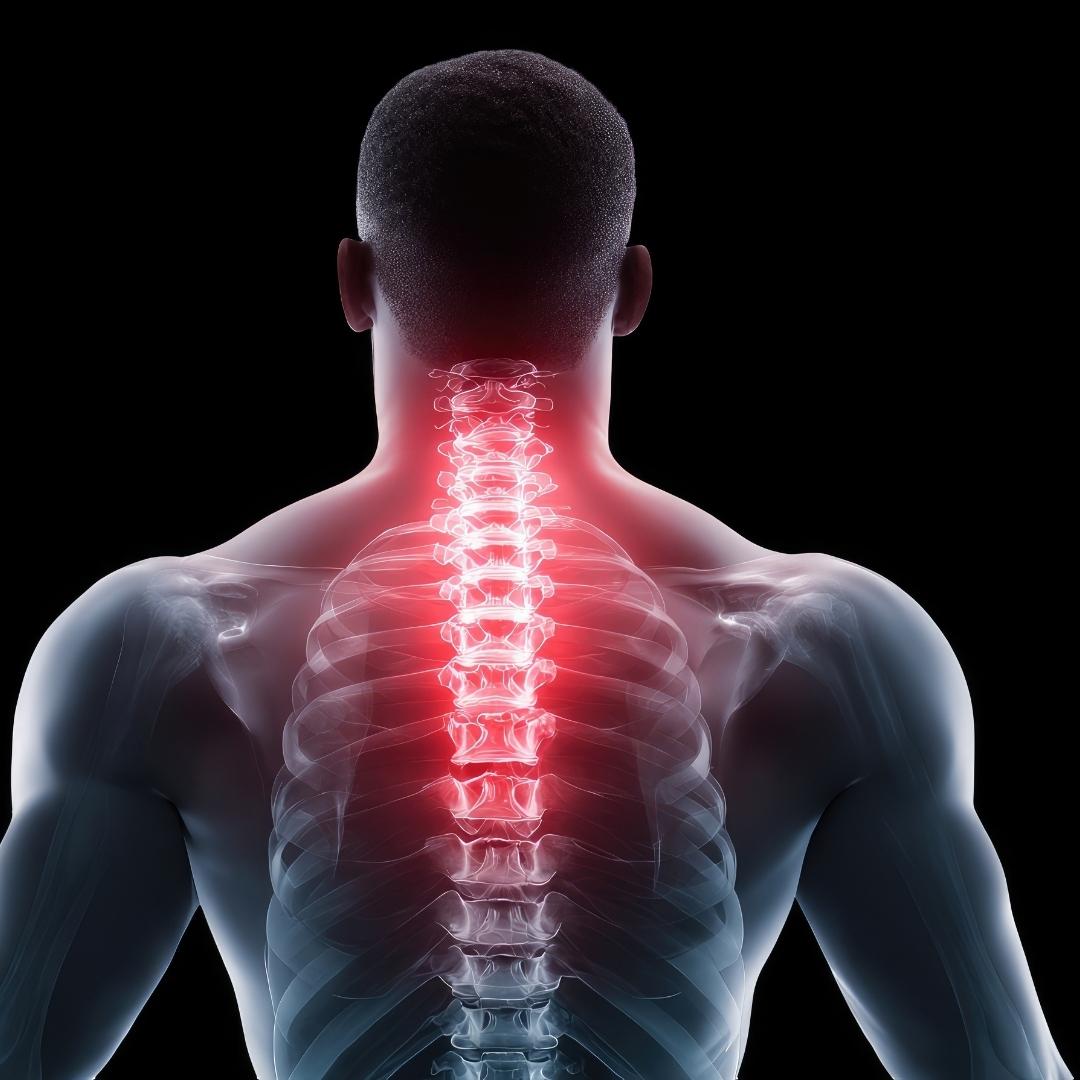
The thoracic spine consists of 12 vertebrae (T1-T12) and is the only region of the spine that articulates with the ribs. This gives it inherent stability — and is why thoracic disc herniations are far less common than lumbar disc herniations. But it also means that rib-related problems, postural muscle strain, and referred pain from the neck or organs are the dominant sources of upper back pain rather than disc problems.
The muscles of the upper back — the trapezius, rhomboids, levator scapulae, and thoracic paraspinals — are under constant load in anyone who sits for extended hours, particularly with the head forward and shoulders rounded. These muscles are essentially holding the weight of the head and arms against gravity all day, in a mechanically disadvantaged position. The strain accumulates.
The Common Causes
Postural Muscle Strain
The single most common cause of upper back pain. Forward head posture and rounded shoulders from desk work, mobile phone use, and driving place the thoracic extensors and scapular stabilisers under sustained eccentric load. The pain is typically a dull diffuse ache across the upper back and between the shoulder blades, worse by end of day, better after movement or a night's sleep.
Thoracic Facet Joint Arthritis
The facet joints of the thoracic spine can develop arthritic changes, particularly in older adults. This produces a more localised, unilateral pain that is worse on extension and rotation. Often confused with muscle pain because of its location, it responds differently to treatment — mobilisation and targeted injections rather than simple physiotherapy exercises.
Cervicogenic Upper Back Pain
The cervical spine refers pain into the upper back and interscapular region via the spinal nerves. A C6 or C7 disc problem can produce pain felt primarily between the shoulder blades rather than in the neck. Treating the upper back without imaging the cervical spine misses the actual source. This is a common reason physiotherapy directed at the upper back fails to provide sustained relief.
Rib-Related Pain
The ribs articulate with the thoracic vertebrae at the costovertebral joints. These joints can become painful after minor trauma, sustained coughing, or repetitive twisting. Costochondritis — inflammation at the anterior rib-cartilage junction — can also refer pain to the posterior upper back. Characteristically worsens with deep breathing and specific trunk movements.
Thoracic Disc Herniation
Far less common than lumbar or cervical disc problems because of the inherent rigidity of the thoracic spine. When it occurs, it can produce pain that wraps around the chest in a dermatomal distribution, or in severe cases symptoms of thoracic myelopathy — leg weakness, gait disturbance, and bladder changes. Requires MRI for diagnosis and specialist evaluation.
Referred Pain From Organs
The gallbladder refers to the right upper back and shoulder. The kidneys can refer to the posterior upper back flanks. The heart refers to the upper back and left shoulder in atypical presentations. The aorta, in dissection, causes tearing posterior chest and back pain. These are not spine problems — and treating them as spine problems is dangerous.
Poor Posture: What Is Actually Happening
What Poor Posture Does
- For every inch the head moves forward, effective head weight on the spine increases by approximately 4-5 kg
- Rounded shoulders stretch the rhomboids and lower trapezius beyond their resting length
- The pectoral muscles shorten and tighten, pulling the shoulders further forward
- Thoracic kyphosis increases, compressing the anterior vertebral bodies
- The scapula protracts and downwardly rotates, changing shoulder mechanics
Who This Affects Most
- Software engineers and IT workers — 8+ hours at screens
- Students using laptops on desks or beds
- Mobile phone users spending 3-5 hours daily on phone
- Drivers — particularly those who drive for a living
- People who do sustained desk work without ergonomic setup
- Anyone who has increased desk time after a period of more active work
When Upper Back Pain Is a Red Flag
Seek Immediate Attention for These
- Upper back pain with chest tightness, shortness of breath, or sweating — cardiac cause until proven otherwise
- Tearing or ripping sensation in the upper back or chest — aortic dissection is a surgical emergency
- Upper back pain with fever and night sweats — spinal infection or malignancy
- Unexplained significant weight loss with new upper back pain
- Upper back pain following even minor trauma in someone over 60 — vertebral fracture from osteoporosis
- Leg weakness, numbness, or walking difficulty with upper back pain — thoracic myelopathy
- Loss of bladder or bowel control — spinal cord emergency, call immediately
- Pain that is constant, not relieved by any position, and worse at night — tumour or infection
Emergency: Call 9951515151 — Pure Ortho Hospitals 24/7 Emergency, Sainikpuri, Hyderabad
How Upper Back Pain Is Diagnosed
Most upper back pain from muscle strain and poor posture does not need imaging for diagnosis — the history and physical examination are sufficient. Imaging is warranted when there are red flags, when the pain has not responded to 6 weeks of appropriate treatment, when the distribution suggests a non-mechanical cause, or when neurological symptoms are present.
- X-ray — assesses bony alignment, fractures, spondylosis, and disc space narrowing
- MRI thoracic spine — identifies disc pathology, spinal cord compression, infection, and tumour; required for any suspected myelopathy
- MRI cervical spine — when cervicogenic origin is suspected; the most common missed diagnosis in upper back pain
- Blood tests — CRP, ESR, full blood count, and tumour markers when infection or malignancy is possible
- Ultrasound abdomen — if gallbladder or renal referred pain is suspected
Treatment — What Actually Works
Physiotherapy: Thoracic Mobilisation and Scapular Stabilisation
The most effective treatment for postural and mechanical upper back pain. Thoracic mobilisation restores the restricted joint mobility that develops from sustained kyphotic posture. Scapular stabilisation exercises — targeting the lower trapezius and serratus anterior — correct the protracted scapula that is the root of most postural upper back pain. Heat and dry needling (trigger point release) provide faster initial pain relief. A well-designed programme at Pure Ortho Hospitals sees most patients with mechanical upper back pain improve substantially within 4-6 weeks.
Ergonomic Correction at the Workstation
Physiotherapy alone fails without addressing the cause. The screen should be at eye level — not below it, which forces the head into sustained flexion. The keyboard and mouse should allow the elbows to rest at 90 degrees. The chair should support the lumbar curve, not just the seat. A monitor riser costs almost nothing compared to months of physiotherapy for a problem that will recur every time the person returns to the same position.
Targeted Injection Therapy
For thoracic facet joint arthritis or persistent trigger points not responding to physiotherapy, image-guided corticosteroid injections into the facet joints or trigger point injections provide rapid, sustained relief. These are diagnostic as well as therapeutic — a good response confirms the facet joint as the pain source. Fluoroscopy or ultrasound guidance ensures accuracy in the thoracic region.
Treating the Cervical Spine When It Is the Source
When cervicogenic upper back pain is identified — MRI showing relevant cervical pathology, distribution fitting a cervical dermatomal pattern, neck examination reproducing upper back pain — the treatment targets the cervical spine rather than the upper back. Cervical traction, specific mobilisation, or cervical epidural injection, depending on the degree of disc pathology. Treating only the upper back in this situation produces temporary relief at best.
Surgery — When and Why
Surgical intervention for thoracic spine problems is uncommon but occasionally necessary — thoracic disc herniation causing myelopathy, spinal cord compression from fracture or tumour, and thoracic spinal stenosis producing progressive neurological deficit. The surgical approach in the thoracic spine is technically more demanding than lumbar surgery because of the proximity of the spinal cord and the rib cage. At Pure Ortho Hospitals, thoracic surgical cases are managed by the spine team with the same minimally-invasive techniques used for lumbar and cervical pathology where feasible.
Workstation Checklist for Upper Back Pain
Screen Position
Top of screen at eye level. Screen arm's length from face. No tilting head down to view — this is the fastest route to upper back and neck pain.
Chair Setup
Back supported, hips at 90 degrees, feet flat on floor. Lumbar support behind the lower back, not mid-back. Armrests at elbow height.
Movement Breaks
Stand and walk every 45-50 minutes. Even 2 minutes of walking resets the compressive load on the spine. Set a timer if needed — the research is consistent that sustained sitting without breaks is a direct injury mechanism.
Phone Use
Hold the phone at eye level rather than looking down at it. Sustained neck flexion of 30-60 degrees doubles and triples the effective weight the upper back muscles must support.
Keyboard and Mouse
Both at elbow height. Reaching forward or upward for either elevates the shoulder and loads the upper trapezius continuously. A wrist rest reduces this load.
Sleeping Position
Sleeping on the stomach with the head rotated sustains the cervical and upper thoracic muscles in a stretched or compressed position for hours. Side sleeping with a pillow supporting the neck's neutral position reduces overnight upper back tension significantly.
Our Spine and Physiotherapy Specialists
Dr. Sai Krishna C.S
Dr. G. Uday Sekhar Reddy
Dr. L. Sreeram
Dr. L. Sri Dharani
Frequently Asked Questions
Other Departments
Upper Back Pain That Is Not Going Away?
Most upper back pain has a treatable cause. The right diagnosis — not just pain killers — is what produces lasting relief. Book a consultation at Pure Ortho Hospitals, Sainikpuri, Hyderabad.
Call 8686868208More from Pure Ortho Hospitals
This article is for patient education only. Please consult a qualified specialist before making any treatment decisions.