

Knee Replacement Surgery — Signs You Need It, Recovery Timeline, and Robotic vs Traditional
Knee replacement is one of the most studied and most successful operations in modern orthopaedics. But it is also overused in some patients and delayed too long in others. The signs that it is the right step, when to try other options first, and what recovery actually looks like — these are the questions that matter before you decide.
This article also compares robotic and conventional surgery plainly, without the marketing language that follows both technologies around.
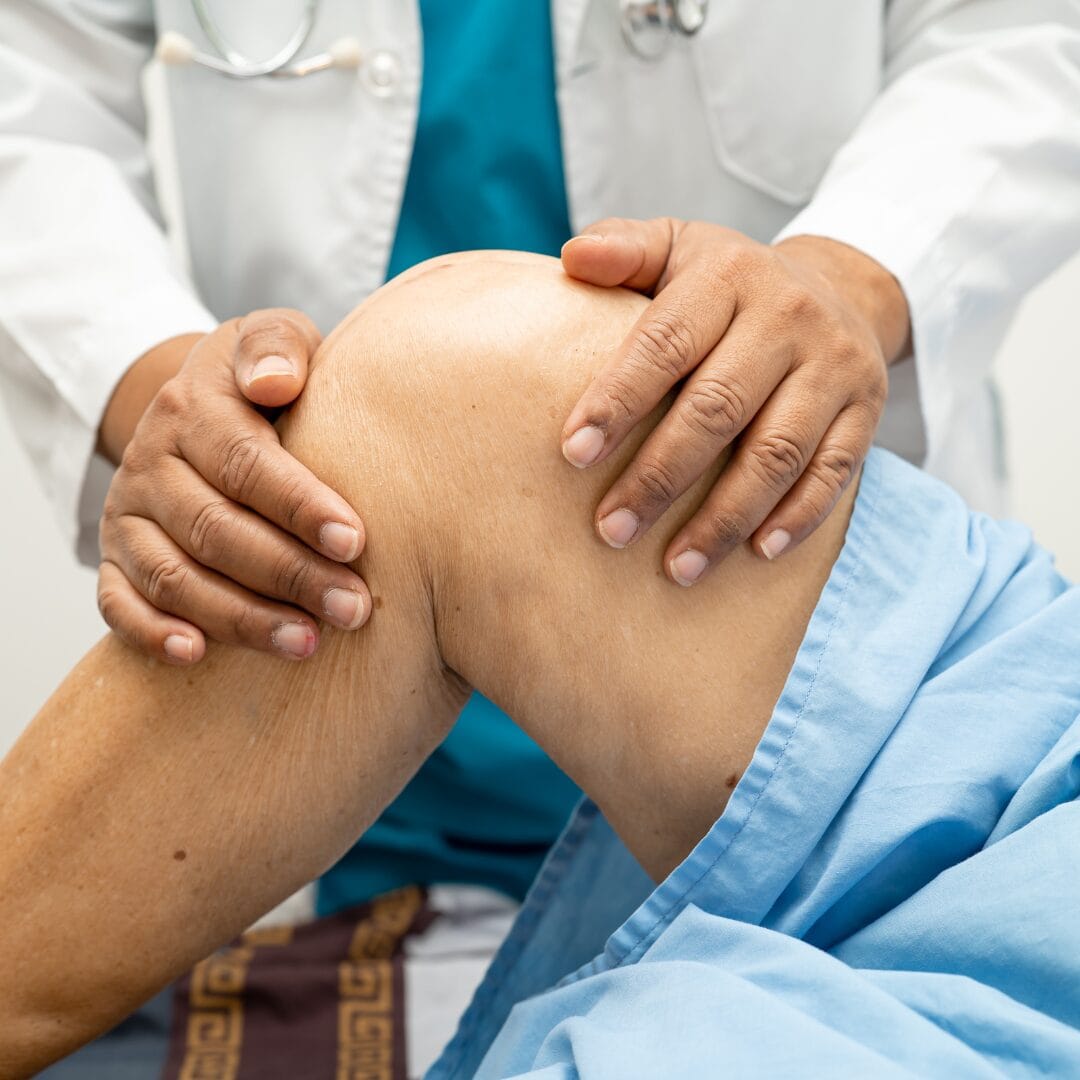
Signs You Need Knee Replacement
The clinical markers that indicate knee replacement surgery should be seriously considered are well established. No single marker is enough on its own — it is the combination that matters.
Pain that limits daily activities despite treatment
Difficulty walking more than a few hundred metres, climbing stairs, rising from a chair, or getting in and out of a car — consistently, over months — that has not responded to physiotherapy, weight management, medication, and injections. This is the primary clinical indicator.
Pain severe enough to disturb sleep
Night pain from knee arthritis — waking up because of the knee, unable to find a comfortable position — indicates advanced disease. At this severity, non-surgical options rarely provide adequate or lasting relief.
Stiffness that limits knee bend significantly
Severe restriction of knee range of motion — particularly less than 90 degrees of flexion — from fixed contracture secondary to arthritis indicates significant structural disease. This level of stiffness substantially limits function and quality of life.
Visible knee deformity that is worsening
Progressive bow-legged (varus) or knock-kneed (valgus) deformity of the knee from asymmetric joint space loss. As deformity increases, it accelerates the remaining cartilage loss on the loaded side, and surgical correction becomes more complex.
Failure of non-surgical treatment
A 3–6 month structured trial of appropriate non-surgical care — physiotherapy targeting quadriceps and hip strengthening, weight management, anti-inflammatory medication, and at least one injection trial — has not provided adequate or sustained relief. Surgery is not the first step; it is the step after the right conservative care has been tried.
X-ray showing severe joint space loss
Weight-bearing X-rays showing bone-on-bone contact (complete or near-complete joint space loss) in the compartment that corresponds to the patient's symptoms. The X-ray finding alone is insufficient — many elderly patients have bone-on-bone X-rays with minimal symptoms and do not need surgery. It must match the clinical picture.
What Conservative Treatment Can and Cannot Do
Non-Surgical Management — Realistic Expectations
What it can achieve
- Meaningful pain reduction in mild-to-moderate arthritis
- Improved muscle support reducing load on the damaged joint
- Delay progression in some patients
- Temporary relief from injections (corticosteroid, PRP, hyaluronic acid)
- Allow surgery to be deferred until optimal timing
What it cannot do
- Regrow lost cartilage — this does not happen once it is gone
- Reverse bone-on-bone arthritis
- Correct fixed deformity (varus/valgus bow)
- Provide permanent relief once the disease is severe
- Replace surgery when the structural damage is the source of pain
The question is not whether to try conservative treatment — always try it first. The question is not to persist with it indefinitely once it has clearly stopped working, because unnecessary delay allows the deformity to worsen and the muscles to weaken, which makes surgical recovery harder.
Week-by-Week Recovery Timeline
Surgery and first mobility
Surgery under spinal or general anaesthesia with a nerve block for pain control. Most patients stand and take a few steps with a physiotherapist on day 1 or day 2. Drains, catheter, and IV lines removed in the first 24–48 hours. Pain managed with multimodal analgesia.
Hospital discharge
Typical hospital stay 3–5 days. Discharge when pain is controlled on oral medication, the patient can walk with a frame or crutches, and can climb a small flight of stairs. Wound check scheduled before discharge. Physiotherapy exercises explained and commenced.
Wound review — stitches or staples removed
Surgical wound checked. Most patients are walking at home with a walking frame or crutches. Swelling and bruising still present — this is normal. Physiotherapy at home or as an outpatient begins in earnest.
Major milestones — most patients manage stairs and light activity
Walking with one stick or unaided for short distances. Driving can resume for most patients (left knee; right knee takes 8–12 weeks for a manual vehicle). Light domestic tasks. Outpatient physiotherapy continuing.
Return to most daily activities
Most patients have returned to daily activities, light shopping, stairs without a rail, and social outings. Swelling has significantly reduced. Outpatient physiotherapy tapering. Many resume light recreational activities. Some residual stiffness or occasional aching is normal at this stage.
Continued strength gains and full recovery
Strength gains continue for 6–12 months. The knee continues to feel progressively more natural. Full recreational walking, swimming, cycling and low-impact activities resume for most patients. High-impact activities (running, jumping) are generally not recommended to protect the implant.
Recovery in Older Patients — What to Expect
- Age alone is not a contraindication. Medically fit patients in their 70s and 80s achieve excellent pain relief and meaningful functional improvement
- The recovery timeline milestones are broadly similar; overall strength recovery may take somewhat longer in older patients
- What matters more than age: overall medical fitness, absence of uncontrolled cardiac, pulmonary or metabolic disease, and the ability to participate in physiotherapy
- Pre-operative optimisation — blood sugar control, haemoglobin, blood pressure, and stopping blood thinners appropriately — reduces surgical risk in older patients
- Family support during the first 2–4 weeks at home is important for all patients, but particularly for those who live alone
Robotic vs Traditional Knee Replacement
Both robotic-assisted and conventional total knee replacement are well-established procedures with excellent long-term track records. The difference is in the precision of execution, not the fundamental operation.
Robotic surgery does not perform the operation — the surgeon plans, decides, and operates throughout. The robotic arm assists the surgeon in executing precise bone cuts within boundaries defined in the pre-operative plan, stopping automatically if the instrument approaches a predefined safety margin. It is a precision tool, not an autonomous system.

What Not to Expect From Knee Replacement
Common Misconceptions to Correct Before Surgery
- Knee replacement does not restore a normal knee — it replaces a painful, worn joint with an implant that functions well but differently. The goal is pain relief and improved function, not a knee that feels exactly as it did at age 30.
- High-impact activity is not advised after TKR — running, jumping, squatting with heavy loads, and contact sports put abnormal stress on the implant and are generally not recommended. Low-impact activity (walking, swimming, cycling, golf) is encouraged.
- Cross-legged sitting and deep squatting are limited — the implant's range of motion is good but not the same as a natural knee. For patients who need to sit cross-legged on the floor regularly (cultural or religious practice), discuss this with your surgeon before the procedure.
- The implant has a design life — typically 15–25 years. Younger patients should understand this means a revision procedure may be needed in their lifetime, though implant longevity is improving with each generation.
- Both knees often need replacement, but not necessarily simultaneously — staged bilateral (each knee in a separate admission) is generally safer than simultaneous bilateral, particularly in older patients or those with cardiac risk factors.
When Is Total Knee Replacement Necessary vs Partial?
Total knee replacement (TKR) replaces all three compartments of the knee. Partial knee replacement (PKR, or unicompartmental knee arthroplasty) replaces only the most affected compartment — usually the medial (inner) side.
- PKR is appropriate only when disease is genuinely confined to one compartment, confirmed on X-ray alignment studies and MRI; cruciate ligaments must also be intact
- PKR advantages: smaller incision, less bone removed, faster recovery, more natural feel reported by patients
- TKR is more durable for severe or multi-compartmental disease and is a more reliable operation for a wider range of patients
- Not every patient is a PKR candidate — your surgeon determines this through imaging and clinical assessment, not patient preference alone
For the full guide to knee replacement at Pure Ortho Hospitals including cost, implant types, and what to ask your surgeon, see: Knee Replacement Surgery — Complete Guide.
Our Knee Replacement Team
Dr. G. Uday Sekhar Reddy
Dr. V.S. Abhilash Kumar S
Dr. Pudari Manoj Kumar
Dr. L. Sreeram
Frequently Asked Questions
Other Departments
Is Knee Replacement the Right Step for You?
Our joint replacement team at Pure Ortho Hospitals, Sainikpuri will assess your X-rays, explain what your options are, and tell you honestly whether surgery is indicated now or whether the right conservative treatment should come first.
Call 8686868208More from Pure Ortho Hospitals
This article is for patient education only. AAOS and Lancet figures are cited as general literature benchmarks, not Pure Ortho Hospitals outcomes. Please consult a specialist for personalised advice.