
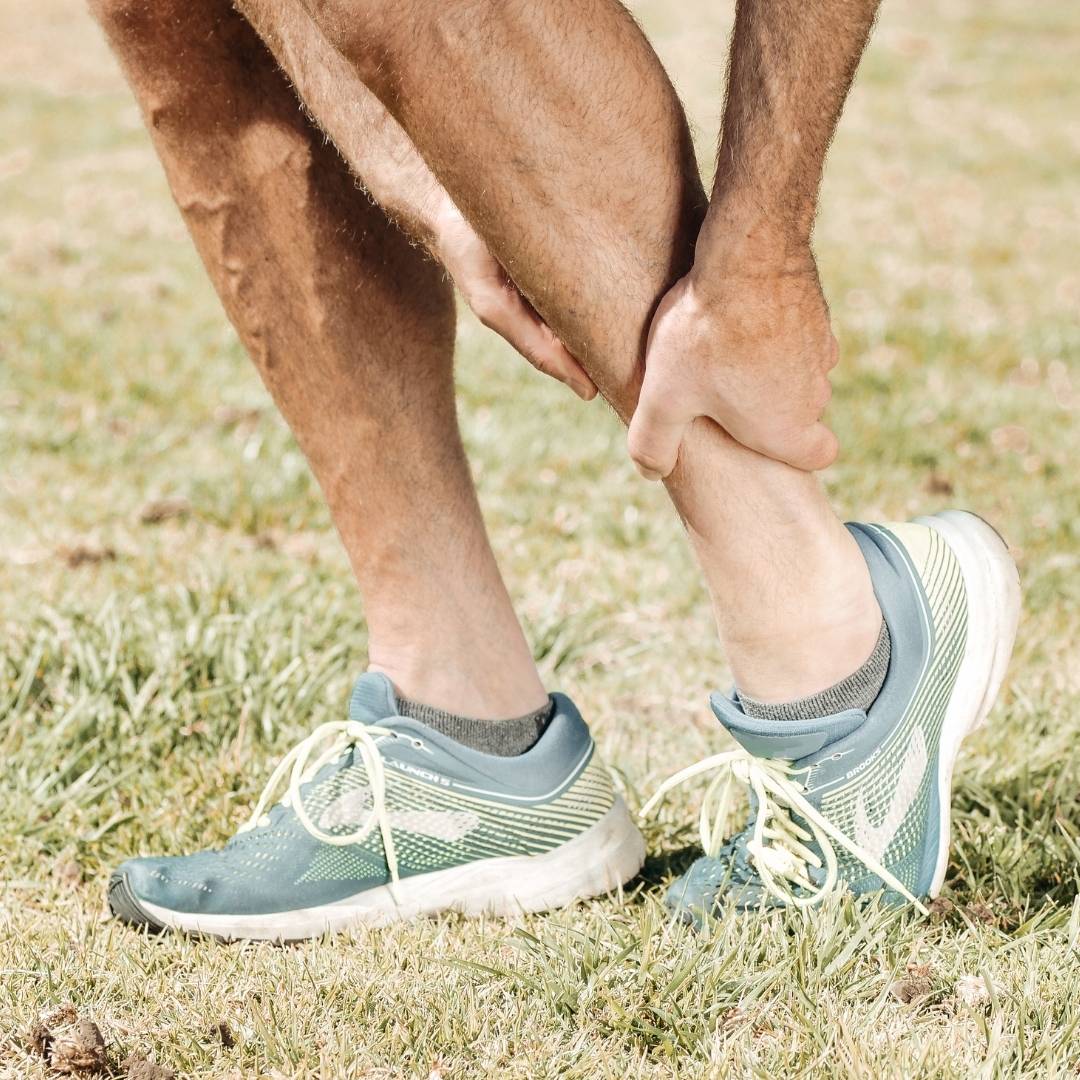
The story is almost always the same. A badminton player lunges for the net. A cricketer accelerates for a run. Someone does a single explosive jump in a fitness class. There is a loud pop — sometimes audible to others nearby. The person falls, turns around, and checks if someone kicked them from behind. Nobody is there. When they try to walk, they cannot push off the affected foot. The Achilles tendon has ruptured.
Achilles tendon rupture is one of the most dramatic sports injuries — not because of pain (some patients initially feel surprisingly little) but because of how completely it disables the affected limb. The Achilles is the largest tendon in the body, and it is the primary driver of push-off during every step, every jump, and every sprint. When it goes, walking becomes altered and running becomes impossible.
What Is the Achilles Tendon?
The Achilles tendon connects the calf muscles (gastrocnemius and soleus) to the heel bone (calcaneus). It transmits the force generated by the calf complex into the foot — enabling push-off, jumping, running, and climbing stairs. It is the thickest and strongest tendon in the human body, capable of withstanding forces many times body weight during explosive activities.
Despite this strength, the Achilles is uniquely vulnerable to rupture. A critical zone approximately 2-6 cm above the heel bone has a relatively poor blood supply compared to the rest of the tendon. This hypovascular zone is where degeneration accumulates and where the overwhelming majority of ruptures occur.
Why the Achilles Ruptures — The Pre-existing Weakness Most Patients Don't Know About
Complete Achilles tendon ruptures in healthy young tendons are rare. The vast majority occur in tendons that already have some degree of degeneration — called tendinopathy — which weakens the collagen structure to the point where a normal activity load exceeds the tendon's tensile strength.
Age 30-50
Peak incidence — often called the "weekend warrior" injury. The tendon has accumulated degeneration from years of activity but the person remains active enough to create explosive loads.
Pre-existing Tendinopathy
Chronic Achilles pain before the rupture is present in many patients — meaning the tendon had been signalling its degenerative state but the warning was not addressed.
Fluoroquinolone Antibiotics
A well-documented association — ciprofloxacin and related antibiotics significantly weaken tendon structure and increase rupture risk, sometimes months after completing the course.
Corticosteroid Injections
Repeated steroid injections near the Achilles tendon are associated with weakening of the tendon structure and increased rupture risk. Injection directly into the tendon is contraindicated.
Sudden Increase in Activity
Return to sport after a period of inactivity — the tendon has deconditioned but the person immediately resumes full pre-injury intensity.
Fluoroquinolone + Steroid Combination
The combination of both risk factors dramatically increases rupture risk — a significant clinical concern for patients receiving both treatments concurrently.
Symptoms — How a Ruptured Achilles Presents
Audible Pop
A loud snapping or popping sound at the time of injury — sometimes heard by others nearby
Feeling of Being Kicked
The classic description — a sensation as if someone kicked the back of the leg, even when no one is nearby
Inability to Stand on Tiptoe
Cannot rise onto the toes of the affected foot — the calf no longer connects to the heel
Palpable Gap
A visible or palpable gap in the tendon approximately 2-6 cm above the heel — the space where the tendon has separated
Altered Walking
Flat-footed gait — cannot push off properly. Some patients can still walk because the remaining foot structures provide partial function.
Variable Pain
Pain ranges from severe to surprisingly mild immediately after rupture — absence of severe pain does not mean the tendon is intact.
The Thompson Test — The Bedside Diagnostic
The Thompson test (also called the calf squeeze test) is the most important clinical test for Achilles tendon rupture — simple, reliable, and definitive. With the patient lying face down, the examiner squeezes the calf muscle. Normally, this produces downward movement of the foot (plantarflexion) because the tendon transmits the movement to the heel. In a complete Achilles rupture, the foot does not move when the calf is squeezed — a positive Thompson test. MRI is used to confirm partial tears or when the clinical picture is unclear.
Surgery vs Conservative Treatment — The Most Debated Question in Sports Medicine
This is one of the most actively debated topics in orthopaedic sports medicine, and the honest answer is that both approaches, when properly executed, produce good outcomes. The evidence from large randomised trials has shifted the conversation from "surgery is always better" to "it depends on the patient."
Surgical Repair
- Direct suturing of the torn tendon ends
- Lower re-rupture rate in most studies
- Faster return to sport in active patients
- Better for young athletes and high-demand patients
- Risk of wound complications and infection
- Scar tissue formation possible
- Requires anaesthesia and recovery time
Functional Bracing (Non-Surgical)
- Tendon allowed to heal in a supportive boot
- No surgical complications
- Equivalent outcomes with accelerated rehabilitation
- Higher re-rupture risk if protocol not followed strictly
- Better for older, less active patients
- Requires very strict rehabilitation compliance
- Appropriate when surgery risk outweighs benefit
The key variable is rehabilitation quality. Non-surgical management with functional accelerated rehabilitation produces outcomes comparable to surgery in compliant patients. The patient who will not adhere strictly to the brace protocol and physiotherapy programme is a better candidate for surgical repair. A specialist at Pure Ortho Hospitals, Sainikpuri will guide this decision based on your specific circumstances.

Recovery — The Long Road Back
Week 1-2
Immobilisation in boot. Non-weight-bearing or touch weight-bearing. Swelling management.
Week 2-6
Progressive weight-bearing in boot. Gentle range of motion begins. Boot still worn.
Week 6-12
Transition out of boot. Normal walking achieved. Physiotherapy intensive.
Month 3-6
Progressive strengthening. Jogging begins. Calf raise strength building.
Month 6-9
Running, sport-specific training. Return to full activity for most patients.
Month 9-12+
Full return to competitive sport. Strength may continue improving beyond 12 months.
Go to Hospital Immediately If
- You hear a pop at the back of your ankle during sport or activity
- You cannot rise onto tiptoe on the affected foot
- You feel a gap in the tendon above your heel
Time to treatment significantly affects outcomes. Call Pure Ortho Hospitals, Sainikpuri: 8686868208
Meet the Specialists at Pure Ortho Hospitals
Dr. G. Uday Sekhar Reddy
MBBS, MS Ortho, MCh Ortho
Dr. V.S. Abhilash Kumar S
MBBS, MS Ortho, FIJR, FISS (S.Korea, USA) — Clinical Director
Dr. Sai Karthikeya Badri
MBBS, D. Ortho, DNB
Dr. L. Sreeram
MPT (Ortho), FDOR, MIAP
Dr. L. Sri Dharani
BPT, MIAP, PTOTA (Canada)
Frequently Asked Questions
Other Departments at Pure Ortho Hospitals
Suspected Achilles Rupture Needs Same-Day Assessment
Time to treatment matters. Visit Pure Ortho Hospitals, Sainikpuri, Hyderabad as soon as possible — the sooner the injury is assessed, the more options are available and the better the outcome.
Call 8686868208More from Pure Ortho Hospitals
This article is for patient education only. Please consult a qualified orthopaedic surgeon before making any treatment decisions.