
Tennis Elbow Treatment in Hyderabad — Why Rest Alone Is Never Enough
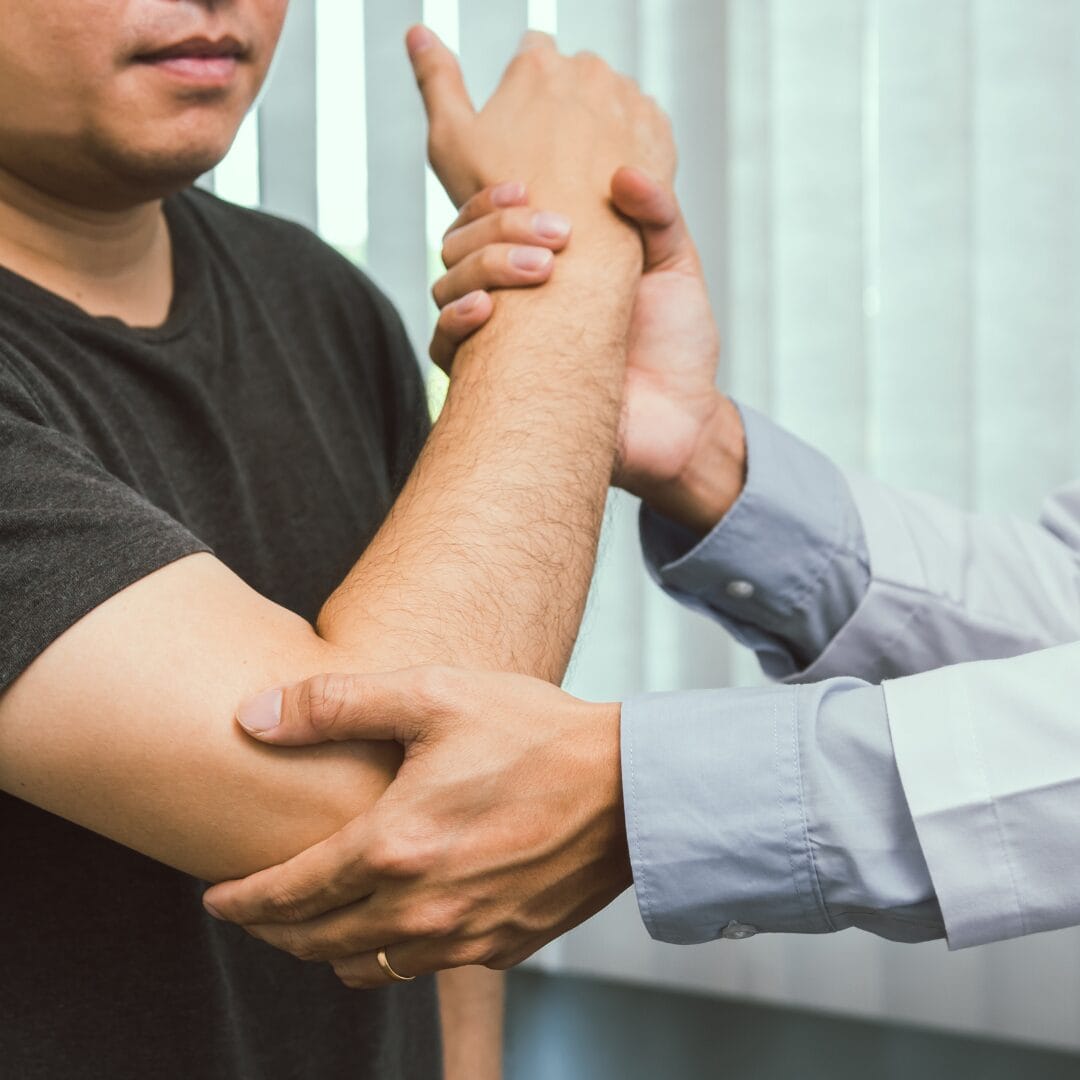
Most people with tennis elbow follow the same pattern. Pain starts. They rest. It eases. They return to the activity that caused it. Within weeks, the pain is back — sometimes worse. They rest again. The cycle repeats for months, sometimes years, before they finally see a specialist.
The reason this cycle keeps repeating is straightforward: rest reduces inflammation, but it does not repair the tendon. The damaged tissue that caused the problem in the first place is still there, still weak, and still vulnerable the moment loading resumes. Effective treatment for tennis elbow has to address the tendon itself — not just manage the pain around it.
This is what proper treatment looks like — and why patients across Hyderabad come to Pure Ortho Hospitals, Sainikpuri for elbow care that actually resolves the condition.
The Treatment Pathway — Matched to Your Stage
Tennis elbow treatment is not one-size-fits-all. What is appropriate at six weeks is very different from what is appropriate at twelve months. The first thing a specialist at Pure Ortho Hospitals does is establish which stage your condition is in — because that determines the starting point.
Symptoms less than 6 weeks
Activity modification plus a structured physiotherapy programme. Most patients at this stage recover fully without injections or further intervention.
6 weeks to 3 months
Physiotherapy remains the core. Cortisone injection considered if pain is severe enough to prevent participation in rehab. Activity modification ongoing.
3 to 12 months
More intensive physiotherapy. PRP injection a strong option if tendon degeneration confirmed on ultrasound. Shock wave therapy considered for resistant cases.
More than 12 months, no improvement
Surgery considered after thorough conservative management has failed. Arthroscopic tendon release at Pure Ortho Hospitals, Sainikpuri.
Why Physiotherapy Is the Foundation — Not an Optional Add-On
Physiotherapy for tennis elbow is not gentle stretching and heat packs. The most evidence-supported intervention is eccentric loading — a specific type of exercise that works the tendon under controlled load as it lengthens, rather than shortens. This stimulates the tendon to rebuild collagen and restore structural integrity.
Studies consistently show that at six to twelve months, patients who completed structured physiotherapy have better outcomes than those who received cortisone injection alone. Pain relief with cortisone is faster in the short term — but the tendon has not been repaired. Without physiotherapy, the pain reliably returns once loading resumes.
Assessment and baseline
Grip strength measured, range of motion assessed, painful movements identified. This establishes the starting point and tracks progress over time.
Pain-free movement restoration
Gentle mobilisation to restore normal elbow and wrist movement without aggravating the tendon in its current state.
Eccentric strengthening programme
The core of tennis elbow rehabilitation — controlled progressive loading of the wrist extensors to stimulate tendon healing and rebuild load tolerance.
Functional and activity-specific loading
Progressive return to the specific movements — work tasks, gym exercises, sport — under controlled conditions as the tendon strengthens.
Return to full activity with maintenance programme
Full return with a programme to maintain tendon health and prevent recurrence — because the risk does not disappear once symptoms resolve.
At Pure Ortho Hospitals, Sainikpuri, physiotherapy and surgery work under the same roof. This means the treating physiotherapist has direct access to the surgeon's operative notes, imaging results, and clinical assessment — producing a rehabilitation programme matched to the actual condition, not a generic protocol.
Cortisone vs PRP — Understanding the Difference
Patients regularly ask which injection is better for tennis elbow. The answer is that they serve different purposes — and the right choice depends on the stage and nature of the tendon problem.
Cortisone Injection
- Anti-inflammatory steroid
- Fast pain relief — 1-2 weeks
- Best for acute or sub-acute inflammation
- Does not repair tendon degeneration
- Recurrence common if used without physiotherapy
- Multiple injections not recommended
PRP Injection
- Patient's own concentrated growth factors
- Slower onset — improvement over weeks
- Best for chronic tendinosis (degenerated tendon)
- Stimulates tendon healing directly
- Better long-term outcomes for chronic cases
- Appropriate when cortisone has not worked
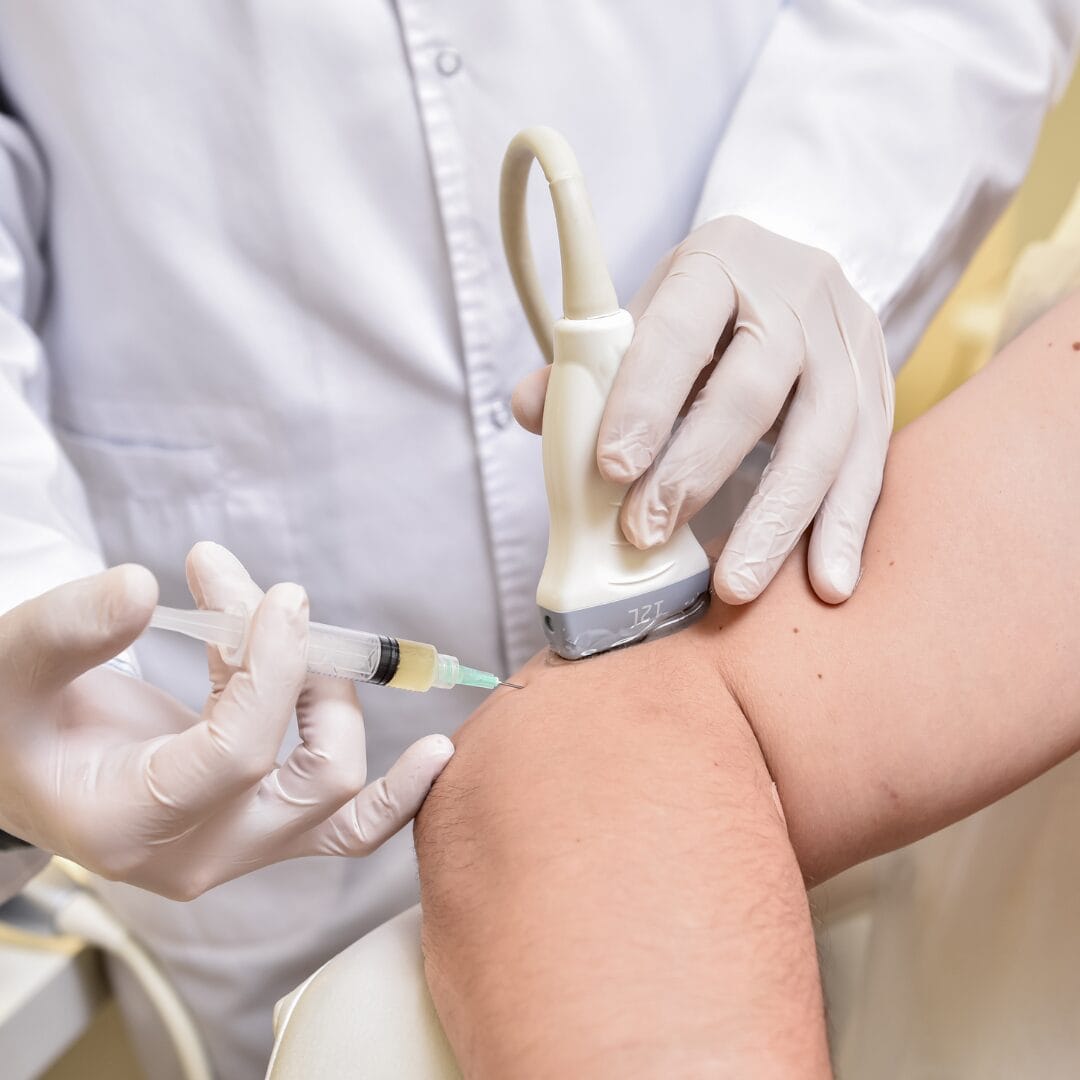
Neither injection is a standalone treatment. Both work best when combined with physiotherapy — because the injection addresses the tissue state while physiotherapy rebuilds the tendon's capacity to tolerate load. At Pure Ortho Hospitals, Sainikpuri, all injections are guided by ultrasound to ensure accurate placement into the affected tendon.
Shock Wave Therapy for Resistant Tennis Elbow
Extracorporeal Shock Wave Therapy (ESWT) is a non-surgical option for chronic tennis elbow cases that have not responded adequately to physiotherapy and injections. It delivers focused acoustic waves to the affected tendon, stimulating a healing response in degenerative tissue.
ESWT is typically considered when symptoms have been present for more than three months and have not improved with conventional conservative management. It is a clinic-based procedure, requires no anaesthesia, and is carried out over a series of sessions. Whether it is appropriate for your specific case is determined during evaluation at Pure Ortho Hospitals, Sainikpuri.
When Surgery Becomes the Right Answer
Surgery for tennis elbow is genuinely a last resort — needed in fewer than 10% of patients. It is only considered after a patient has undergone thorough conservative management over at least 6-12 months without adequate improvement. This means physiotherapy has been consistently followed, at least one injection has been tried, and activity has been appropriately modified.
The surgical procedure involves removing the degenerated tendon tissue from its attachment on the lateral epicondyle and allowing healthy tissue to regenerate in its place. At Pure Ortho Hospitals, Sainikpuri, this is performed arthroscopically — through small keyhole incisions — wherever appropriate.
Arthroscopic tennis elbow release — what to expect
- Performed under local or general anaesthesia — usually as a day procedure
- 2-3 small incisions around the elbow — camera and instruments inserted
- Degenerated tendon tissue removed under direct vision
- Hospital stay: typically same day or overnight
- Return to light activity: 4-6 weeks
- Physiotherapy begins: 2-3 weeks after surgery
- Return to full activity: 3-4 months with structured rehabilitation
Outcomes after surgery for carefully selected patients are consistently good — the majority achieve full resolution of symptoms. The selection is the key word. Surgery that is performed before conservative management has been genuinely exhausted does not always produce the expected result.
The Mistakes That Keep Tennis Elbow Coming Back
There is a predictable set of errors that cause tennis elbow to become a revolving-door problem for patients across Hyderabad. Understanding them is part of breaking the cycle.
Returning to activity too soon
Pain settles with rest, patient returns to full loading — tendon has not rebuilt capacity. Cycle restarts within weeks.
Using cortisone as a cure
Injection reduces pain, patient believes problem is solved. No physiotherapy follows. Pain returns when loading resumes.
Skipping physiotherapy
The most critical component. Rest alone does not rebuild the tendon. Without eccentric loading exercises, vulnerability to reloading remains.
Continuing gym exercises that aggravate it
Training through pain maintains the tissue damage cycle. Activity modification is not optional — it is part of treatment.
Waiting too long before seeking evaluation
Early-stage tennis elbow responds in weeks. Chronic tendinosis takes months. Delayed presentation creates a significantly harder treatment challenge.
Self-diagnosing and self-treating
Several conditions mimic tennis elbow — radial nerve compression, referred pain from the cervical spine. Treating the wrong condition wastes months.
Why Pure Ortho Hospitals, Sainikpuri for Tennis Elbow
Tennis elbow management at Pure Ortho Hospitals, Hyderabad combines on-site ultrasound for accurate diagnosis and injection guidance, an in-house physiotherapy team working directly with the orthopaedic surgeons, and arthroscopic surgical capability for the minority of cases that reach that point — all in Sainikpuri, without referrals between separate facilities.
Patients from across Hyderabad — Secunderabad, Malkajgiri, ECIL, Kapra, Bolarum — come to Sainikpuri for this combination. The alternative in most cases is a general physician for medication, an external physiotherapy clinic for rehabilitation, and a separate orthopaedic hospital for any procedure — three different facilities, three different clinical teams, and no direct communication between them.
Meet the Specialists at Pure Ortho Hospitals
Dr. V.S. Abhilash Kumar S
MBBS, MS Ortho, FIJR, FISS (S.Korea, USA) — Clinical Director
Dr. G. Uday Sekhar Reddy
MBBS, MS Ortho, MCh Ortho
Dr. Pudari Manoj Kumar
MBBS, MS Ortho, FIJR, FIRJR
Dr. Sai Karthikeya Badri
MBBS, D. Ortho, DNB
Dr. L. Sreeram
MPT (Ortho), FDOR, MIAP
Dr. L. Sri Dharani
BPT, MIAP, PTOTA (Canada)
Frequently Asked Questions
Other Departments at Pure Ortho Hospitals
Stop the Cycle — Get Proper Treatment
Tennis elbow that keeps coming back is not a coincidence — it is undertreated. Visit Pure Ortho Hospitals, Sainikpuri, Hyderabad for an evaluation that identifies the real stage of your condition and a treatment plan that actually addresses it.
Call 8686868208More from Pure Ortho Hospitals
This article is for patient education only. Please consult a qualified orthopaedic surgeon before making any treatment decisions.